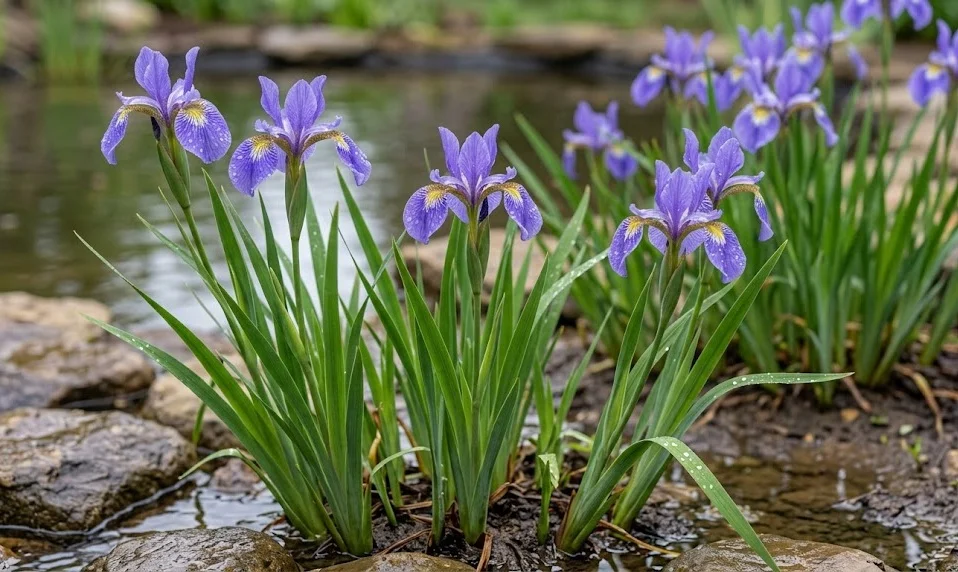

Watering and fertilizing Virginia iris should be guided by its wetland character. This plant is most comfortable in consistently moist to wet soil, and it can even tolerate shallow fresh standing water in suitable garden settings. Its feeding needs are moderate, but its water needs are more specific than those of many common perennials. A careful balance of moisture, oxygen, and restrained fertility produces stronger clumps and more dependable flowering. plants.ces.ncsu.edu+1
The most common mistake is treating Virginia iris like a drought-tolerant border plant. It may survive short dry periods once established, but severe drying during active growth weakens foliage and reduces bloom potential. Spring and early summer are especially important because the plant is expanding leaves, forming buds, and replenishing rhizome reserves. Moisture stress at this stage can affect both current performance and next year’s display.
The second common mistake is feeding too heavily. Rich wet soil can already supply substantial nutrients, especially where organic matter is present. Heavy nitrogen encourages lush, soft leaves that may lean, shade the crown, or become more vulnerable to disease. Fertility should support balanced growth, not force excessive foliage.
A good program begins with observation. Look at soil moisture, leaf color, flowering, clump density, and site conditions before applying water or fertilizer. A plant in a pond margin needs different management from one in a rain garden that dries between storms. Adjusting care to the exact site is more professional than following a rigid schedule.
Moisture requirements during establishment
Newly planted Virginia iris needs consistently moist soil until its roots anchor into the surrounding bed. The first growing season is the most important period for watering. Even plants placed in rain gardens may need supplemental irrigation during dry intervals. Establishment depends on regular hydration, not simply on occasional heavy rain.
More articles on this topic
Water deeply after planting so the soil settles around the roots. This reduces air pockets and helps the rhizome make immediate contact with moisture. Continue watering whenever the top few inches begin to dry. In warm weather, young plants can decline quickly if the root zone dries before they have expanded.
Container-grown plants often arrive in peat-heavy media that dries or wets differently from garden soil. After planting, check both the surrounding soil and the original root ball. Sometimes the garden soil is damp while the root ball has become dry. Careful hand-checking prevents this hidden stress.
Mulch can help maintain moisture, but it should be used lightly and thoughtfully. A thin layer around the planting area reduces evaporation and moderates soil temperature. Keep mulch away from the crown so new shoots remain open to air. Overly thick mulch in wet soil can encourage crown problems and hide pests.
Watering established clumps
Established Virginia iris performs best when the soil remains evenly moist through the growing season. It is especially well suited to pond borders, wet meadows, and rain garden zones that receive regular moisture. In these locations, irrigation may be minimal once plants are rooted. In ordinary beds, however, dry spells still require attention.
More articles on this topic
Deep watering is better than frequent shallow watering. A deep soak reaches the rhizome zone and supports a wider root system. Shallow watering encourages surface rooting and may leave the plant vulnerable during heat. Water slowly enough that moisture enters the soil rather than running away from the crown.
In pond-edge plantings, the plant can tolerate shallow water if the water is fresh and reasonably clean. Some guidance notes use in pond borders with several inches of water, while Clemson describes shallow standing water conditions for rain garden use. This does not mean the plant should be submerged in stagnant, dirty water. Healthy wetland planting still depends on oxygen movement and good site hygiene. plants.ces.ncsu.edu+1
Watch foliage during hot weather. Leaves that fold, yellow prematurely, or brown at the tips may indicate water stress, although other causes are possible. If the soil is dry below the surface, water thoroughly. If the soil is wet and the plant still declines, inspect for rot, pests, or nutrient imbalance instead of adding more water.
Seasonal watering strategy
Spring watering should support rapid, clean growth. This is when new fans emerge and flower stems begin to form. Soil should stay moist but not be disturbed excessively. Avoid working around the crown when the soil is saturated because compaction can damage structure.
During flowering, consistent moisture helps maintain bloom quality. Drought during bud development can shorten stems and reduce flower size. A sudden dry period may also cause buds to abort or open poorly. If rainfall is inconsistent, supplemental irrigation during this period is worthwhile.
Summer watering keeps the foliage functional after flowering. The plant still needs its leaves to rebuild energy reserves in the rhizomes. Do not assume care is finished once blooms fade. Strong post-bloom foliage is one of the keys to reliable flowering the following year.
Autumn watering depends on rainfall and climate. In many regions, cooler temperatures and seasonal rains reduce irrigation needs. If autumn is dry, provide enough water to prevent severe stress before dormancy. Well-hydrated plants enter winter in better condition than plants exhausted by late-season drought.
Fertilizer needs and soil fertility
Virginia iris usually needs only moderate fertility. In rich, damp soil with organic matter, annual fertilization may be unnecessary. Compost applied around the root zone can maintain soil life and nutrient availability. This slow, soil-building approach suits wetland perennials well.
If growth is weak in lean soil, apply a light balanced fertilizer in early spring. Choose a formulation that does not overload nitrogen. Place it around the plant rather than directly on the crown. Water afterward so nutrients move into the active root zone.
Avoid fertilizing late in the season with high-nitrogen products. Late soft growth may be more vulnerable to cold, disease, or collapse. The plant should move naturally toward dormancy as temperatures fall. Fertility at that stage should not push tender new leaves.
Soil testing is useful where performance is poor and the cause is unclear. It can reveal pH issues, nutrient deficiencies, or excesses that visual inspection cannot confirm. Virginia iris is tolerant of several soil types, but extremes still affect nutrient availability. A test-based correction is more accurate than guessing.
Organic matter, mulch, and long-term nutrient management
Organic matter is often the best long-term amendment for Virginia iris. Compost improves moisture retention, supports microbes, and slowly releases nutrients. In sandy soils, it helps prevent rapid drying. In clay soils, it encourages a more workable structure when applied over time.
Apply compost as a surface dressing rather than burying the crown. A thin layer around the clump in spring can feed the soil without smothering the rhizomes. Keep the immediate crown area visible and open. This allows air movement and makes inspection easier.
Mulch should be used differently in wet sites than in dry borders. The goal is moisture moderation and weed reduction, not heavy insulation. Fine-textured mulch should not mat into a dense layer over the root zone. Coarser organic mulch or leaf mold is often safer when applied lightly.
Long-term nutrition is best judged by plant behavior. A vigorous clump with sturdy leaves and regular flowering does not need more fertilizer simply because a calendar says so. A weak clump should be assessed for light, moisture, crowding, and pests before feeding. Good fertilizing is restrained, responsive, and based on the whole growing environment.