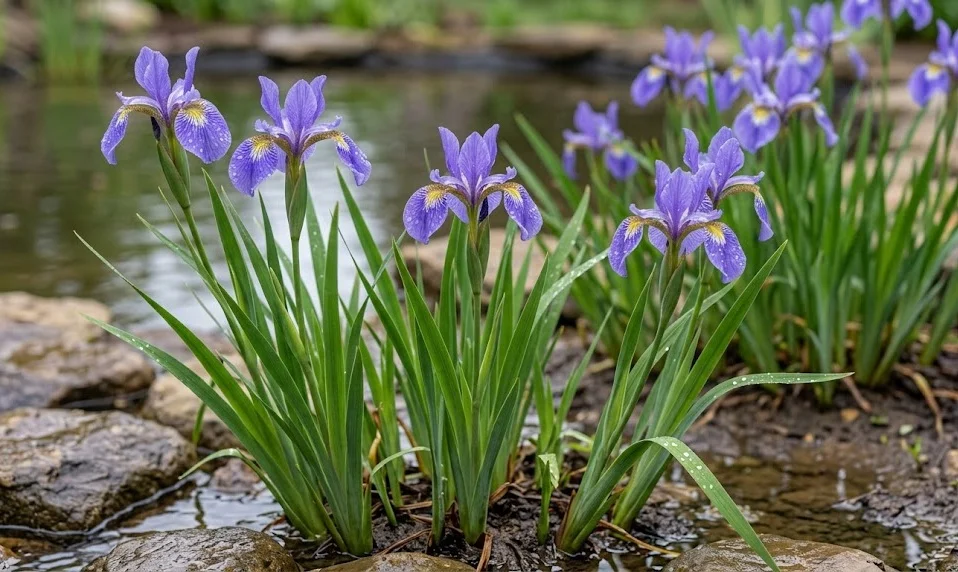

Virginia iris is a hardy herbaceous perennial that naturally passes through winter by storing energy in its rhizomes and allowing top growth to decline. In suitable climates, it does not need complicated winter protection, but it does benefit from clean, thoughtful seasonal preparation. The main goals are to protect healthy crowns, avoid rot, prevent unnecessary disturbance, and leave the plant ready for vigorous spring growth. Proper overwintering begins before the first hard frost, not after winter damage has already occurred.
The plant is often listed for temperate hardiness ranges that include cold winters, especially when grown in consistently moist soil. Missouri Botanical Garden lists Virginia iris within zones 5 to 9, while Clemson describes it as a perennial suited to moist rain garden conditions in warmer eastern regions. Exact winter behavior depends on climate, water levels, soil type, and exposure. A plant in a protected pond margin may overwinter differently from one in an exposed container. missouribotanicalgarden.org+1
As autumn progresses, foliage may yellow, brown, or collapse. This is normal as the plant redirects energy into the rhizome. Do not mistake seasonal senescence for disease unless there are soft crowns, foul odors, or spreading lesions. Healthy dormancy is gradual and usually follows cooler temperatures and shorter days.
Winter care should be restrained. Overhandling wet crowns in cold soil can do more harm than good. Excessive mulch can trap moisture and encourage decay in poorly aerated sites. A clean, open, stable crown is usually safer than a heavily covered one.
Preparing plants in autumn
Autumn preparation begins with evaluating the foliage. Remove leaves that are diseased, collapsed, or heavily damaged. Healthy leaves can remain until they naturally decline, especially in naturalistic plantings. In formal beds, cutting back after yellowing creates a cleaner winter appearance.
More articles on this topic
When cutting foliage, use clean, sharp tools. Leave a short fan or stub rather than cutting into the crown. Avoid tugging old leaves from the base because this can damage rhizomes or expose tissue. Clean cuts reduce injury and make the planting easier to inspect.
Remove debris that has accumulated around the crown. Fallen leaves, dead stems, and dense mulch can hold moisture against the rhizome. This is especially important in wet soils where decay pressure is already higher. Cleanliness improves overwintering without requiring heavy protection.
Autumn is also a good time to assess whether division is needed. If the clump is crowded and the climate allows enough rooting time before freezing, early fall division can be successful. If winter arrives quickly in the region, postpone division until after flowering the following season. Dividing too late leaves rhizomes poorly anchored before cold weather.
Managing winter moisture
Virginia iris is adapted to wet places, and established plants may remain in wet soil through winter. Some guidance notes that plants can be left in water over winter under appropriate pond-border conditions. This makes the species useful for permanent wet edges where many perennials would fail. Still, winter water should be clean and not stagnant in a way that encourages crown decay. plants.ces.ncsu.edu
More articles on this topic
In garden beds, winter drainage should prevent polluted water from collecting around crowns. A low area that receives clean rainwater is generally acceptable. A depression filled with road salt runoff, oily water, or compacted anaerobic sludge is not. The difference between healthy wetland moisture and harmful saturation is crucial.
Do not let newly planted divisions heave out of the soil. Freeze-thaw cycles can lift shallow rhizomes, especially in loose or newly amended beds. Check crowns during mild winter periods if heaving is common in the region. Gently press displaced rhizomes back into contact with soil when conditions allow.
Containers need special attention. Potted Virginia iris is more exposed to freezing and drying than plants in the ground. The root ball can freeze solid, thaw, and dry repeatedly. For container culture, place pots in a sheltered position and keep the medium slightly moist but not neglected.
Mulching and protection
A light winter mulch can be useful in colder regions, especially for new plantings. The purpose is to moderate freeze-thaw cycles rather than bury the plant deeply. Apply mulch after the ground cools, and keep it loose. Dense, wet material packed over the crown is risky.
Suitable materials include chopped leaves, pine needles, or coarse organic mulch. Avoid heavy layers of fine, matted leaves directly over the crown. These can hold too much moisture and reduce air movement. A ring around the plant is safer than a thick blanket across the growing points.
In pond-edge plantings, mulch may not be practical or necessary. Water and surrounding vegetation often moderate temperature changes. The more important task is removing decaying debris that could collect around the crown. A clean edge reduces disease pressure when growth resumes.
Wildlife protection is rarely complicated, but local conditions vary. Rhizomes can be disturbed by animals, water movement, or maintenance activity. Mark the planting location if foliage disappears completely in winter. This prevents accidental digging or trampling before spring shoots emerge.
Spring recovery after winter
In early spring, remove winter debris gradually as new growth appears. Do not pull forcefully around emerging shoots. Young fans are tender and can snap if old leaves are yanked away. Use fingers or small tools to clear the crown gently.
Inspect the rhizomes for firmness. Healthy rhizomes should feel solid and anchored. Soft, foul, or hollow sections should be removed promptly. Early sanitation prevents small problems from spreading into the active growing season.
As temperatures rise, resume moisture monitoring. Spring growth requires steady hydration, even after a wet winter. If rainfall is low, water before the plant shows stress. Early drought can reduce the quality of the upcoming bloom.
Fertilize only lightly if needed. A small spring compost dressing or restrained balanced feeding is enough for most plantings. The plant should emerge strongly from stored rhizome reserves and healthy soil. Overwintering success is visible when new fans rise evenly, cleanly, and with good color.