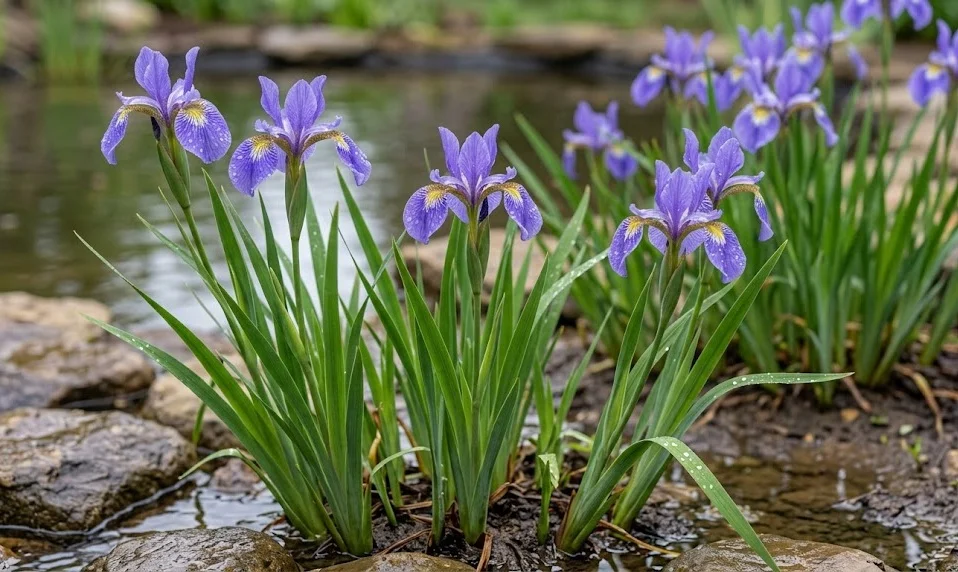

Virginia iris is generally a durable plant when grown in the moist, open conditions it prefers, but it is not immune to disease and pest problems. Most serious issues arise when plants are stressed by poor siting, overcrowding, stagnant conditions, mechanical injury, or excessive fertility. Healthy rhizomes, clean foliage, and steady air movement are the foundation of prevention. A professional approach focuses on early detection rather than waiting until a clump collapses.
The plant’s wetland tolerance can sometimes mislead gardeners into ignoring drainage quality and sanitation. Moist soil is beneficial, but stagnant, polluted, or oxygen-poor conditions can encourage decay. Crowded clumps can trap humidity and leaf debris around the crown. These conditions create opportunities for rot organisms and leaf diseases.
Pest pressure varies by region and planting style. Naturalistic wetland plantings may experience occasional chewing, boring, or sap-feeding insects without serious damage. Formal gardens may require closer cosmetic management because leaf spotting and chewing are more visible. The goal is to protect plant health while avoiding unnecessary intervention.
Accurate diagnosis matters. Yellow leaves can be caused by drought, rot, nutrient deficiency, old age, shade, or pest injury. Brown leaf tips can come from water stress, salt exposure, disease, or natural aging. Before treating, inspect the crown, rhizomes, soil moisture, leaf surfaces, and surrounding plant density.
Rhizome and crown rot
Rhizome rot is one of the most important problems to watch for in irises. It often appears as soft, foul-smelling, collapsing tissue near the crown or rhizome. Leaves may yellow suddenly, fall over, or pull away easily from the base. Once rot is advanced, affected sections should be removed rather than ignored.
More articles on this topic
Virginia iris tolerates wet soil better than many irises, but tolerance is not the same as immunity to decay. Healthy wet soil contains oxygen, biological activity, and movement. Stagnant soil around buried crowns creates a very different environment. Deep planting, compacted mud, and heavy mulch over the crown can all increase risk.
Prevention begins with correct planting depth and spacing. Crowns should not be smothered under dense organic material. Clumps should be divided when congestion reduces air movement and traps decaying debris. Clean tools should be used when cutting rhizomes to avoid spreading pathogens.
If rot appears, lift the plant and inspect the rhizome carefully. Cut away all soft tissue back to firm, healthy material. Discard diseased parts away from the garden rather than composting them casually. Replant only clean, firm divisions in improved conditions where the crown can breathe.
Leaf spots and foliar decline
Leaf spots can develop when foliage remains wet for long periods and air movement is poor. Spots may begin as small discolored lesions and expand into larger brown or tan areas. Severe spotting reduces the plant’s ability to photosynthesize. It can also make otherwise attractive clumps look tired before the season ends.
More articles on this topic
Spacing is one of the simplest controls. Plants crowded tightly together dry more slowly after rain or irrigation. Removing dead leaves and old bloom stems also improves airflow. In rain gardens, companion plants should be selected so they do not smother the iris foliage.
Watering technique can influence leaf disease. Irrigating at the base of the plant is better than repeatedly wetting the leaves late in the day. Morning watering allows foliage to dry more quickly. In a wetland-edge planting, natural rain cannot be controlled, but additional irrigation should not worsen humidity unnecessarily.
Remove badly infected leaves when practical. Do this with clean tools and avoid stripping the clump of too much healthy foliage. The plant still needs green leaves to rebuild the rhizome after bloom. Sanitation should reduce disease pressure without weakening the plant further.
Insect pests and chewing damage
Iris borers can damage many iris species by feeding inside leaves and rhizomes. Early symptoms may include streaking, ragged foliage, or entry points where larvae have moved downward. Later injury can open the way for bacterial rot. The most effective management is early inspection and removal of infested tissue.
Chewing insects may leave holes, notches, or shredded leaf edges. Minor chewing rarely threatens an established clump. The plant’s vertical leaves can tolerate a modest amount of cosmetic damage. Intervention becomes more important when new growth is repeatedly destroyed or when pests are clearly moving into rhizomes.
Sap-feeding insects can occasionally weaken foliage or create sticky residues. Aphids and similar pests tend to be more troublesome on soft, nitrogen-rich growth. Avoiding excessive fertilizer helps reduce overly tender foliage. Beneficial insects often control small populations in diverse plantings.
Slugs and snails may be active in damp sites, especially where mulch, weeds, or debris provide shelter. Their damage is usually most noticeable on young shoots. Improve sanitation, reduce hiding places, and encourage airflow around the crown. Traps or targeted controls may be used where pressure is severe.
Environmental disorders that mimic disease
Not every symptom is caused by a pathogen or pest. Dry soil during active growth can cause browning, shortened leaves, and poor flowering. Too much shade can lead to weak, leaning foliage and sparse bloom. Nutrient imbalance can produce pale or overly lush growth depending on the issue.
Salt exposure is another concern in some landscapes. Virginia iris is not a strong choice for sites affected by deicing salt or saline irrigation. Runoff from roads, sidewalks, and treated hard surfaces may harm plants even when soil moisture seems ideal. Site selection should avoid contaminated water sources whenever possible. Ask IFAS – Powered by EDIS
Heat stress can also distort diagnosis. In hot regions, afternoon shade may reduce stress, but deep shade will reduce performance. Moisture must be maintained during hot spells because wetland plants can suffer quickly when exposed soils dry. A plant that looks diseased in midsummer may simply be under combined heat and drought stress.
Overcrowding often presents as reduced flowering rather than obvious disease. The clump may look leafy but produce fewer blooms. Interior rhizomes may become old, shaded, and less productive. Division restores vigor by giving young rhizomes space, light, and access to fresh soil.
Integrated prevention and management
The strongest disease and pest program is good culture. Plant Virginia iris in the correct moisture zone, give it enough light, avoid deep burial, and maintain reasonable spacing. These basic decisions reduce most problems before they start. Healthy plants are always easier to protect than stressed plants.
Inspect clumps several times during the growing season. Early spring inspection reveals winter damage and crown condition. Post-bloom inspection shows whether division, deadheading, or sanitation is needed. Late-season inspection helps remove diseased leaves before they overwinter around the plant.
Use chemical controls only when a specific problem has been identified and cultural methods are not enough. Broad, routine spraying is rarely necessary in a well-balanced planting. In ecological landscapes, preserving beneficial insects and wetland life is especially important. Any treatment near water should be chosen with extreme care and label compliance.
Long-term records help refine management. Note when symptoms appear, which site conditions were present, and what corrections worked. A pattern of annual rot may point to planting depth or stagnant soil. A pattern of weak bloom may point to shade, drought, or overdue division rather than disease.