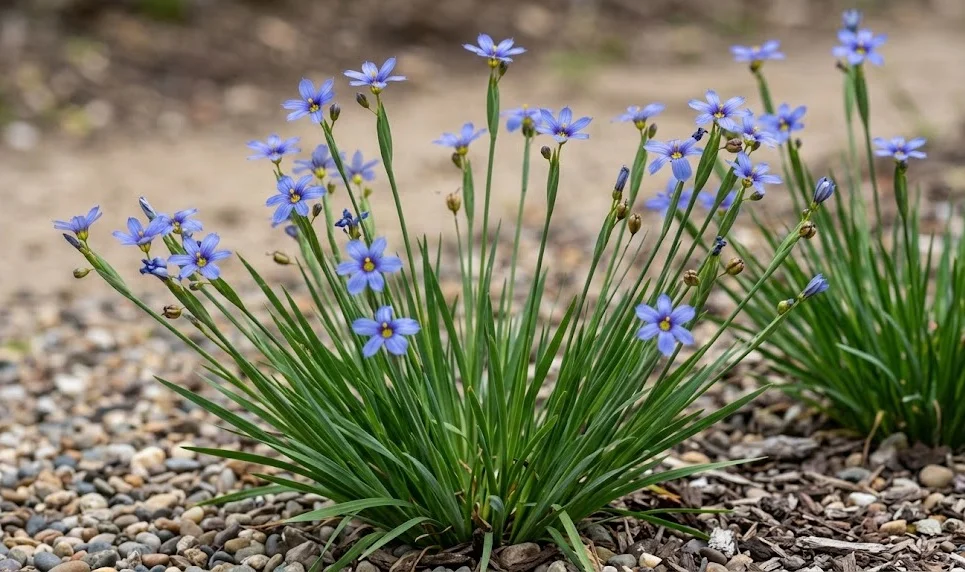

Properly managing the hydration and nutrient levels of the narrow-leaf blue-eyed grass is essential for maintaining its vibrant color and floral abundance. This species occupies a specific niche in nature where moisture is often consistent but never stagnant, a balance that must be replicated in the garden. While it is a hardy plant, its performance significantly improves when its physiological needs are met with a professional touch. A thoughtful approach to watering and feeding ensures a sustainable and visually stunning landscape feature.
Irrigation frequency and timing strategies
Developing a consistent irrigation schedule requires an understanding of the plant’s seasonal rhythm and the local soil conditions. In the spring, when growth is most vigorous, the plant benefits from regular watering to support the development of flower buds. The goal is to keep the soil consistently moist to the touch, roughly the consistency of a wrung-out sponge. During this phase, early morning watering is preferred to allow any moisture on the leaves to dry before nightfall.
As the season transitions into the heat of mid-summer, the frequency of watering may need to be adjusted based on evaporation rates. If the soil is allowed to dry out completely, the plant may enter a premature dormancy, causing the foliage to turn brown and unsightly. Professionals often use drip irrigation or soaker hoses to deliver water directly to the root zone, which is more efficient than overhead spray. This method also keeps the delicate flowers and foliage dry, reducing the risk of fungal pathogens.
During the autumn months, as the plant prepares for dormancy, irrigation should be gradually reduced to help harden the tissues for winter. The plant’s water needs decrease significantly as the daylight hours shorten and temperatures drop. However, it is important not to let the soil become bone-dry before the ground freezes, especially in regions with dry winters. A final deep watering in late autumn provides a reservoir for the roots during the cold months.
Environmental factors like wind and humidity also play a large role in how often the plant needs supplemental water. High winds can rapidly strip moisture from the thin, grass-like leaves, necessitating more frequent checks of the soil moisture. Conversely, in very humid environments, the plant may need less frequent watering as the soil stays damp for longer periods. Always use the soil’s actual moisture level as your primary guide rather than relying strictly on a calendar.
More articles on this topic
Identifying and managing water related stress
Recognizing the early signs of water stress allows a gardener to take corrective action before permanent damage occurs. When the plant is thirsty, the first sign is often a loss of turgor pressure, causing the leaves to look slightly limp or dull. If the drought continues, the tips of the leaves will begin to turn yellow and then brown, eventually spreading down the entire leaf. This “tip burn” is a clear signal that the plant’s vascular system cannot keep up with the transpiration demands.
Overwatering presents its own set of problems and can be even more dangerous than a short-term drought. Signs of excess moisture include a general yellowing of the entire plant and a soft, mushy feeling at the base of the crown. In severe cases, the plant may develop a foul odor, which is a definitive indicator of root rot caused by anaerobic conditions. If these symptoms appear, the first step is to immediately stop watering and check the soil’s drainage capacity.
In situations where drainage is poor, it may be necessary to physically lift the plant and amend the soil with grit or organic matter. Professional growers sometimes use elevated planting beds to ensure that gravity helps pull excess water away from the root systems. Monitoring the site after a heavy rainstorm is an excellent way to see where water naturally pools. If the blue-eyed grass is sitting in a puddle for more than an hour, the site needs intervention.
Recovering a stressed plant requires a gradual approach rather than a sudden flood of water or fertilizer. If a plant has suffered from drought, reintroduce moisture slowly to avoid shocking the system and causing further root damage. For overwatered plants, removing any dead or rotting foliage can help improve airflow while the soil dries out. Consistency is the hallmark of professional care, as extreme fluctuations in moisture are the most common cause of plant decline.
More articles on this topic
Nutrient requirements and soil fertility
The narrow-leaf blue-eyed grass is not a “heavy feeder,” meaning it does not require high concentrations of synthetic fertilizers to thrive. In fact, excessive nitrogen can lead to lush but weak foliage that flops over and is more prone to disease. Its natural habitat is often characterized by moderately fertile soils where nutrients are cycled through decaying organic matter. Therefore, the goal of a professional fertilization program is to supplement rather than overwhelm the soil chemistry.
A baseline soil test is the most professional way to determine exactly what nutrients are lacking in your specific garden site. Often, a simple top-dressing of well-composted organic matter in the early spring provides all the necessary elements. Compost not only adds nutrients but also improves the soil’s ability to hold onto moisture and support beneficial microbes. This “soil-first” approach builds a sustainable environment that supports the plant’s health over many years.
If a supplemental fertilizer is deemed necessary, a balanced, slow-release formula is usually the best choice. Look for a product with an N-P-K ratio where the nitrogen (N) is not significantly higher than the phosphorus (P) or potassium (K). Phosphorus is particularly important for this species as it supports the strong root development and vibrant flowering that gardeners desire. Applying the fertilizer in the early spring, just as the new growth appears, ensures the nutrients are available when the plant needs them most.
Avoid fertilizing in late summer or autumn, as this can stimulate new, tender growth that won’t have time to harden off before the first frost. This late-season growth is highly susceptible to winter kill and can sap the plant’s energy reserves. If the foliage looks healthy and the plant is blooming well, it is often best to skip fertilization entirely. Over-fertilizing is a common mistake that can lead to a shorter lifespan for these delicate perennials.
Organic vs synthetic fertilization options
Choosing between organic and synthetic fertilizers is a decision that impacts the long-term health of the entire garden ecosystem. Organic options, such as compost, bone meal, or seaweed extracts, break down slowly and provide a steady stream of nutrients. They also contribute to the “living soil” by feeding the earthworms and microorganisms that keep the ground aerated and healthy. For many professional horticulturists, the slow-acting nature of organic matter is preferred for native-style plants.
Synthetic fertilizers offer the advantage of precision and immediate availability, which can be useful in specific recovery situations. If a soil test shows a severe deficiency in a single element, a targeted synthetic application can provide a quick fix. However, these products do nothing to improve the soil structure and can sometimes lead to salt buildup if overused. If you choose to use synthetics, always follow the manufacturer’s instructions to the letter and consider using them at half-strength.
Liquid fertilizers are another option, often used for plants in containers or for a quick “pick-me-up” during the growing season. While they are easy to apply, the nutrients are washed away quickly and must be reapplied frequently. For the narrow-leaf blue-eyed grass, a granular organic fertilizer applied once a year is generally more effective and less labor-intensive. The goal is to create a self-sustaining system where the plant’s needs are met with minimal intervention.
Sustainability should be a key consideration in any professional fertilization plan. Using locally sourced compost or mulches reduces the carbon footprint of the garden and recycles valuable nutrients. Furthermore, keeping the nutrient levels balanced prevents excess runoff into local waterways, which is a major environmental concern in modern landscaping. A professional approach considers the health of the plant, the soil, and the surrounding environment as an integrated whole.
Soil drainage and moisture retention balance
Achieving the perfect balance between drainage and moisture retention is a technical challenge that defines expert gardening. The narrow-leaf blue-eyed grass requires moisture to keep its cells turgid, but its roots must have access to oxygen to function. In sandy soils, the challenge is moisture retention, which can be addressed by adding organic matter like peat moss or coconut coir. These materials act as tiny sponges, holding water near the roots while allowing the excess to pass through.
In heavy clay soils, the primary concern is improving drainage to prevent the soil from becoming a compacted, anaerobic mass. This is often achieved by incorporating “grit”—small, angular stones or coarse sand—into the planting hole and surrounding area. Avoid using fine sand, as it can mix with clay to create a substance almost like concrete, which is impenetrable to roots. The goal is to create macropores in the soil that allow water and air to move freely.
Mulching is a powerful tool for managing moisture levels without the need for constant irrigation. A layer of organic mulch reduces evaporation from the soil surface and keeps the root zone cooler during the heat of the day. As the mulch breaks down, it also improves the soil structure, creating a virtuous cycle of health. For this species, a relatively fine-textured mulch is best, as it fits the scale of the small, delicate plants.
The use of moisture sensors or simple manual checks is a hallmark of a professional maintenance routine. By sticking a finger into the soil near the base of the plant, you can accurately gauge the moisture level several inches down. This is much more reliable than looking at the surface, which can dry out quickly while the roots remain damp. Taking the time to understand the unique moisture dynamics of your specific site will pay dividends in the health and beauty of your plants.