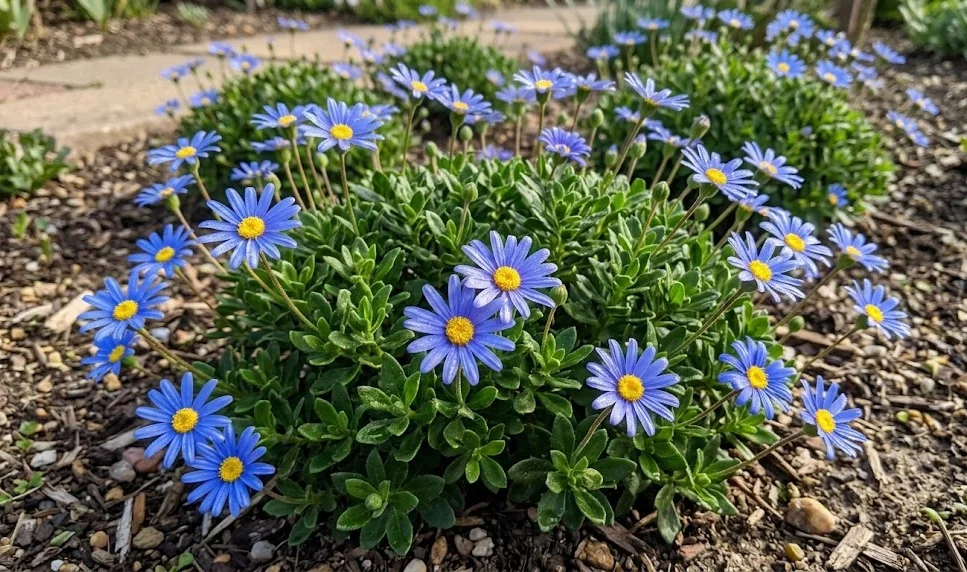

The blue daisy is a captivating perennial that brings a vibrant splash of azure to any garden landscape. Growing this plant successfully requires a deep understanding of its Mediterranean-like preferences and growth cycles. Gardeners often appreciate its long flowering period, which can span from early spring through the first frosts of autumn. By providing the right foundation, you can ensure that this South African native thrives and remains a focal point in your outdoor space.
In its natural habitat, this plant grows in rocky areas where it receives plenty of air circulation and sunlight. These conditions allow the plant to develop a compact, bushy habit that is resistant to many common environmental stressors. Understanding the origin of the plant helps in recreating the necessary microclimate in a temperate garden setting. You should aim to mimic these well-drained and bright conditions to see the best results during the growing season.
The aesthetic appeal of the plant lies in its striking contrast between the yellow centers and the deep blue ray florets. This color combination is relatively rare in the gardening world, making it a prized choice for mixed borders and containers. Beyond its beauty, the plant is relatively low-maintenance once it has become established in its permanent location. You will find that the effort put into the initial care pays off significantly when the plant bursts into full bloom.
Success with this species often depends on your ability to monitor local weather patterns and adjust your care routine accordingly. While it is hardy in warmer climates, it requires specific attention when the seasons begin to shift toward extreme heat or cold. Observing the foliage and flower production will give you immediate feedback on the health of the plant. A proactive approach to gardening is always the best way to maintain the vitality of such ornamental species.
Understanding the ideal climate and hardiness
The temperature tolerance of this plant is a critical factor for any gardener living in a region with fluctuating seasonal weather. It prefers mild temperatures and can struggle if the thermometer stays consistently above thirty degrees Celsius for extended periods. During the height of summer, providing some afternoon relief can prevent the plant from going into a heat-induced dormancy. Conversely, it is not a frost-hardy plant and will require protection if temperatures dip toward the freezing point.
More articles on this topic
Air humidity also plays a subtle but important role in the overall health of the foliage and flower stems. High humidity without adequate air movement can lead to physiological stress and an increase in moisture-related issues. You should ensure that the planting site is not tucked away in a stagnant corner of the garden where air cannot circulate freely. Proper spacing between plants is the easiest way to manage the local environment and keep the leaves dry.
Mediterranean climates offer the perfect balance of wet winters and dry, sunny summers that this plant naturally craves. In other regions, you may need to utilize containers that can be moved to more favorable spots as the seasons change. This flexibility allows you to extend the life of the plant and keep it blooming for several years. Many experts recommend treating it as a tender perennial, which acknowledges its need for specific environmental stability.
Monitoring the night-time temperatures is just as important as watching the daily highs when managing this species. Cool nights can actually enhance the intensity of the blue pigment in the flowers, making them appear more vivid. However, sudden drops in temperature during the late spring can damage the tender new growth that emerges after winter. Keeping a close eye on the local forecast will help you decide when to provide extra cover or move pots indoors.
Soil composition and drainage requirements
The foundation of a healthy plant is always found in the soil, and this species is particularly sensitive to its growing medium. It requires a substrate that is highly permeable to allow water to pass through the root zone quickly. Heavy clay soils are generally unsuitable because they retain too much moisture, which can lead to rapid root decline. If your garden has heavy soil, consider incorporating organic matter or coarse sand to improve the structure.
More articles on this topic
A slightly acidic to neutral pH level is ideal for ensuring that all necessary nutrients are available for uptake. You can test your soil before planting to determine if any amendments are needed to reach the desired range. Adding well-composted leaf mold can help maintain a stable environment while providing a slow release of minerals. It is important to avoid over-enriching the soil, as too much nitrogen can lead to excessive leaf growth at the expense of flowers.
For those using containers, a high-quality potting mix designed for Mediterranean plants or succulents is often the best choice. These mixes are formulated to provide the necessary aeration while still holding enough moisture to keep the roots hydrated. You should also ensure that the pots have large drainage holes at the bottom to prevent water from pooling. Layering a few stones or crocks at the base can further enhance the movement of water out of the container.
Soil temperature also influences the rate at which the plant can establish its root system after being transplanted. Planting in soil that has warmed up in the spring will encourage faster growth and more robust stems. Cold, damp soil can cause the plant to sit in a state of shock, making it more vulnerable to pathogens. Taking the time to prepare the soil correctly is the most important step in the long-term care of the blue daisy.
Maintenance routines and deadheading
Regular maintenance is the secret to a long-lasting display of flowers that lasts throughout the entire summer. One of the most effective tasks you can perform is the removal of spent blooms, a process commonly known as deadheading. This prevents the plant from putting energy into seed production and instead directs it back into creating new flower buds. You should use sharp, clean shears to snip the stems just above a set of healthy leaves.
As the plant grows, it may start to lose its compact shape and become somewhat leggy or sparse in the center. Lightly pinching back the tips of the young stems can encourage the plant to branch out and become much denser. This technique is particularly useful in the early spring when the plant is entering its most active phase of growth. A bushier plant not only looks better but also produces a much higher volume of flowers across its surface.
Removing any yellowing or damaged leaves from the base of the plant is also an essential part of its general care. This practice improves the overall appearance and also helps to maintain good hygiene within the canopy of the plant. Debris that accumulates on the soil surface should be cleared away to prevent it from becoming a breeding ground for unwanted organisms. Keeping the area tidy is a simple way to promote a healthy growing environment.
You should also keep an eye on the surrounding area to ensure that weeds are not competing for the same resources. Weeds can quickly strip the soil of moisture and nutrients, leaving the ornamental plant weakened and less productive. Mulching with a thin layer of gravel or fine bark can help suppress weed growth while keeping the soil temperature stable. This minimal effort results in a much more professional and cared-for appearance in the garden bed.
Growth habits and spatial considerations
The blue daisy typically exhibits a mounding or trailing growth habit, which makes it incredibly versatile in various garden designs. It can reach a height of about thirty to fifty centimeters, with a similar or slightly larger spread over time. Understanding these dimensions is vital when you are planning the layout of your flower beds or choosing container sizes. Giving the plant enough room to expand ensures that it does not become overcrowded by its neighbors.
When used as a groundcover, the stems can slowly spread across the soil, creating a carpet of green foliage and blue stars. This habit is excellent for filling in gaps in front of taller shrubs or along the edges of garden paths. However, you must ensure that the soil remains well-drained even when the foliage covers the ground completely. If the density becomes too high, you might need to thin out some of the stems to maintain air flow.
In hanging baskets or elevated planters, the trailing nature of the plant allows the stems to spill gracefully over the edges. This creates a soft, flowing effect that is highly desired in vertical gardening and balcony displays. You should monitor the moisture levels more closely in these environments, as elevated pots tend to dry out much faster than the ground. The growth rate is moderate, so you will have plenty of time to guide the stems as they develop.
Companion planting is another aspect to consider when looking at the growth habits of this perennial. It pairs beautifully with other sun-loving plants that have contrasting colors, such as yellow marigolds or silver-leaved dusty miller. Make sure that the companions have similar water and light requirements so that one does not outcompete the other. A well-planned combination will result in a harmonious and professional-looking garden display.
Seasonal transitions and environmental adjustments
As the seasons change from the cool spring into the intense heat of midsummer, the plant will require slight adjustments in care. During the hottest weeks, the growth might slow down as the plant focuses on survival rather than expansion. You might notice that the flowers become slightly smaller or the blooming frequency decreases during this time. This is a natural response, and the plant will usually bounce back once the temperatures become more moderate in the evening.
In autumn, as the days shorten and the air becomes crisper, the plant often experiences a secondary flush of growth. This is a great time to enjoy the late-season color before the winter dormancy begins. You should start reducing the frequency of any supplemental feeding as the plant prepares to enter its resting phase. The goal is to let the current growth harden off rather than encouraging soft, new shoots that would be damaged by frost.
The transition into winter is the most challenging period for those living in cooler climates. If you are growing the plant in the ground, you may need to provide a heavy mulch or a protective cloche. For container-grown specimens, moving them to a sheltered location like a greenhouse or a bright garage is often necessary. Protecting the root system from freezing is the most critical factor during these colder months.
Spring is the time for renewal, and you will see the first signs of life as the soil begins to warm up again. This is when you can clear away any winter damage and prepare the plant for the upcoming growing season. Gradually increasing the water and light exposure will help the plant wake up from its slumber and start producing new foliage. A successful transition through the seasons ensures that your blue daisy remains a permanent fixture in your collection.
Long-term health and vitality strategies
Maintaining the vitality of a perennial over several years requires a strategic approach to plant health. Every few years, you might find that the center of the plant becomes woody and produces fewer flowers than it used to. This is a signal that the plant may need to be rejuvenated through more significant pruning or even division. Keeping the plant youthful is the best way to ensure that it continues to perform at its peak.
Monitoring the nutrient levels in the soil is a long-term commitment that prevents the plant from becoming stunted. Even with regular fertilization, the soil can sometimes become depleted of specific micronutrients over time. Rotating the types of organic matter you add to the soil can provide a broader spectrum of minerals for the plant. Healthy soil leads to a robust immune system, making the plant less susceptible to environmental stresses.
Observation is perhaps the most powerful tool in a gardener’s arsenal when it comes to long-term care. Spending time each week looking closely at the leaves and stems can help you catch potential issues before they become serious. You will start to recognize the subtle signs of thirst, hunger, or even the presence of unwanted visitors. This personal connection with your garden allows you to provide exactly what the plant needs at the right time.
Finally, documenting your successes and failures can provide invaluable insights for future growing seasons. Every garden has its own unique characteristics, and what works for one person might not work for another. Keeping a simple garden journal can help you track blooming dates, weather anomalies, and the effectiveness of different care techniques. Over time, this knowledge will make you an expert in the specific needs of the blue daisy in your own backyard.