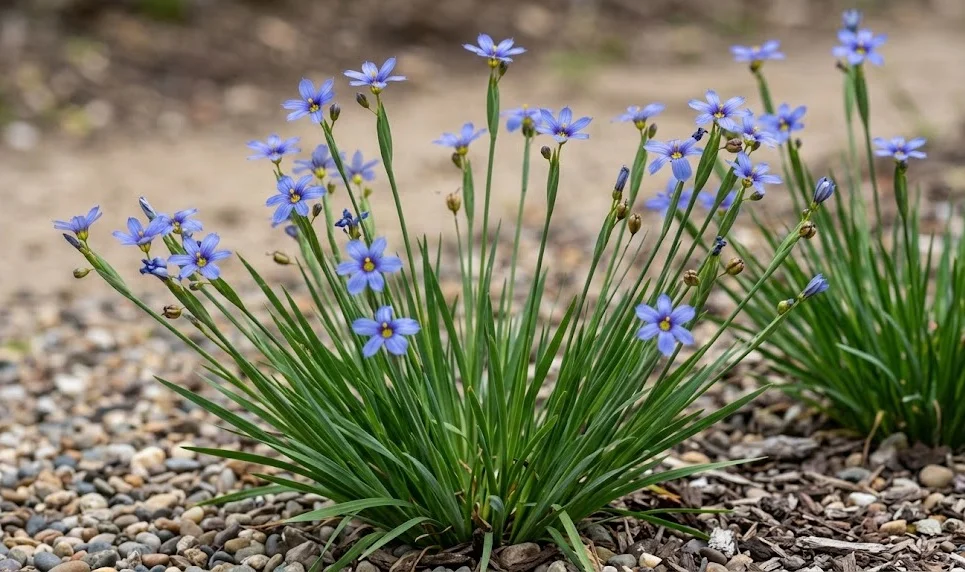

Pruning and cutting back the narrow-leaf blue-eyed grass is a fundamental aspect of professional maintenance that ensures the plant remains vigorous and attractive. While it doesn’t require the heavy pruning associated with woody shrubs, timely interventions help manage its shape and reproductive energy. Understanding when and how to remove spent material allows the gardener to keep the clumps looking intentional rather than neglected. A well-pruned plant is not only more beautiful but also more resistant to the stressors of the summer and winter seasons.
Tools and timing for effective pruning
The most important factor in a professional pruning routine is the use of the correct tools and the proper timing. Small, sharp hand pruners or specialized floral snips are the best choice for the delicate, grass-like leaves and stems of this species. Using dull tools can crush the vascular tissue, leading to ragged edges that are more susceptible to disease and browning. Always ensure that your tools are sanitized before use to prevent the cross-contamination of pathogens between different plants in your garden.
Timing is everything when it comes to cutting back this perennial, with the first major pruning event usually occurring after the primary bloom cycle. As the flowers fade, the stalks can be cut back to the base of the foliage to keep the plant looking tidy. This prevents the plant from looking “weedy” as the old flower stems turn brown and brittle. For most regions, this post-bloom cleanup happens in the early to mid-summer, depending on the local climate.
Another critical pruning window opens in the late winter or very early spring, just before the new growth begins to emerge. This is the time to remove all the dead, brown foliage from the previous year to make way for the fresh green fans. Cutting the plant back to about two inches above the soil line allows the sun to reach the crown and stimulate new growth. This “renewal pruning” is essential for keeping the clump looking fresh and preventing the accumulation of old thatch.
Avoid heavy pruning during the heat of mid-summer unless the foliage has become severely diseased or damaged. Cutting back a healthy plant during a heatwave can cause undue stress and may lead to the death of the specimen. The leaves are the plant’s primary way of cooling itself through transpiration, so removing them when the temperature is high is counterproductive. A professional always considers the weather forecast before picking up the pruning shears.
More articles on this topic
Deadheading for prolonged bloom and energy
Deadheading is the practice of removing spent flowers before they have a chance to develop seeds, and it is a key technique for this species. By intercepting the seed-making process, you signal the plant to redirect its energy back into root development and foliage health. In some cases, diligent deadheading can even encourage a small second flush of flowers later in the season. It is a simple task that significantly enhances the aesthetic value of the planting over several weeks.
To deadhead the narrow-leaf blue-eyed grass, follow the individual flower stem down to where it emerges from the leaf fans. Use your snips to make a clean cut, being careful not to damage the surrounding healthy leaves. Because the flowers bloom in succession on the same stalk, you may want to wait until the entire stalk has finished blooming before removing it. This systematic approach ensures that you get the maximum floral display while still maintaining a clean look.
If your goal is to have the plant self-seed and naturalize in a meadow setting, you may choose to skip the deadheading process entirely. Allowing the seeds to ripen and fall naturally is the best way to expand your population of blue-eyed grass without additional cost. However, in a formal garden border, allowing hundreds of seedlings to sprout can quickly become a maintenance headache. Professional gardeners often strike a balance by deadheading some plants while leaving others to go to seed.
Beyond the energetic benefits, deadheading also improves the overall air circulation within the plant clump. Old, decaying flower stems can trap moisture and provide a breeding ground for various fungal spores and small pests. By removing these stems, you are performing a vital sanitation task that keeps the entire garden healthier. It is one of those small details that separates a professionally maintained garden from one that is merely “kept.”
More articles on this topic
Rejuvenating old clumps and managing density
As a perennial, the narrow-leaf blue-eyed grass will naturally become more crowded and less vigorous as it ages. After three or four years, you may notice that the center of the clump begins to die out or that the blooming becomes less intense. This is a clear signal that the plant is ready for rejuvenation through a combination of thinning and division. This process breathes new life into the planting and ensures that it continues to be a highlight of the garden.
Thinning involves the selective removal of some of the fans within a dense clump to improve light penetration and airflow. This can be done by carefully reaching into the center of the plant and cutting out the oldest or weakest sections at the base. While it may seem counterintuitive to remove healthy growth, it actually stimulates the remaining fans to grow stronger. This is a particularly useful technique for maintaining the health of large, established colonies without moving them.
When thinning is no longer sufficient, a full division of the clump is the most effective way to rejuvenate the species. This involves digging up the entire plant and breaking it into smaller, more vigorous sections, which are then replanted. This not only restores the health of the original plant but also gives you “free” plants to use elsewhere in your landscape. A professional views division as a vital part of the plant’s lifecycle rather than a disruptive chore.
After any significant pruning or thinning, it is important to provide the plant with a bit of extra care to help it recover. A light watering and a thin layer of fresh compost will provide the resources needed for the plant to push out new growth. Avoid any heavy fertilization immediately after a major pruning, as you don’t want to force too much growth too quickly. With a thoughtful approach to cutting back and rejuvenation, your blue-eyed grass will remain a beautiful part of your garden for many years to come.