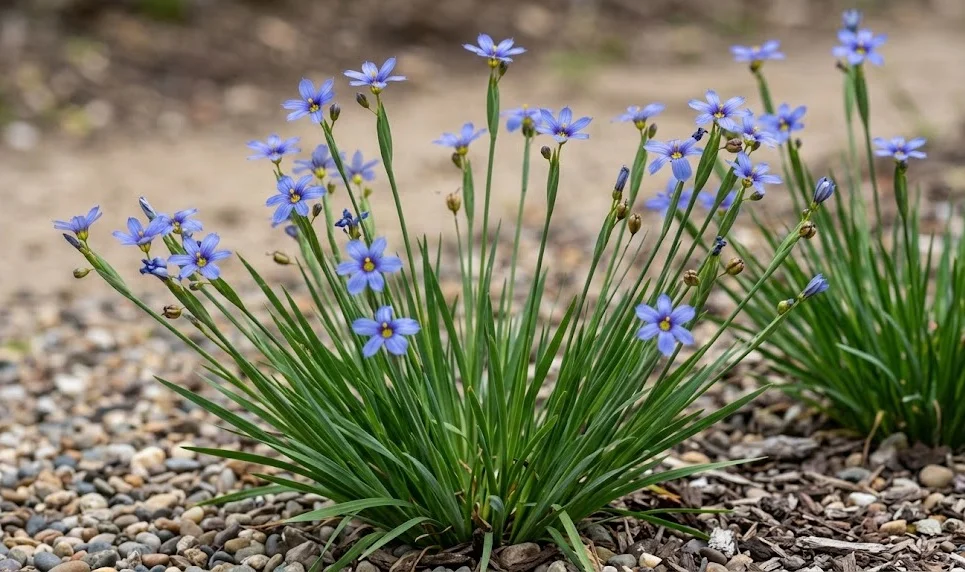

The narrow-leaf blue-eyed grass is a charming perennial that brings a delicate, wildflower aesthetic to managed landscapes and gardens. While it belongs to the iris family, its appearance is more reminiscent of a sturdy tuft of grass adorned with vibrant blue flowers. Successful cultivation requires a balance between providing enough moisture and ensuring excellent soil drainage to prevent root issues. Gardeners who pay attention to these subtle needs are rewarded with a resilient plant that returns year after year.
Understanding the plant morphology and growth habits
Developing a professional approach to this species begins with recognizing its unique structural characteristics and how they influence maintenance. The plant forms dense, grass-like clumps of narrow, sword-shaped leaves that remain attractive throughout the growing season. Unlike true grasses, these leaves are organized in fan-like arrangements typical of its iris relatives. This structural density means that the center of the clump can occasionally become overly compact, requiring observation to ensure airflow.
The flowering period typically occurs in late spring or early summer, producing small but striking star-shaped blossoms. Each individual flower is fleeting, often lasting only a single day under the bright morning sun. However, the plant produces a steady succession of buds, ensuring a consistent display over several weeks. Professionals should note that the intensity of the blue or violet color can vary depending on the specific soil chemistry and local climate conditions.
Growth patterns are generally predictable, with the plant reaching a modest height of six to twelve inches. This compact stature makes it an ideal candidate for rock gardens, borders, or as a transitional element in meadow plantings. It does not spread aggressively through runners, making it much easier to manage than many invasive ornamental grasses. Its self-seeding tendency is its primary method of expansion, which can be controlled or encouraged depending on the desired garden density.
The seasonal lifecycle of the plant involves a period of vigorous green growth followed by a post-bloom ripening phase. During the height of summer, the foliage may lose some of its luster if the environment becomes too arid. Maintaining the health of the leaves is crucial because they serve as the primary energy source for the following year’s bloom cycle. Understanding this cycle allows for a more proactive rather than reactive approach to overall plant care.
More articles on this topic
Optimizing soil conditions for long term health
Soil quality is the foundation of any successful agricultural or horticultural project involving this particular species. It prefers a soil profile that mimics its native meadow habitats, which are often rich in organic matter yet well-aerated. A loamy texture is generally considered ideal, as it provides the necessary nutrients while allowing roots to penetrate easily. Testing the soil before planting can reveal deficiencies that might hinder the plant’s natural vigor.
The pH level of the substrate plays a significant role in the availability of essential micronutrients for the plant. It generally thrives in slightly acidic to neutral environments, typically ranging from a pH of 5.5 to 7.0. If the soil is too alkaline, the foliage may begin to show signs of chlorosis or yellowing due to iron lockout. Periodic amendments with compost or organic mulch can help stabilize these levels over several seasons.
Drainage is perhaps the most critical factor when discussing soil requirements for this iris relative. While it enjoys consistent moisture, standing water or heavy clay that traps liquid can quickly lead to fungal infections. Professional landscapers often incorporate grit or coarse sand into heavier soils to improve the internal drainage capacity. This ensures that the root system remains oxygenated even during periods of heavy rainfall.
Nutrient management should be handled with a gentle touch to avoid over-stimulating the plant at the expense of its structural integrity. Rich organic matter integrated into the soil at the time of planting often provides enough slow-release energy for the first few years. If the soil is particularly sandy or depleted, a light application of balanced organic matter in early spring is usually sufficient. Excessive nitrogen should be avoided, as it can lead to floppy, weak foliage that is more susceptible to environmental stress.
More articles on this topic
Seasonal maintenance and aesthetic management
Routine maintenance tasks are relatively minimal but essential for keeping the clumps looking professional and healthy. One of the primary tasks is the removal of spent flower stalks once the blooming period has concluded. This practice, known as deadheading, prevents the plant from putting all its energy into seed production. By removing these stalks, the gardener encourages the plant to focus on root development and foliage strength.
As the season progresses into the heat of summer, the foliage may require occasional grooming to remove withered leaves. Using sharp, sanitized shears is important to prevent the spread of any potential pathogens between plants. Removing the outer, older leaves helps maintain a clean silhouette and allows more light to reach the center of the clump. This keeps the plant looking “fresh” even when it is not in its primary blooming phase.
Late summer is often a time when the plant enters a semi-dormant state if the weather is particularly hot and dry. During this time, the maintenance focus shifts from aesthetics to survival and resource conservation. It is perfectly normal for some leaf tips to brown slightly during extreme heatwaves, but systemic yellowing should be addressed. Professionals should monitor the clumps closely during these periods to decide if supplemental shading is necessary.
In autumn, the maintenance schedule involves preparing the plant for the upcoming colder months by cleaning the surrounding area. Clearing away fallen debris from other trees or shrubs prevents the base of the plant from staying too damp. A final inspection of the clump’s density will help determine if it is time for a more significant intervention in the spring. Keeping the area around the base clear also reduces the overwintering sites for potential pests.
Managing the transition between growth phases
The transition from the active growing season to the dormant period is a critical time for nutrient translocation. As the days shorten, the plant naturally begins to move sugars and minerals from the leaves down into the crown. Interfering with this process by cutting the plant back too early can weaken the overall health of the specimen. It is best to wait until the foliage has naturally turned brown before performing any major cleanup.
During the early spring transition, the first signs of green growth are a signal to clear away any remaining dead material. This “waking up” phase is when the plant is most hungry for light and space to expand its new fans of leaves. Clearing the old mulch or leaf litter allows the soil to warm up faster, stimulating root activity. A light tilling of the surface soil around the plant can also improve aeration after the winter compaction.
Monitoring the growth rate during the first few weeks of spring helps in identifying the plant’s overall health. If the new growth appears stunted or pale, it may be an indication that the roots are struggling with the soil density. This is the optimal time to make adjustments to the surrounding soil or to consider moving the plant if the site is no longer ideal. Early intervention ensures that the plant has the full spring season to recover and prepare for blooming.
Environmental shifts, such as unseasonably warm spells followed by a hard frost, can be challenging for the plant. Being prepared to provide temporary protection for new, tender growth can save the season’s floral display. While the species is hardy, the emerging flower buds are the most vulnerable part of the plant during these erratic transitions. Professional growers often keep frost blankets or cloches on hand for these specific weather events.
Environmental adaptation and site considerations
Selecting the right environment for this species requires an understanding of its native ecological niche. It is naturally found in moist meadows and along the edges of woodlands, where it receives ample light but is protected from the harshest winds. When placing it in a garden, aim for a location that offers similar protection to maintain its delicate structure. Exposed sites with high wind can dry out the thin leaves and cause the plant to look ragged.
Humidity levels can also impact the performance and health of the narrow-leaf blue-eyed grass. In regions with very high humidity, ensuring adequate spacing between plants is vital to prevent mildew and other fungal issues. Air circulation acts as a natural fungicide by drying out the foliage after morning dew or rain. In contrast, in very dry climates, grouping plants together can help create a slightly more humid microclimate.
The proximity to other plant species should be considered to avoid competition for resources and light. Because it is a relatively small plant, it can easily be overshadowed by more aggressive or taller perennials. Choosing companion plants that share similar moisture requirements but have different growth habits creates a balanced ecosystem. Good companions include smaller sedges, primroses, or other moisture-loving meadow plants that won’t overwhelm the blue-eyed grass.
Urban environments present unique challenges, such as heat island effects and soil compaction from foot traffic. If planting in a city setting, extra care should be taken to ensure the soil remains loose and that the plant isn’t baking against a concrete wall. The reflected heat from hardscaping can be much more intense than direct sunlight in a natural field. Providing a bit of afternoon shade in these situations can significantly improve the plant’s lifespan.
Long term sustainability and clump management
For a professional gardener, the long-term sustainability of the planting is just as important as the initial installation. Over time, the center of the clump can become woody or die out as the plant expands outward. This is a natural aging process that indicates the plant is ready for rejuvenation or division. Recognizing these signs early allows for a planned intervention that maintains the aesthetic continuity of the garden.
Sustainability also involves managing the self-seeding nature of the species to prevent it from becoming a nuisance. If the goal is a naturalized meadow, the seeds can be left to fall where they may to create a dense carpet over time. In more formal borders, however, the seedlings may need to be thinned out to maintain the original design intent. This balance between natural expansion and controlled growth is a key aspect of professional care.
The use of chemicals should be minimized to support the overall health of the garden’s ecosystem. Since this plant is attractive to various pollinators, including small bees and butterflies, using harsh pesticides can have negative cascading effects. Integrated Pest Management (IPM) techniques are preferred, focusing on cultural practices to prevent problems before they start. Maintaining healthy, unstressed plants is the best defense against any long-term decline.
Finally, documentation of the plant’s performance over the years can provide valuable insights for future maintenance. Keeping track of bloom dates, weather patterns, and any issues that arose helps in fine-tuning the care routine. Every garden has its own unique microclimate, and the blue-eyed grass will react slightly differently in each one. This professional level of observation turns a simple gardening task into a sophisticated horticultural practice.
Ecological value and wildlife interactions
The narrow-leaf blue-eyed grass plays a small but significant role in supporting local biodiversity. Its early summer flowers provide an important source of nectar for various native bee species and small syrphid flies. These pollinators are attracted to the bright blue petals and the contrasting yellow centers that act as nectar guides. By including this plant in a landscape, you are actively contributing to the health of the local pollinator population.
Beyond insects, the seeds produced by the plant can provide a food source for small ground-feeding birds. While not a primary food source like large sunflowers, every bit of diverse forage contributes to a resilient ecosystem. The dense foliage also offers a modest amount of cover for beneficial predatory insects and small amphibians. This multi-layered ecological benefit makes the plant a “workhorse” in sustainable landscape design.
The plant’s root system helps in soil stabilization, particularly in areas prone to light erosion or runoff. While its roots are not as deep as some prairie grasses, they form a fibrous mat that holds the surface soil together. This is especially useful in rain gardens or along the edges of swales where water flow is frequent. Utilizing native species for these functional roles is a hallmark of modern, professional ecological engineering.
Cultivating this species also encourages a deeper connection to the local natural history of the region. It serves as a reminder of the beauty found in native meadows that are often lost to development or monoculture lawns. Educating clients or the public about the value of such “understated” native plants is part of a professional’s broader responsibility. When we care for these plants, we are preserving a piece of the biological heritage of the landscape.