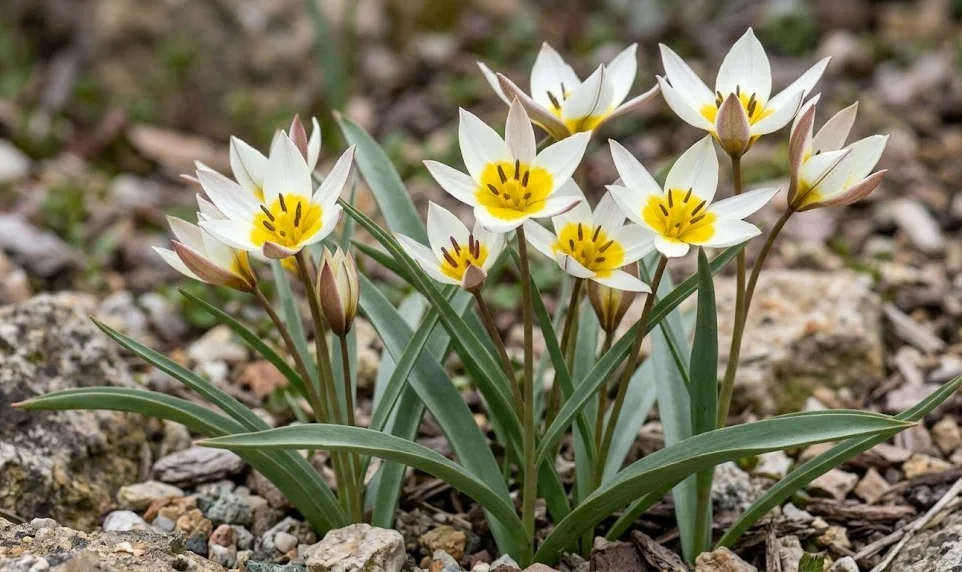

The Turkestan tulip is generally a robust species when grown in the right conditions, but it is not immune to disease and pest pressure. Most serious problems are linked to poor drainage, overcrowding, infected planting material, or unsuitable aftercare. Because the bulb spends much of the year underground, prevention is more effective than treatment. Healthy bulbs, clean soil, and a dry summer rest are the strongest defenses.
Common fungal problems
Fungal diseases often appear when bulbs sit in wet or poorly aerated soil. Bulb rot is one of the most damaging problems because it attacks the storage organ directly. Affected bulbs may become soft, discolored, and foul-smelling. Once rot is advanced, the bulb usually cannot be saved.
Grey mold can affect tulips in damp, cool conditions. It may cause spotted leaves, distorted shoots, or fuzzy growth on weakened tissue. Dense plantings with poor air circulation are more vulnerable. Removing infected material promptly helps reduce spread.
Basal rot is another serious issue in tulips. It attacks the base of the bulb and interferes with root development. Plants may emerge weakly, yellow early, or fail to bloom. Infected bulbs should be removed and discarded rather than composted.
Prevention starts with careful bulb selection. Never plant bulbs that are soft, moldy, or damaged. Avoid replanting tulips in soil where diseased bulbs have recently failed. If disease has been severe, rotate the planting area and improve drainage before trying again.
More articles on this topic
Viral diseases and distorted growth
Tulips can be affected by viral diseases that cause streaked flowers, mottled leaves, weak growth, or distorted stems. While some historic tulip color breaks were caused by viruses, infected garden plants are not desirable. Viral infection weakens bulbs over time. It can also spread to nearby tulips.
Aphids are important because they can transmit viruses between plants. Even a small aphid population can become a problem if infected plants are present. Regular inspection during spring growth helps catch issues early. Removing virus-suspected plants reduces the risk to the rest of the planting.
There is no cure for viral disease in tulip bulbs. Plants showing persistent abnormal streaking, twisted growth, or mottled foliage should be lifted and destroyed. Do not save offsets from suspicious bulbs. Propagating diseased material only continues the problem.
Good hygiene is essential when handling bulbs and cutting flowers. Clean tools reduce the chance of mechanical spread. Avoid damaging foliage unnecessarily because wounds can create entry points for pathogens. Strong, unstressed plants are also less attractive to pests that spread disease.
More articles on this topic
Animal pests and bulb damage
Rodents can be troublesome where tulip bulbs are accessible. Mice, voles, and squirrels may dig up newly planted bulbs or feed on them underground. Damage is often noticed when bulbs fail to appear in spring. Loose, freshly disturbed soil can attract digging animals.
Planting bulbs slightly deeper in light soil may reduce casual disturbance. A layer of sharp grit over the planting area can also discourage digging. In high-pressure gardens, wire mesh bulb baskets offer better protection. The mesh must allow roots and shoots to grow while blocking animals from reaching the bulbs.
Deer and rabbits may browse emerging shoots or flowers. Although species tulips are sometimes less targeted than lush bedding plants, they are not fully resistant. Damage is usually most noticeable in early spring when other food is limited. Physical barriers are the most reliable protection.
Slugs and snails may chew young shoots, especially in damp gardens. They rarely destroy established bulbs directly, but they can spoil emerging growth. Keeping the area open and free of excessive debris helps reduce shelter. Hand-picking or appropriate controls may be useful in vulnerable sites.
Insect pests on foliage and flowers
Aphids may gather on young stems, buds, or the undersides of leaves. They feed by sucking sap and can weaken tender growth. Their greater danger is the potential spread of viral disease. Early removal is therefore important.
Small infestations can be washed off with water or removed by hand. Encouraging beneficial insects such as ladybirds and lacewings helps keep populations balanced. Avoid unnecessary broad-spectrum insecticides, which can harm natural predators. Monitoring is often enough in a healthy garden.
Thrips can occasionally mark petals or leaves. Their feeding may cause silvery streaks, distorted flowers, or tiny dark specks. They are more common in warm, dry conditions or sheltered areas. Removing affected flowers and improving plant spacing may help.
Bulb mites can attack weakened or damaged bulbs. They often follow rot rather than causing the first problem. Clean planting material and dry storage conditions are the best prevention. Damaged bulbs should not be kept for propagation.
Prevention, hygiene, and recovery
The strongest disease control strategy is matching the plant to the right site. Sharp drainage, spring sun, and dry summer conditions reduce most major problems. Overcrowding should be corrected when clumps decline. A well-spaced planting dries faster and grows more strongly.
Remove faded foliage only after it has died naturally, but do not leave diseased debris in place. Healthy yellowed foliage can be cleared once it detaches easily. Diseased leaves, rotting bulbs, and suspicious plant material should be disposed of away from compost. This keeps infection pressure lower.
When lifting bulbs, handle them gently and allow them to dry in an airy place if they are being stored. Inspect them before replanting. Any bulb with softness, mold, or severe injury should be discarded. Saving questionable bulbs often creates larger losses later.
If a planting has failed repeatedly, change the conditions before replacing the bulbs. Improve drainage, choose a sunnier site, reduce summer irrigation, and plant only healthy stock. In some gardens, raised beds or containers may be the safest solution. Recovery is usually possible when the underlying cause is corrected.