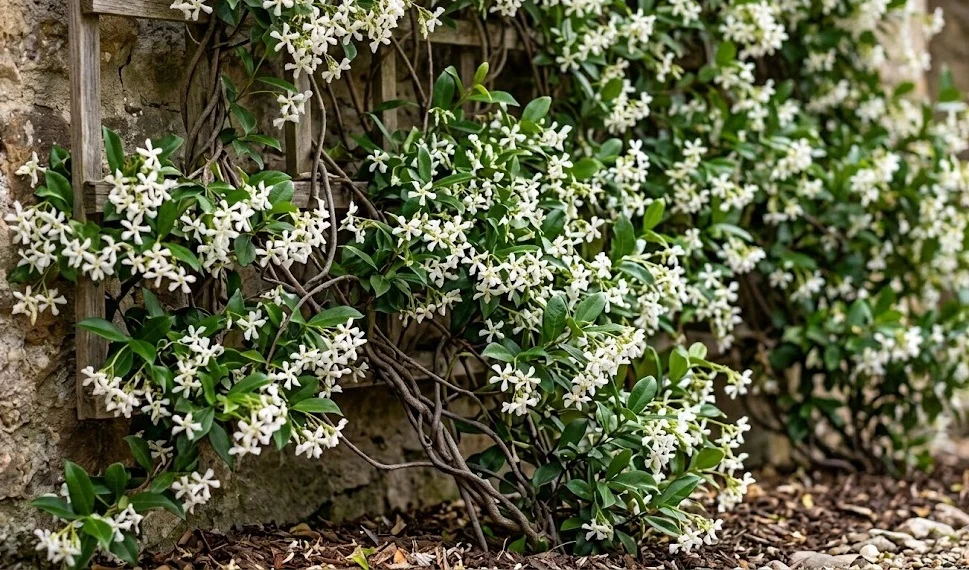

Pruning star jasmine is mainly about shaping, training, and keeping growth within bounds. The plant does not usually need harsh annual cutting, but it benefits from regular light attention. The best pruning respects its natural twining habit and flowering cycle. With careful timing, pruning improves structure without reducing the fragrant display.
When and why to prune
The best time to prune star jasmine is usually after flowering. This allows the plant to bloom before growth is shortened. Pruning too early may remove developing flower buds. After-flowering trimming gives the plant time to produce new growth before winter.
Light pruning can also be done during the growing season if stems become intrusive. Shoots that block paths, windows, or gutters can be shortened. This kind of maintenance should be selective rather than severe. The aim is control without removing too much leaf area.
Dead, damaged, or diseased growth can be removed whenever it is noticed. Clean removal improves appearance and reduces pest shelter. Use sharp, clean tools to make neat cuts. Ragged cuts heal more slowly and can invite problems.
Pruning is also used to improve airflow. Dense, tangled plants may trap moisture inside the canopy. Thinning a few congested stems can reduce disease pressure. This is especially useful in humid or sheltered gardens.
More articles on this topic
Shaping climbers and ground cover plants
When grown as a climber, star jasmine should be trained before it is heavily pruned. Young stems can be tied to a support and spread evenly. This creates a strong framework for future growth. Once the frame is covered, pruning becomes mostly corrective.
Cut back overly long shoots to a side shoot or healthy bud. Avoid leaving many bare stubs. Neat cuts maintain the natural appearance of the plant. They also encourage new growth in useful positions.
As a ground cover, pruning keeps star jasmine from spreading too far. Edge trimming can maintain paths, beds, and borders. Occasional thinning prevents the mat from becoming too dense. Good airflow matters even in ground cover plantings.
Container plants may need more frequent shaping. Limited space makes long wandering shoots more noticeable. Regular light trimming keeps the plant balanced with the pot and support. This is better than allowing it to become overgrown and then cutting it back hard.
More articles on this topic
Rejuvenation and severe cutting back
Old star jasmine plants can become woody, congested, or bare in places. Rejuvenation should be gradual when possible. Removing too much growth at once can shock the plant. A staged approach preserves energy and reduces recovery time.
Start by removing dead, weak, or crossing stems. Then shorten a portion of the oldest growth to encourage new shoots. Keep enough healthy foliage to support the plant. Further renewal can be continued in the next growing season.
Severe cutting back may be necessary if a plant has outgrown its space. This should be done in mild conditions when the plant can recover. Avoid hard pruning just before winter. Recovery is strongest when warmth, light, and moisture are available.
After heavy pruning, support the plant with careful watering and moderate feeding. Do not overfeed in an attempt to force quick regrowth. New shoots should be guided early while they are flexible. This rebuilds the plant into a cleaner and more manageable shape.