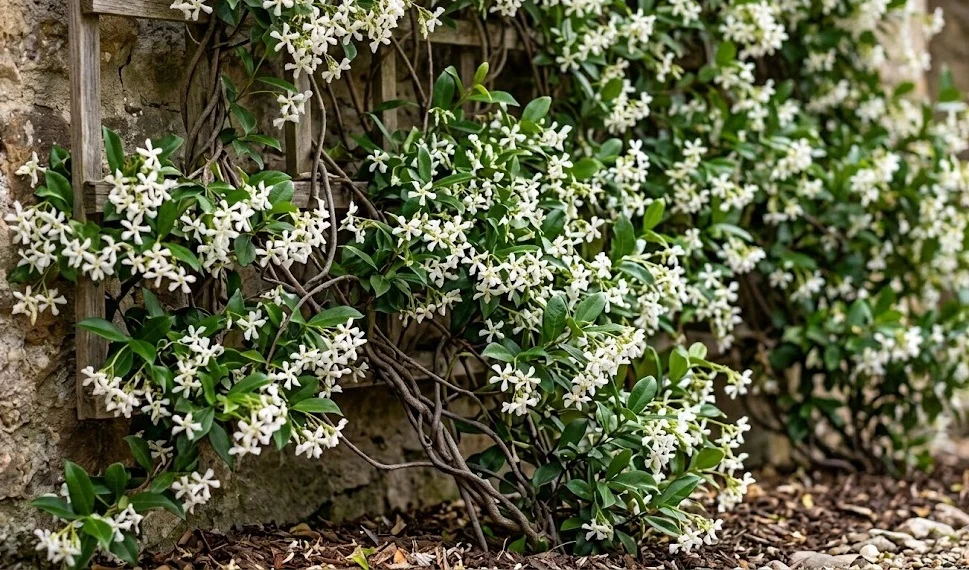

Light has a direct effect on the growth, density, and flowering of star jasmine. The plant can tolerate partial shade, but it flowers best when it receives bright light for much of the day. Too little light often produces long, leafy growth with fewer fragrant blooms. Choosing the right exposure is therefore one of the most important decisions in successful cultivation.
Full sun, partial shade, and practical exposure
Star jasmine performs very well in full sun when moisture is adequate. A sunny position encourages strong flowering and compact growth. The leaves also tend to remain glossy and dense. In very hot climates, some afternoon shade can prevent stress.
Partial shade is also suitable, especially in warm regions. Morning sun with light afternoon shade is often an excellent balance. The plant receives enough energy for flowering but avoids extreme heat. This is useful near reflective walls or paved areas.
Deep shade is not ideal. The plant may survive, but flowering usually decreases. Shoots may stretch toward available light and become sparse. A shaded plant may need pruning and repositioning to improve its form.
Light should be considered together with shelter. A sunny but exposed site may cause wind scorch. A slightly less sunny but protected wall can sometimes produce better results. The best position combines brightness, warmth, and reduced wind stress.
More articles on this topic
Light requirements in containers
Container-grown star jasmine should be placed where it receives bright light. Patios, balconies, and entrances can work well if the site is not too exposed. The container must also be large enough to prevent rapid drying. Sun and pot size should always be considered together.
Pots against south-facing walls can become very warm. This may increase flowering, but it also increases water demand. Compost can dry quickly in these conditions. Regular moisture checks are essential during warm weather.
In partial shade, container plants may grow more slowly. This can be useful where space is limited. However, too much shade reduces flower production. If a potted plant is healthy but not flowering, light is one of the first factors to assess.
Moving containers should be done thoughtfully. Sudden changes from shade to strong sun can scorch leaves. Gradual adjustment allows foliage to adapt. This is especially important after wintering under cover.
More articles on this topic
Light problems and how to correct them
Poor flowering is the most common sign of insufficient light. The plant may look green and healthy but produce few buds. This often happens when trees, buildings, or nearby shrubs cast more shade than expected. Seasonal observation helps identify the problem.
Sparse growth can also indicate poor light. Stems may become long, thin, and widely spaced. Leaves may cluster at the ends of shoots. Training the plant into a brighter area can improve its structure over time.
If the plant cannot be moved, pruning nearby vegetation may help. Removing overhanging branches can increase available light. Reflective surfaces and pale walls may also improve brightness slightly. Even modest improvements can support better flowering.
In very hot exposure, symptoms are different. Leaves may scorch, curl, or lose colour during extreme heat. Mulching, deeper watering, and light afternoon shade can help. The aim is not maximum sun at all costs, but balanced light with manageable stress.