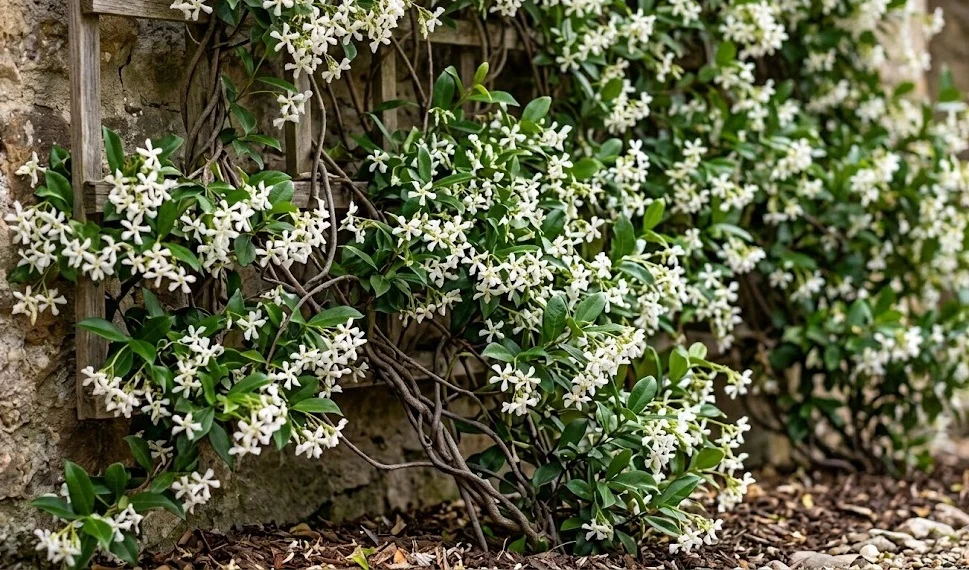

Star jasmine is evergreen, so winter care matters even when the plant is not actively growing. Cold wind, frozen soil, and wet compost can all cause damage. The level of protection needed depends on local climate, exposure, and whether the plant grows in the ground or in a pot. With thoughtful preparation, star jasmine can pass through winter with healthy foliage and strong spring recovery.
Understanding winter tolerance
Star jasmine is more cold tolerant when it is mature, well-rooted, and planted in a sheltered place. Young plants are more vulnerable because their roots are not yet widely established. Plants in containers are also at greater risk because the root ball freezes more easily. Protection should be adjusted to the plant’s situation.
Cold damage often appears as bronzed, browned, or dropped leaves. This does not always mean the plant is dead. Evergreen foliage may suffer while stems and roots remain alive. Spring growth will show the true extent of recovery.
Wet winter soil can be as harmful as low temperature. Saturated roots are more likely to suffer when growth is slow. Cold, wet compost also increases the risk of root decline. Good drainage is therefore central to winter survival.
Shelter from wind is highly valuable. Drying winter winds pull moisture from evergreen leaves while roots may be too cold to replace it quickly. A wall, fence, or temporary screen can reduce this stress. Wind protection often makes the difference between damaged and healthy foliage.
More articles on this topic
Preparing plants in the ground
Begin winter preparation in late autumn before severe cold arrives. Remove weeds around the base of the plant. Check that the soil drains freely and does not collect standing water. Correcting wet spots early helps prevent winter root problems.
Apply a mulch over the root zone. Compost, bark, leaf mould, or straw can help insulate the soil. The mulch should be several centimetres deep but kept away from direct contact with the stem. This protects roots while reducing the risk of stem rot.
Avoid heavy feeding late in the season. Fertiliser can encourage soft growth that does not harden before frost. Star jasmine should enter winter with firm, mature shoots. Feeding is better resumed in spring when active growth begins.
Do not prune heavily before winter. Fresh cuts and soft regrowth can increase vulnerability. Remove only damaged, diseased, or clearly misplaced stems if necessary. Main shaping should usually wait until after flowering or spring recovery.
More articles on this topic
Protecting container-grown plants
Potted star jasmine needs special winter care because roots are exposed to cold from all sides. Move the container to a sheltered wall if possible. A position protected from wind and excessive rain is ideal. The plant should still receive light because it remains evergreen.
Wrap the pot rather than the foliage when root protection is the priority. Horticultural fleece, bubble wrap around the outside of the pot, or insulating fabric can help. Raise the pot on feet to improve drainage. This prevents water from pooling beneath the container.
Water sparingly in winter. The compost should not become bone dry, but it should not stay wet. Check moisture with a finger before watering. Water only during mild periods when the compost can drain freely.
In very cold regions, a bright unheated greenhouse, porch, or conservatory can be useful. The space should be cool rather than warm. Excess warmth in low winter light can produce weak growth. Ventilation is still important to prevent pests and fungal issues.
Spring recovery after winter
Do not rush to cut back winter-damaged growth too early. Some stems that look poor may still be alive. Wait until new growth begins and the risk of severe frost has passed. Then remove dead tips and damaged foliage.
Check stems by gently scratching a small area of bark. Green tissue beneath the surface indicates life. Brown, dry, brittle stems are less likely to recover. This simple check helps avoid unnecessary pruning.
Resume watering gradually as temperatures rise. The plant will need more moisture once growth begins. However, wet spring soil can still harm weak roots. Increase watering according to weather and visible growth.
Feeding should begin only when the plant is actively growing. A balanced fertiliser or compost mulch supports recovery. Avoid forcing a stressed plant with strong feed. Gentle care allows star jasmine to rebuild naturally.