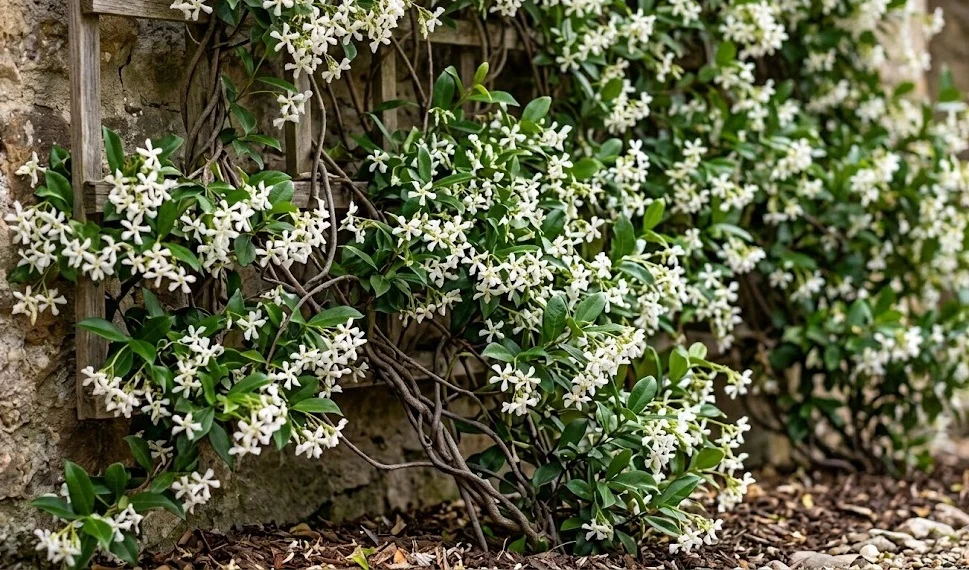

Star jasmine grows best when water and nutrients are supplied evenly rather than dramatically. The plant dislikes both prolonged drought and stagnant wet soil. Fertilising should support healthy leaves and fragrant flowers without pushing weak, excessive growth. A steady seasonal routine is the key to strong roots, glossy foliage, and reliable flowering.
Understanding the plant’s moisture needs
Star jasmine is moderately drought tolerant once established, but it performs better with consistent moisture. Newly planted specimens need closer attention because their roots are still limited. A plant may survive dry soil but flower less generously. Careful watering supports both growth and ornamental quality.
The soil should be moist at root depth, not constantly wet at the surface. Shallow sprinkling encourages roots to remain near the top layer. Deep watering helps roots move downward into cooler, more stable soil. This improves resilience during hot weather.
Leaves can signal water stress. Curling, dull foliage, and premature leaf drop may indicate dryness. Yellowing and soft growth may indicate overwatering or poor drainage. Always check the soil before assuming the cause.
Weather, soil type, and plant age all affect watering frequency. Sandy soil dries quickly and needs more regular attention. Clay soil holds moisture longer but can become airless when saturated. A good watering plan responds to conditions rather than following a rigid calendar.
More articles on this topic
Watering plants in open ground
During the first season after planting, water deeply whenever the soil begins to dry. The root ball can dry out even when surrounding soil looks moist. This is especially common when pot-grown plants are placed into different garden soil. Water should be directed slowly over the original root zone and the surrounding area.
Once established, star jasmine in the ground usually needs less frequent irrigation. In normal rainfall, it may need little extra water. During heatwaves or long dry periods, watering becomes important again. Flowering plants and plants against warm walls often need extra moisture.
Mulching helps reduce water loss from the soil. Compost, bark, leaf mould, or similar organic materials can be used. A mulch layer also moderates soil temperature. Keep the mulch clear of the stem base to avoid dampness around the crown.
Avoid watering late in the evening during cool, damp weather. Wet foliage and stagnant night conditions can encourage fungal problems. Morning watering is usually preferable. It allows leaves and soil surfaces to dry during the day.
More articles on this topic
Watering container-grown plants
Container-grown star jasmine needs more regular checking than plants in the ground. Pots have limited soil volume and dry quickly in warm weather. Windy balconies and paved terraces can increase water loss further. A container plant may need watering several times a week during summer.
Water thoroughly each time rather than giving small amounts. The entire root ball should be moistened. Water should run from the drainage holes at the base. This ensures that dry pockets inside the pot are properly rehydrated.
Do not allow the pot to stand in water for long periods. Constantly wet compost can suffocate roots and cause decline. Saucers should be emptied after watering unless conditions are extremely hot and temporary water retention is intentional. Drainage is especially important in winter.
If compost has dried completely, it may repel water at first. In that case, water slowly in stages until the root ball absorbs moisture again. A very dry pot may need soaking and draining. Regular checks prevent this problem from becoming severe.
Fertilising during active growth
Spring is the best time to begin feeding star jasmine. A balanced slow-release fertiliser can support steady growth. Apply it according to the product instructions and avoid overuse. More fertiliser does not automatically mean more flowers.
Organic mulches also contribute to nutrition. Compost and well-rotted organic matter release nutrients gradually as they break down. They improve soil structure as well as fertility. This is useful for long-term plant health.
Container plants benefit from liquid feeding during the growing season. Use a balanced feed or a flowering-plant feed at moderate strength. Feeding every few weeks is usually enough when the plant is actively growing. Stop feeding as growth slows toward autumn.
High-nitrogen fertilisers should be used carefully. They encourage leafy growth but can reduce flowering if overapplied. Soft, lush shoots may also be more attractive to pests. A balanced nutrient profile is safer and more productive.
Diagnosing nutrient and watering problems
Yellow leaves can have several causes, so diagnosis should be patient. Overwatering, underwatering, cold stress, nutrient deficiency, and root restriction can look similar. Soil inspection gives better information than leaf colour alone. Correcting moisture problems should come before adding fertiliser.
Poor flowering is often linked to insufficient light, immature plants, or excess nitrogen. Water stress during bud formation can also reduce bloom quality. A plant that grows strongly but rarely flowers may be receiving too much shade or too much leafy feed. Adjusting care gradually is better than making several drastic changes at once.
Brown leaf edges may result from drought, wind, frost, or salt build-up in pots. Container plants can accumulate fertiliser salts over time. Occasional thorough watering helps flush excess salts from the compost. Fresh compost or repotting may be needed for long-term container specimens.
Healthy star jasmine shows firm leaves, steady shoot growth, and seasonal flowering. The plant should not be pushed into constant lush growth. It needs periods of consolidation as well as active expansion. Balanced watering and feeding create this rhythm naturally.