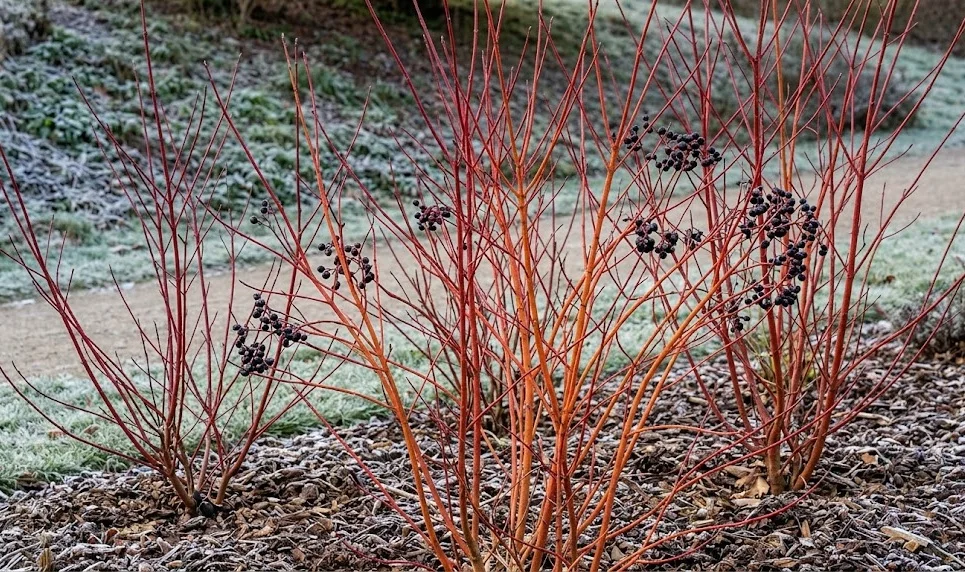

Common dogwood is naturally well suited to winter in temperate gardens, and mature plants usually need little special protection. Its deciduous habit, hardy stems, and strong root system allow it to pass through cold months with minimal attention when it is planted in suitable soil. Winter care is still important, especially for young shrubs, container-grown plants, and specimens exposed to drying winds. The aim is not to keep the plant warm, but to help it enter dormancy strong and emerge in spring without unnecessary stress.
Preparing the shrub before cold weather
Good overwintering begins in late summer and autumn. The shrub should not be encouraged into soft late growth with heavy nitrogen feeding at this stage. Shoots need time to mature before freezing temperatures arrive. Firm, well-ripened stems tolerate winter better and usually show stronger colour.
Water management before winter is important. After a dry autumn, the soil around young or recently planted shrubs should be watered deeply before freezing weather becomes regular. Dry roots are more vulnerable to cold wind and winter dehydration. However, saturated soil should not be watered further because root oxygen remains essential even during dormancy.
Autumn is also a good time to inspect the shrub for damaged, diseased, or broken stems. Removing clearly diseased material reduces the chance of problems carrying into the next season. Heavy pruning is usually better left until late winter or early spring, depending on the maintenance goal. Light cleaning, however, can be done before winter if it improves plant health.
Mulching protects the root zone and improves soil stability. A layer of compost, leaf mould, or shredded bark can help moderate freeze-thaw cycles. The mulch should not be piled against the stems because damp material around the crown may encourage rot. A broad, even layer over the root area is more effective than a thick mound at the base.
More articles on this topic
Winter risks in open-ground plantings
Cold alone is rarely the main problem for established common dogwood. More often, winter damage results from drying winds, waterlogged soil, heavy snow, or repeated freeze-thaw movement around young roots. Exposed sites can desiccate stems and buds, particularly when the ground is frozen and roots cannot replace lost moisture. Windbreaks or surrounding planting can reduce this stress.
Waterlogging can be damaging during mild, wet winters. Roots sitting in saturated, airless soil may weaken before spring growth begins. This is especially likely in compacted clay or low-lying areas where water gathers. Improving drainage before planting is the best solution, but surface mulching and avoiding soil compaction also help.
Snow can bend or break older, arching stems. Common dogwood is flexible, but heavy wet snow may weigh down dense shrubs. If snow accumulation is severe, it can be gently shaken off before branches are forced out of shape. This should be done carefully because frozen stems can be brittle.
Frost heave may affect newly planted shrubs. Repeated freezing and thawing can lift the root ball slightly, breaking root contact with the soil. Checking young plants after severe weather is useful. If a plant has lifted, it should be gently firmed back into place when the soil is workable.
More articles on this topic
Container-grown shrubs in winter
Common dogwood can be grown in large containers, but container plants are more exposed to winter stress than shrubs in the ground. Roots in pots experience stronger temperature fluctuations because they are surrounded by air rather than insulated by garden soil. The growing medium can freeze more deeply and dry out more quickly during windy weather. For this reason, winter care for container plants must be more deliberate.
The container should be large, stable, and frost-resistant. Small pots dry quickly and offer poor root insulation. A large container also supports better summer growth, which affects the plant’s ability to overwinter well. Drainage holes must remain open so winter rain does not collect around the roots.
Moving the pot to a sheltered position can prevent unnecessary damage. A spot near a wall, away from the strongest wind, is often suitable. The plant should remain outdoors because it needs natural dormancy and does not benefit from warm indoor conditions. Wrapping the pot, rather than the stems, can help protect the root system during severe cold.
Watering container shrubs in winter is sometimes necessary. Even dormant plants can dry out if the compost becomes completely dry. Water should be given during mild periods when the medium is not frozen. Overwatering must be avoided because cold, wet compost can cause root problems.
Late-winter renewal and spring recovery
Late winter is the key moment for assessing common dogwood after the cold season. Dead, broken, or damaged stems can be removed before new growth begins. This is also the usual time for renewal pruning if colourful young stems are desired. Pruning at this stage allows the shrub to respond with vigorous new shoots in spring.
Not every brown or dull stem is dead. Older stems naturally lose some colour and become woody, so they should be judged by flexibility, buds, and internal tissue if uncertain. A light scratch can reveal whether tissue beneath the bark is green and alive. Dead stems are dry and brittle, often with no viable buds.
After winter pruning, the shrub benefits from mulch and moderate spring feeding. Compost around the root zone supports new growth without forcing it too aggressively. If the soil is dry, watering after pruning and feeding helps the plant restart evenly. This is especially useful after a dry winter or in exposed gardens.
Spring recovery should be monitored without impatience. Common dogwood may leaf out at different speeds depending on weather, pruning severity, and site conditions. Strong basal shoots are a good sign that the plant has overwintered well. With suitable care, winter becomes not a threat but one of the seasons in which the shrub shows its greatest ornamental value.