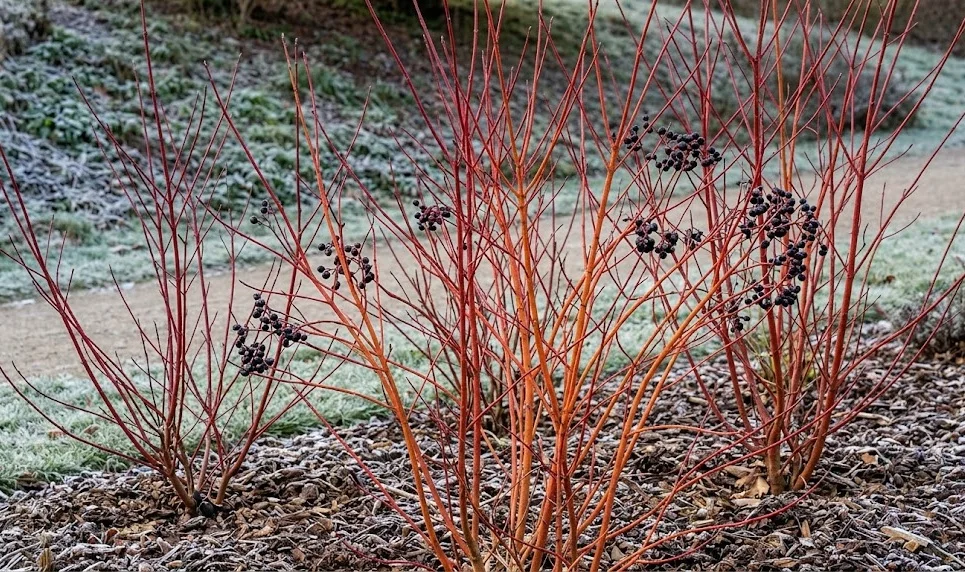

Watering and fertilizing common dogwood should support steady, resilient growth rather than force the shrub into excessive softness. This species is naturally robust, yet it performs best when moisture and nutrition remain balanced through the growing season. Strong young stems, healthy foliage, good flowering, and reliable winter colour all depend on the condition of the root zone. Practical care begins with observing the soil rather than following a rigid calendar.
Moisture needs during establishment
Newly planted common dogwood needs regular watering until its roots extend into the surrounding soil. During the first growing season, the original root ball can dry faster than the nearby garden soil, especially in container-grown plants. This can create hidden stress even when the surface appears damp. Checking moisture a few centimetres below the surface gives a more accurate picture.
Deep watering is more effective than light sprinkling. A slow soak encourages roots to grow downward and outward, which improves drought tolerance later. Shallow watering keeps roots close to the surface and makes the plant more dependent on frequent attention. In dry spells, watering once thoroughly is usually better than watering a little every day.
Weather, soil type, and plant size all influence watering frequency. Sandy soils lose moisture quickly and may require more frequent irrigation during warm periods. Clay soils hold water longer, but they can become hard on the surface while remaining moist below. A young shrub in a windy, sunny site will need more water than one in light shade with mulched soil.
Mulch helps reduce the stress of establishment. Organic mulch limits evaporation, moderates soil temperature, and suppresses competing weeds. It should be spread over the root zone but kept away from direct contact with the stems. Replenishing mulch as it breaks down also improves soil quality gradually.
More articles on this topic
Watering established shrubs
Established common dogwood is more tolerant of irregular rainfall, but it is not completely drought-proof. Prolonged dryness can cause leaf dullness, premature yellowing, reduced shoot growth, and fewer strong stems for winter colour. These symptoms may not kill the plant, but they reduce its ornamental quality. A shrub grown for stem display should be protected from severe summer stress.
Watering is most important during active growth and during extended dry periods. If the soil remains dry for several weeks, a deep soak can help maintain healthy growth. The water should be directed to the root zone rather than sprayed over the foliage. Wet leaves, especially in humid weather, may encourage fungal problems if they remain damp for long periods.
In mixed borders, competition from nearby plants should not be underestimated. Trees, large shrubs, and dense perennial plantings can take significant moisture from the soil. Common dogwood can compete reasonably well, but young or recently pruned plants may struggle if surrounded by thirsty neighbours. Supplemental watering may be needed when several plants share the same root area.
Autumn watering can be useful after a dry season. Moist soil going into winter helps roots remain functional before the ground becomes cold. This is particularly important for recently planted shrubs and plants in exposed positions. However, watering should stop if the soil is already saturated, because oxygen around the roots is just as important as moisture.
More articles on this topic
Fertility requirements and organic feeding
Common dogwood responds well to soil that is fertile without being over-enriched. In most gardens, annual mulching with compost or leaf mould provides enough nutrition. This type of feeding improves soil structure and supports slow nutrient release. It also benefits the wider soil ecosystem, which is important for long-term plant health.
A shrub growing in poor soil may need additional support. Signs of low fertility can include weak shoots, small leaves, pale foliage, and limited flowering. These symptoms should be interpreted carefully because drought, shade, and compaction can look similar. Before applying fertilizer heavily, it is better to assess the whole growing environment.
Organic amendments are particularly suitable for common dogwood. Mature compost, well-rotted manure, and leaf mould improve water retention and nutrient availability. They should be used as surface amendments rather than buried deeply around established roots. Soil organisms will gradually incorporate them into the root zone.
Fresh, strong organic materials should be avoided near the stems. Fresh manure can burn roots, encourage lush weak growth, and introduce weed seeds. Thick, wet mulch pressed against stems can also encourage rot. A moderate, breathable layer gives the best results.
Using mineral fertilizers responsibly
Mineral fertilizers can be useful when soil fertility is genuinely low or when shrubs are grown in demanding ornamental situations. A balanced general fertilizer applied in spring is usually enough. The rate should be modest because common dogwood does not need heavy feeding to perform well. Overfeeding creates more problems than it solves.
Nitrogen is the nutrient most likely to be overused. While nitrogen promotes leafy growth, excessive amounts can produce long, soft stems with reduced structural strength. These shoots may be more vulnerable to aphids, frost damage, and wind injury. In plants grown for winter stem colour, overly lush growth may not mature as well as firmer, slower growth.
Fertilizer should be applied when the soil is moist and the plant is beginning active growth. Dry soil increases the risk of root scorch and reduces nutrient uptake. After application, watering helps dissolve nutrients and move them into the root zone. Fertilizer granules should not be allowed to collect against the crown or stems.
Late-season feeding is not recommended. Feeding in late summer or autumn can delay hardening and stimulate tender growth before winter. The plant should be allowed to slow naturally as day length decreases and temperatures fall. This supports better dormancy and improves resilience in cold weather.
Diagnosing problems related to water and nutrition
Leaf symptoms often reveal stress, but they do not always identify a single cause. Yellowing leaves may result from waterlogged soil, drought, nutrient deficiency, root damage, or shading. Brown leaf edges may indicate drought stress, salt accumulation, or wind scorch. Accurate diagnosis requires checking the soil and reviewing recent weather and maintenance.
If growth is weak despite regular watering, compaction may be limiting root function. Compacted soil prevents air and water from moving properly, even when nutrients are present. Loosening the surrounding soil carefully and improving it with organic matter can help over time. Severe compaction should be addressed before planting rather than after problems appear.
If the plant grows vigorously but flowers poorly, excessive shade or heavy nitrogen may be responsible. A shrub in deep shade may produce leafy growth without strong flowering or vivid stems. Similarly, too much fertilizer can shift growth toward foliage at the expense of balanced development. Adjusting light, pruning, and feeding often gives better results than adding more nutrients.
The most reliable care comes from observation. Soil moisture, shoot length, leaf colour, and seasonal performance should all be read together. Common dogwood is forgiving, but it responds clearly when conditions improve. Balanced watering and moderate feeding create a shrub that is strong, attractive, and easier to maintain.