
Planting common dogwood successfully begins with understanding that this shrub is vigorous, adaptable, and happiest when its roots can establish in cool, moisture-retentive soil. It is often forgiving, but good preparation makes a clear difference in early growth, branching, and long-term stability. A carefully planted shrub settles faster, resists drought better, and develops a more balanced framework. Propagation is also straightforward when timing, hygiene, and aftercare are handled with patience and precision.
Choosing the right planting position
Common dogwood should be planted where it has enough room to develop its natural multi-stemmed habit. Even when it is pruned regularly, the shrub needs space for fresh basal shoots and outward-spreading branches. A cramped site can lead to constant cutting, poor airflow, and an untidy shape. In a border, it is usually better placed behind lower perennials or among other robust shrubs.
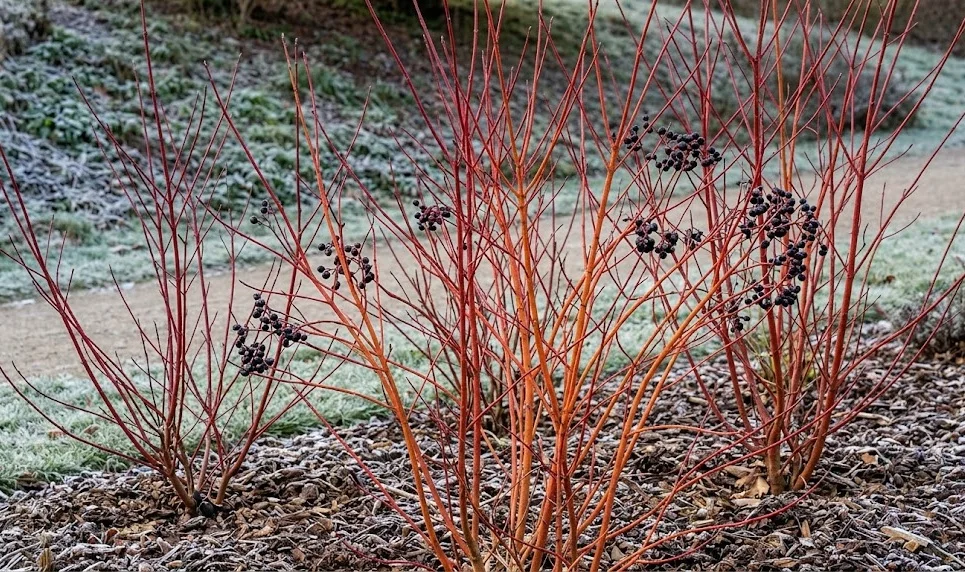
Light conditions affect both growth and ornamental quality. The shrub tolerates partial shade, but stronger light usually improves flowering and winter stem colour. In deep shade, stems may stretch, foliage may become sparse, and the plant can lose its compact presence. A site with morning or afternoon sun often provides a good balance between vigour and moisture retention.
Soil moisture should be assessed before planting. Common dogwood appreciates soil that stays reasonably fresh without becoming stagnant. If the ground dries out quickly, organic matter should be added and mulching should be planned from the start. If the ground is heavy and wet, structure and drainage should be improved before the shrub is installed.
The surrounding planting should also be considered. Common dogwood combines well with native hedging plants, ornamental grasses, moisture-loving perennials, and other shrubs with contrasting winter features. It should not be planted where delicate neighbours will be smothered by its growth. Good design gives the shrub a clear role, whether that role is screening, wildlife support, winter colour, or background structure.
More articles on this topic
Preparing the soil and planting properly
Before planting, remove perennial weeds from the area around the intended root zone. Weeds such as couch grass or bindweed can be difficult to control once the shrub is established. The soil should be loosened over a wider area rather than only in a narrow planting hole. This encourages roots to move into the surrounding ground instead of remaining trapped in a small pocket of improved soil.
The planting hole should be broad enough to accommodate the roots comfortably. For container-grown plants, the root ball should be soaked if it is dry, and circling roots should be gently teased out. Bare-root plants should be kept moist before planting and should not be exposed to wind or sun for long. Damaged roots can be trimmed cleanly, but healthy roots should be preserved as much as possible.
Planting depth is important. The shrub should be set at the same depth it grew previously, with the crown neither buried nor raised too high above the soil. Planting too deeply can encourage stem rot and weak establishment. After backfilling, the soil should be firmed gently to remove large air pockets without compacting the root zone excessively.
Watering immediately after planting helps settle the soil around the roots. Even if rain is expected, this first watering is valuable because it improves root-to-soil contact. A mulch layer can then be applied over the prepared area, leaving a small gap around the stems. During the first year, regular checks are needed because newly planted shrubs can dry out even in otherwise suitable soil.
More articles on this topic
Propagating from hardwood and softwood cuttings
Hardwood cuttings are one of the most reliable methods for propagating common dogwood. They are usually taken during the dormant season from healthy, mature shoots produced during the previous growing season. Each cutting should be long enough to include several buds, with the lower cut made below a bud and the upper cut made above one. The cuttings can be inserted into prepared ground or containers filled with a free-draining propagation medium.
The position for hardwood cuttings should be sheltered but not warm or forced. Outdoor propagation works well because winter conditions help keep the cuttings dormant while roots slowly begin to form. Most of the cutting is inserted into the soil, leaving only a few buds above the surface. The medium should remain slightly moist but not waterlogged, as rotting is more likely in stagnant conditions.
Softwood or semi-ripe cuttings can also be used during the growing season. These cuttings require more controlled conditions because young tissues lose moisture quickly. A humid environment, clean tools, and a well-aerated medium improve success. Leaves may need to be reduced to limit transpiration while the cutting forms roots.
Whichever method is used, hygiene matters. Propagation material should come from disease-free plants with strong growth and no signs of canker, dieback, or pest infestation. Tools should be cleaned before cutting, especially when working with multiple shrubs. Healthy starting material gives young plants the best chance of developing into vigorous specimens.
Establishing young plants after propagation
Rooted cuttings should be moved carefully because young roots are fragile. Once a cutting has produced enough root growth, it can be potted on into a slightly richer but still well-drained compost. The young plant should not be rushed into a difficult garden position before it has built a strong root system. Gradual development produces a sturdier shrub than rapid forcing.
Watering young propagated plants requires consistency. Small root systems cannot access moisture from a wide soil volume, so drying can happen quickly in containers. At the same time, overwatering can cause weak roots and fungal problems. The best approach is to keep the medium evenly moist and allow good drainage after each watering.
Young plants should be hardened off before they are planted outdoors permanently. This means exposing them gradually to outdoor temperatures, wind, and stronger light. Sudden exposure can scorch leaves or check growth, especially if the plants were raised in a protected environment. A sheltered outdoor position is useful during this transition.
After final planting, the same principles apply as with nursery-grown shrubs. The soil should be prepared well, the plant should be watered deeply, and the base should be mulched. Early pruning should be minimal, focusing only on damaged or badly placed shoots. Once the young shrub is established, formative pruning can begin to encourage a strong multi-stemmed framework.