
Common dogwood is one of those shrubs that rewards attentive, practical care with strong seasonal character, generous ecological value, and remarkable resilience in mixed planting schemes. Its red winter stems, creamy spring flowers, dark fruits, and dependable tolerance of ordinary garden conditions make it valuable both in ornamental borders and in wildlife-friendly landscapes. Although it is often described as a tough native shrub, its best form develops when soil, moisture, light, pruning, and spacing are considered together rather than treated as separate details. Good care is less about constant intervention and more about understanding how the plant grows through the year and supporting that natural rhythm.
Understanding the growth habit
Common dogwood grows as a multi-stemmed deciduous shrub with a naturally spreading, slightly informal shape. In suitable conditions it can form a dense thicket, especially when older stems arch down and the base produces new shoots. This habit is useful in hedgerows, shelter belts, naturalistic borders, and larger gardens where structure and wildlife value matter. In smaller gardens, the same vigour needs thoughtful pruning and enough space, otherwise the shrub can become crowded and coarse.
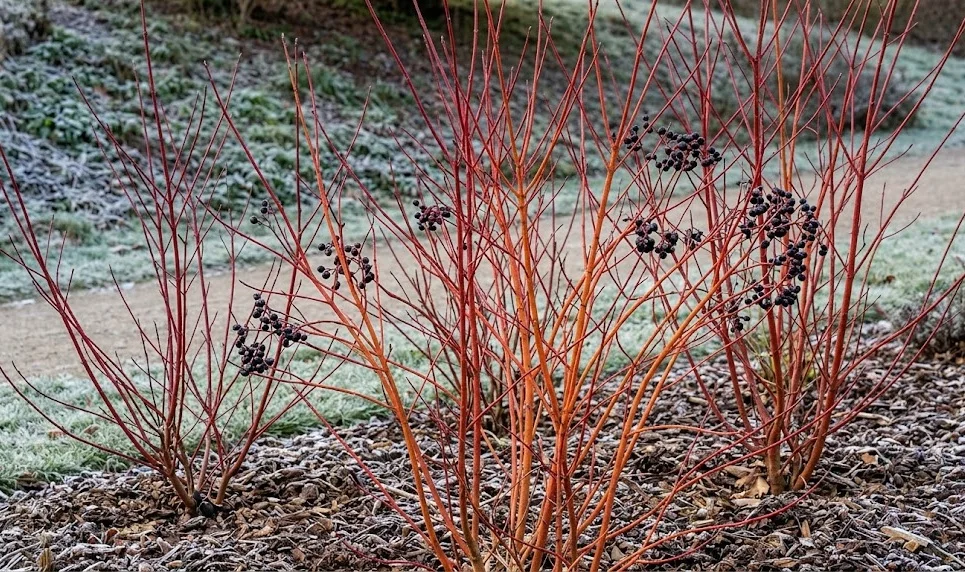
The plant’s ornamental value changes with the seasons, which is why it should not be judged only during flowering. In spring and early summer, flat clusters of small flowers attract pollinating insects and add a soft brightness to the shrub. Later, the foliage becomes a calm green backdrop, and the berries provide interest for birds rather than dramatic garden colour. During winter, young stems often display the richest reddish tones, especially when the plant receives enough light and is regularly renewed.
Its root system is generally robust and adaptable, allowing the shrub to cope with a range of soils. It performs best where the soil is moderately fertile, moisture-retentive, and not extremely dry for long periods. Heavy soils are usually tolerated if they do not remain stagnant and airless around the roots. Very poor, compacted, or sharply draining soils reduce growth quality and may weaken flowering, foliage density, and stem colour.
More articles on this topic
Because common dogwood is vigorous, it should be treated as a structural shrub rather than a delicate accent plant. It works particularly well at the back of a border, along boundaries, in wildlife gardens, and in informal screens. It can also stabilize slopes or fill difficult corners where more refined shrubs struggle. The key is to place it where its natural energy can be used rather than constantly fought.
Site selection and soil preparation
A good site begins with enough room for both height and spread. Common dogwood can be pruned, but it should not be squeezed into a narrow space where every new shoot becomes a problem. Allowing sufficient air movement around the shrub reduces disease pressure and helps leaves dry quickly after rain. Spacing also makes maintenance easier, especially when older stems need to be removed at the base.
The soil should be prepared deeply enough to encourage early root establishment. Before planting, loosen compacted ground and incorporate mature compost if the soil is poor or structureless. Compost improves water retention in sandy soils and helps heavier soils become more workable. Fresh manure or excessive fertilizer should be avoided at planting because it can encourage soft growth before the roots are ready to support it.
Common dogwood is not usually fussy about soil pH, which makes it useful in many gardens. It can grow in neutral, slightly alkaline, and mildly acidic soils as long as drainage and moisture are balanced. The plant dislikes extreme stress more than it dislikes a particular soil type. A site that becomes bone dry in summer or waterlogged for weeks in winter will cause more trouble than a modest variation in pH.
More articles on this topic
Mulching after planting is one of the simplest ways to improve long-term care. A layer of organic mulch helps stabilize soil temperature, conserve moisture, and reduce weed competition around young plants. The mulch should be kept slightly away from the stems so the crown remains airy and does not rot. Renewing the mulch each year also feeds the soil gradually without forcing growth.
Water management through the seasons
Newly planted common dogwood needs consistent moisture during its first growing season. The goal is not to keep the ground constantly wet, but to prevent repeated drying around the young root ball. Deep watering is better than frequent shallow sprinkling because it encourages roots to move outward and downward. During warm, windy weather, young plants may need extra attention even when rainfall seems adequate.
Once established, the shrub usually tolerates short dry periods, but prolonged drought can reduce leaf quality and weaken new stem growth. In ornamental plantings where winter stem colour is important, summer stress should not be ignored. A plant that struggles through drought may produce fewer strong young shoots, and those shoots are the stems that create the best winter display. Regular watering during extended dry spells is therefore both a health measure and an aesthetic one.
Heavy soils require a different approach because excess water can be just as damaging as drought. If water stands around the planting area after rain, roots may suffer from low oxygen levels. In such locations, improving soil structure and planting slightly proud of the surrounding grade can help. Drainage problems should be corrected before planting because mature shrubs are harder to rescue once roots have declined.
Autumn moisture is also important, especially after a dry summer. A shrub entering winter with severely dry soil may be more vulnerable to stress during cold winds and fluctuating temperatures. Watering before the ground freezes can be useful for younger plants if autumn rainfall has been limited. This is especially relevant in exposed sites, where winter dehydration can affect stems and buds.
Feeding and soil fertility
Common dogwood usually needs moderate fertility rather than heavy feeding. In garden soil enriched with compost and organic mulch, additional fertilizer may not be necessary every year. Too much nitrogen can produce long, soft shoots that are more vulnerable to pests, weather damage, and poor colour development. Balanced, steady nutrition produces firmer growth and a better-shaped shrub.
If growth is weak, pale, or sparse, the first step is to examine soil moisture and compaction before adding fertilizer. Poor growth is often caused by drought, waterlogging, root restriction, or shade rather than a simple lack of nutrients. A soil test can be useful in professional or large-scale planting, especially where several shrubs show the same symptoms. Correcting the underlying condition usually gives better results than applying feed blindly.
For most gardens, a spring application of mature compost around the root zone is sufficient. This supports microbial activity and improves soil structure over time. If a granular balanced fertilizer is used, it should be applied lightly and kept away from direct contact with stems. Watering after feeding helps nutrients move into the soil and reduces the risk of root irritation.
Feeding should not continue late into the season. Late nitrogen encourages tender growth that may not harden properly before winter. This is especially important where winters are cold or where the shrub is grown for colourful stems. Allowing growth to mature naturally in late summer and autumn improves winter resilience and stem quality.
Pruning for health and appearance
Pruning is central to keeping common dogwood attractive, especially when the red winter stems are a priority. The brightest colour usually appears on young stems, while older stems become darker, thicker, and less vivid. Removing a portion of older growth encourages renewal from the base. This keeps the shrub dynamic rather than allowing it to become a tangled mass of aging wood.
A common method is to remove some of the oldest stems near ground level in late winter or early spring. This opens the plant, improves airflow, and makes room for young shoots. In vigorous specimens, more substantial coppicing can be used, but it should be matched to the plant’s strength and the gardener’s purpose. Hard pruning produces strong young stems but temporarily reduces flowers and fruit because much of the flowering wood is removed.
Light shaping can be done after flowering if the shrub is used in a more formal setting. However, repeated trimming of the outer surface can create a dense shell with dead and congested wood inside. Selective pruning is usually better than shearing because it respects the natural framework of the plant. Removing crossing, damaged, or weak stems also reduces future disease and breakage problems.
Tools should always be sharp and clean. Ragged cuts heal poorly and can create entry points for disease organisms. Cuts should be made close to the base or to an appropriate side shoot without leaving long stubs. After pruning, remove debris from around the shrub because dead twigs and fallen leaves can shelter pests and fungal spores.
Managing seasonal interest and wildlife value
Common dogwood is highly valuable in gardens designed for biodiversity. Its flowers provide nectar and pollen for a range of insects, while its berries are used by birds and other wildlife. Dense growth can also offer shelter and nesting opportunities in informal plantings. This makes the shrub especially useful in hedgerows, wildlife corridors, and mixed native-style borders.
To support wildlife, avoid pruning all shrubs hard every year if berries and shelter are important. A rotational approach works better in naturalistic plantings, where some stems are renewed while others are left to flower and fruit. This creates a balance between ornamental stem colour and ecological function. It also prevents the entire planting from losing structure at once.
The shrub combines well with grasses, perennials, and other deciduous shrubs that share similar soil conditions. Plants with contrasting winter stems, evergreen foliage, or seed heads can extend the seasonal value of the border. In larger plantings, common dogwood can be grouped for stronger winter impact. In smaller gardens, a single well-pruned shrub can still provide structure without overwhelming the design.
Because the berries are part of the plant’s ecological role, chemical use should be minimized. Broad-spectrum insecticides can harm beneficial insects and disrupt the natural balance around the shrub. Healthy soil, good spacing, and regular observation are more sustainable than routine spraying. A resilient plant community usually manages minor pest activity without serious damage.
Long-term maintenance and renewal
Over time, common dogwood can become woody, broad, and congested if left entirely unmanaged. This is not a sign that the shrub is unsuitable, but it does mean renewal should be part of its care plan. Every few years, old stems can be removed to restore vigour and shape. In neglected shrubs, rejuvenation may need to be staged over two or three seasons to avoid excessive shock.
The base of the plant should be inspected regularly. Strong new shoots emerging from the crown are valuable and should usually be preserved unless they are badly placed. Weak, spindly, or diseased shoots can be removed to concentrate energy into better growth. This selective approach creates a healthier framework and improves visual quality.
Weed control remains important even after establishment. Perennial weeds competing at the base can reduce water and nutrient availability, especially during dry weather. Hand weeding and mulching are preferable to aggressive cultivation, which may damage shallow roots. Keeping the root zone clean also makes it easier to monitor moisture, pests, and stem health.
A well-cared-for common dogwood can remain useful for many years. Its beauty lies in a combination of toughness, seasonal transformation, and responsiveness to pruning. When planted in the right place and maintained with a steady hand, it offers far more than a simple background shrub. It becomes a living framework that supports colour, wildlife, and garden structure throughout the year.