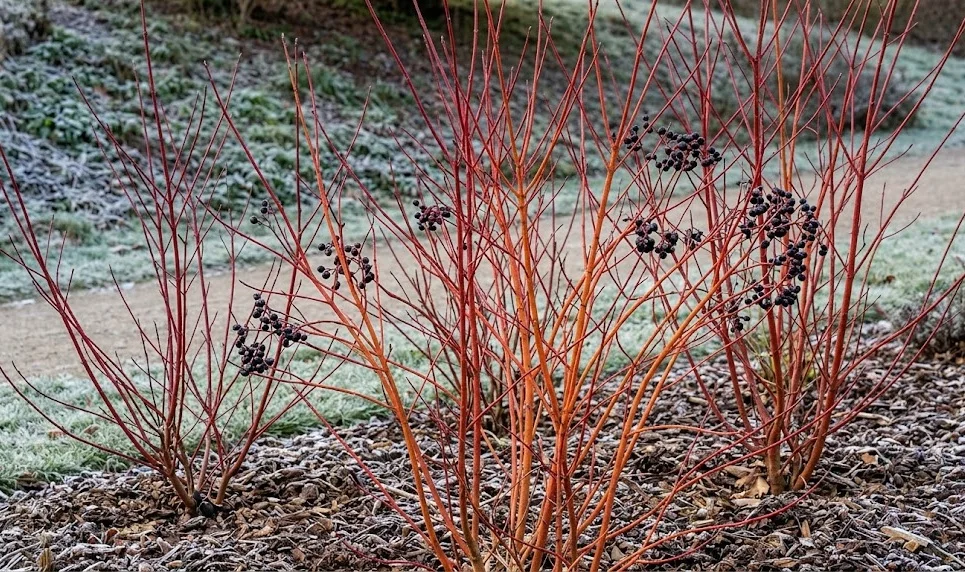

Light has a direct influence on the shape, flowering, stem colour, and overall density of common dogwood. Although this shrub is adaptable and can tolerate partial shade, it performs most impressively where it receives enough sunlight to support strong young shoots. The famous red winter stems are usually brighter when the plant grows in good light, especially after regular renewal pruning. Understanding light exposure helps place the shrub where its ornamental and ecological qualities can develop fully.
Full sun and strong growth
In full sun, common dogwood usually grows vigorously and forms a dense framework. Good light supports photosynthesis, which allows the shrub to produce strong stems, healthy foliage, and reliable flowering. Young shoots often mature better in sunny positions, improving their winter colour. A sunny site is particularly valuable when the shrub is grown as a winter feature.
Full sun also encourages better branching from the base when the plant is pruned. This is important because the youngest stems usually provide the best colour. When a shrub receives enough light, renewal growth tends to be stronger and more upright. The result is a cleaner, more vivid winter display.
However, full sun increases water demand. In dry, sandy, or exposed soils, strong light can combine with heat and wind to create drought stress. Leaves may dull, curl, or scorch at the margins if the roots cannot supply enough moisture. Mulching and deep watering during prolonged dry periods help balance the benefits of sunlight.
A sunny position is ideal only when the soil can support the growth it encourages. If the soil is shallow or very dry, partial shade may actually produce a healthier shrub. The best site is not simply the brightest one, but the place where light and moisture remain in balance. This practical balance is especially important in increasingly hot summers.
More articles on this topic
Partial shade and balanced performance
Common dogwood often performs well in partial shade, particularly where it receives several hours of direct light each day. Morning sun with afternoon shade can be excellent in warmer gardens. This exposure reduces heat stress while still supporting good growth. It can also protect foliage from scorching during intense summer weather.
In partial shade, flowering may remain good if the shade is not too dense. The shrub can still provide valuable habitat, seasonal foliage, and a degree of winter stem colour. Growth may be slightly looser than in full sun, but it can still be attractive and healthy. The key is to avoid deep, permanent shade from buildings or evergreen trees.
Moisture retention is often better in partial shade. Soil dries more slowly, which can benefit young plants and shrubs growing in lighter soils. This can reduce the need for frequent watering during establishment. It also helps the plant maintain leaf quality through summer.
Partial shade is useful in mixed borders and woodland-edge plantings. Common dogwood can form a transition between open garden spaces and taller trees. It looks natural near other shrubs that tolerate similar conditions. With selective pruning, it can maintain a graceful shape without becoming too dense.
More articles on this topic
Problems caused by insufficient light
Deep shade reduces the ornamental value of common dogwood. Stems may stretch toward available light, creating a thin and uneven habit. Flowering can decline, and the winter stem colour may become duller. The shrub may survive, but it will not show its best qualities.
Dense shade also slows drying after rain. Leaves that remain damp for long periods are more likely to develop fungal spotting. Crowded shade can further reduce airflow, creating a humid interior. Pruning can help, but it cannot fully compensate for unsuitable light.
Competition is another issue in shaded positions. Large trees and shrubs often compete strongly for water and nutrients as well as light. Common dogwood may cope for a time, but growth can become weak if roots are constantly outcompeted. Mulching and occasional watering help, but severe competition should be avoided.
If a shrub is already planted in too much shade, improvement may be possible. Nearby branches can sometimes be lifted or thinned to admit more light. The dogwood itself can be opened by removing old or crowded stems. If conditions remain too dark, transplanting while the shrub is young may be the best long-term solution.