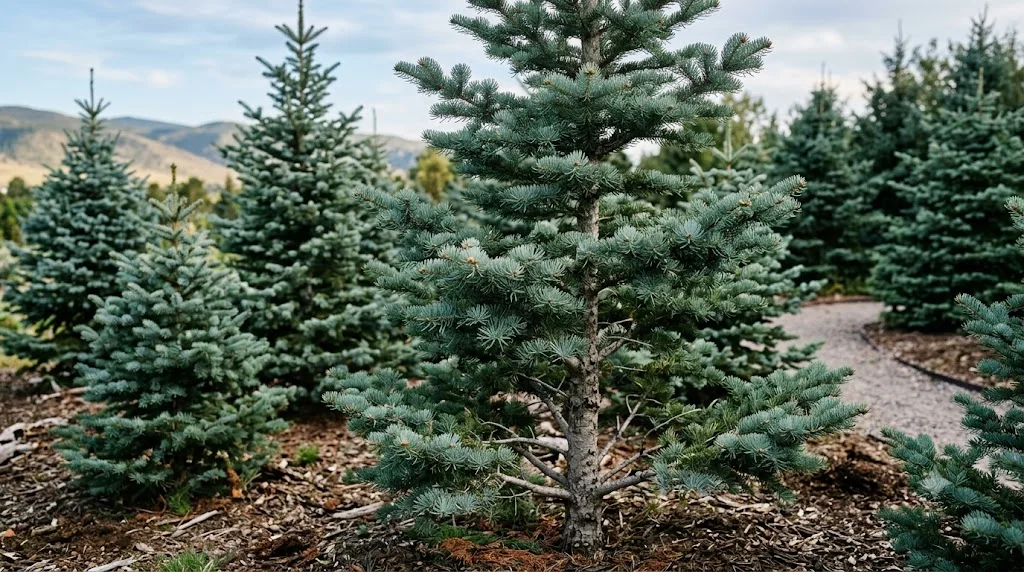

Colorado white fir develops its best root system when water and nutrients are supplied according to actual need rather than a fixed routine. Young trees need reliable moisture during establishment, while mature specimens generally require irrigation only during extended dry periods. Fertilizer should support healthy growth without producing weak, excessively soft shoots. Careful observation of soil conditions is therefore more important than frequent product application.
Watering newly planted trees
A newly planted Colorado white fir depends heavily on the original root ball until new roots enter the surrounding soil. Water must reach the complete depth of that root ball rather than wetting only the surface. Slow application allows moisture to soak in evenly and reduces runoff. The surrounding soil should also be moistened so new roots are encouraged to expand outward.
Watering frequency varies with temperature, rainfall, soil texture, mulch depth, and root-ball size. Sandy soil dries faster than loam, while heavy clay may stay wet for much longer. The upper soil can appear dry even when deeper layers remain saturated. Checking moisture several centimeters below the surface provides a more reliable guide.
During the first growing season, the root zone should not be allowed to dry completely. At the same time, permanently wet soil must be avoided because it limits oxygen and encourages root disease. Deep watering followed by a period of gradual drying is usually better than daily shallow sprinkling. This pattern supports deeper, more resilient roots.
Container-grown trees sometimes have a root ball that resists absorbing water after it has dried severely. Water may run around the outside without penetrating the original potting medium. Applying water slowly in several passes can restore even moisture. Mulching the surrounding area also helps prevent rapid drying after irrigation.
More articles on this topic
Irrigating established specimens
Established Colorado white fir is reasonably drought tolerant, but prolonged drought can still reduce growth and weaken natural defenses. Mature trees benefit from deep watering when the soil has remained dry for an extended period. The water should be distributed across a broad area beneath and beyond the crown. Concentrating irrigation beside the trunk misses much of the active root system.
Occasional deep irrigation is more valuable than frequent surface wetting. Water should penetrate the soil gradually to reach fine roots at different depths. A drip system, soaker hose, or slow sprinkler can work well when positioned correctly. Runoff indicates that the application rate is faster than the soil can absorb.
Hot weather increases moisture loss from the needles, particularly in exposed or reflective locations. Wind also accelerates drying even when air temperatures are moderate. Irrigation decisions should therefore consider the entire microclimate rather than rainfall totals alone. Trees near walls, paving, or slopes may need closer monitoring.
Late-season watering can be especially helpful before the ground freezes in regions with dry autumn weather. Evergreen needles continue to lose moisture during winter whenever conditions allow. Well-hydrated roots improve the tree’s ability to replace some of that loss. Watering should be completed early enough for excess surface moisture to drain before severe freezing.
More articles on this topic
Maintaining healthy soil moisture
Mulch is one of the most effective tools for stabilizing moisture around Colorado white fir. A wide layer of wood chips, shredded bark, or similar organic material reduces evaporation and moderates soil temperature. The mulch should be kept shallow near the trunk and deeper toward the outer root zone. Piling it against the bark creates unnecessary disease and decay risks.
Soil compaction can prevent water from entering evenly and may also restrict oxygen movement. Compacted areas often produce surface runoff even after light irrigation. Protecting the root zone from vehicles, heavy equipment, and repeated foot traffic is essential. Professional aeration may be considered where established soil has become severely compacted.
Drainage must always be evaluated before increasing irrigation. Yellowing foliage, reduced growth, and branch decline can result from excessive water as well as drought. If soil remains wet for many days, additional watering is likely to worsen the problem. Improving surface flow or correcting the site may be more important than adjusting frequency.
Automatic irrigation systems should be inspected regularly because they can conceal both overwatering and inadequate coverage. A system designed for shallow-rooted lawn grass may not water a tree deeply enough. Broken emitters, blocked nozzles, or changed plantings can alter distribution. Manual soil checks remain necessary even when irrigation is automated.
Determining whether fertilizer is needed
A healthy Colorado white fir growing in moderately fertile soil may need little or no supplemental fertilizer. Normal shoot extension, dense foliage, and stable needle color suggest that nutrient supply is adequate. Feeding such a tree heavily will not necessarily improve its appearance. Excess nutrients may instead produce soft growth and increase salt levels around the roots.
Before fertilizing a weak tree, inspect moisture, drainage, planting depth, root damage, and soil compaction. Nutrient deficiency symptoms often resemble stress caused by environmental problems. Fertilizer cannot repair roots that are suffocating in saturated soil. Correct diagnosis prevents unnecessary treatment and further stress.
A soil test can identify important characteristics such as reaction, organic matter level, and major nutrient availability. Foliage analysis may be useful for valuable trees when symptoms remain unclear. These tests help determine whether a genuine deficiency exists and which element is involved. Guessing from needle color alone is unreliable.
When feeding is justified, use a balanced, controlled product suited to woody landscape plants. Apply it across the active root zone according to label directions rather than concentrating it beside the trunk. More fertilizer does not produce better results and can burn fine roots. Water appropriately after application when the product instructions require it.
Planning seasonal nutrition
Early spring is generally the most suitable period for necessary fertilization because root activity and new growth are beginning. Nutrients applied at this time can support natural development during the main growing season. Late autumn nitrogen applications should be avoided where they could stimulate tender growth. The tree should enter winter with mature, hardened shoots.
Organic mulch contributes small amounts of nutrients as it decomposes. This gradual release often supports soil health without creating sudden growth surges. Compost may be used as a thin surface layer when the soil is poor, but it should not be heaped around the trunk. Surface improvement is safer than digging deeply among established roots.
Young trees should not receive strong fertilizer immediately after planting unless a confirmed need exists. Root establishment is more important than rapid shoot extension during the first season. Concentrated salts around damaged or newly handled roots may slow recovery. Adequate water, mulch, and good soil structure usually provide greater benefit.
The most effective watering and feeding program remains flexible from year to year. A cool, wet season demands different management from a hot, dry one. Tree age, soil type, exposure, and recent growth should guide every decision. Consistent observation allows Colorado white fir to grow steadily without the problems caused by excessive intervention.