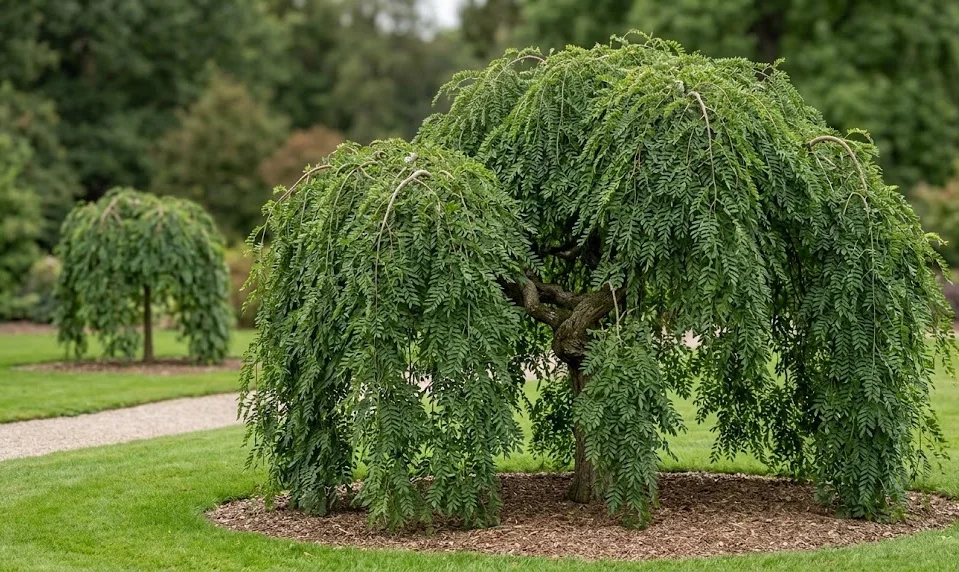

A weeping Japanese pagoda tree needs generous light to build a strong crown, dense foliage, and the elegant hanging structure that makes it valuable in ornamental planting. Although it can tolerate some light shade, it should not be treated as a shade tree for dark garden corners. The quality of light affects branch direction, leaf density, flowering potential, and the overall balance of the canopy. Choosing the right exposure from the beginning prevents many shape and vigor problems later.
Sun exposure and growth quality
Full sun is usually the best condition for a healthy weeping Japanese pagoda tree. In bright light, shoots mature better, foliage is denser, and the crown develops a clearer silhouette. The hanging branches also tend to form more evenly when the tree is not stretching toward one side. Good light supports both strength and beauty.
Light shade may be acceptable, particularly in warm climates where afternoon sun is intense. A position with morning sun and light afternoon protection can work well in dry or heat-prone gardens. The key is that the tree still receives several hours of direct or strong filtered light. Deep, constant shade should be avoided.
In too little light, the tree may grow thin and uneven. Shoots can become elongated, sparse, or weak, and the weeping habit may look untidy rather than graceful. The canopy may also become open, with fewer leaves on inner branches. This reduces the ornamental effect significantly.
Light also influences the health of the foliage. Leaves in brighter, well-ventilated positions usually dry faster after rain. This can reduce conditions favorable to fungal leaf problems. A dark, still, crowded location often increases moisture retention on the leaves.
More articles on this topic
Placement in different garden situations
In open lawns, the tree can receive light from all sides and develop a balanced crown. This is often the best setting for a specimen plant. The weeping outline becomes visible from a distance, and the branches can fall naturally. The surrounding grass or low planting should not compete heavily with the root zone.
Near buildings, the direction of light must be considered carefully. A south-facing or west-facing exposure may be bright and warm, while a north-facing wall may create too much shade. Reflected heat from walls or paving can also increase summer stress. The tree should not be placed where heat and drought combine with restricted rooting space.
In mixed borders, neighboring plants should remain lower and less competitive. Tall shrubs or fast-growing trees can shade the crown and distort the shape. If the weeping Japanese pagoda tree is meant to be the focal point, the surrounding planting should support it rather than crowd it. Space around the canopy is part of the design.
Courtyards can be suitable if they are bright and airy. The tree’s sculptural habit often works beautifully in enclosed garden spaces. However, narrow courtyards with limited sky exposure may not provide enough light. Airflow, reflected heat, and soil volume should all be assessed together.
More articles on this topic
Managing light-related stress
Too much exposure can still cause stress when combined with drought, heat, or poor soil. Young trees in full sun need reliable watering during establishment. Without enough moisture, leaves may scorch at the edges or drop early. Good mulching helps protect the roots in bright, hot positions.
Sudden changes in light can also cause problems. A tree grown in a nursery under partial protection may need time to adjust to a very exposed garden. Planting during mild weather and watering carefully reduces transplant shock. Extreme summer planting in full sun should be avoided when possible.
Uneven light may create an unbalanced crown. If one side receives much more light, growth may become stronger in that direction. Careful formative pruning can help, but it cannot fully compensate for a poor position. Site choice is more effective than later correction.
Observation is the best guide after planting. Dense, healthy foliage and steady shoot growth indicate that the light level is suitable. Sparse leaves, leaning growth, and weak branches suggest that the tree may be receiving too little light or too much competition. Correcting surrounding shade early is easier than restoring a badly distorted mature crown.