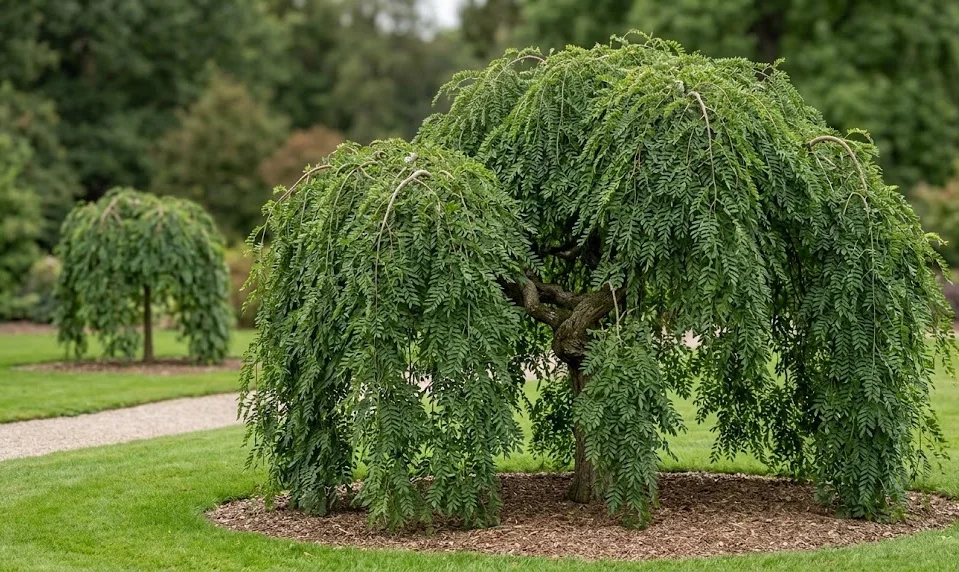

A weeping Japanese pagoda tree is generally a sturdy ornamental tree, but it can still suffer when stress, poor planting conditions, or unfavorable weather weaken its natural defenses. Most disease and pest problems begin as small signals in the foliage, bark, shoots, or root zone. Careful observation is therefore the most reliable form of protection. A healthy site, balanced watering, and restrained pruning reduce many problems before treatment becomes necessary.
Recognizing early warning signs
Leaf discoloration is often the first visible sign that something is wrong. Yellowing, browning edges, spotting, or premature leaf drop may indicate water stress, nutrient imbalance, disease, or root trouble. The pattern of damage helps narrow the cause. Uniform yellowing suggests a different issue from scattered spots or damage concentrated on new growth.
Shoot dieback should always be inspected closely. A few dead twigs may result from winter injury or minor stress, but spreading dieback can indicate a deeper problem. Branches that fail to leaf out in spring should be pruned back to healthy wood. If dieback continues, the root zone and trunk should be examined as well.
Bark damage can create entry points for disease. Cracks, sunscald, mechanical wounds, and poorly made pruning cuts can weaken the tree. Young trees are especially vulnerable because their bark is thinner and their reserves are lower. Protecting the trunk from mowers, trimmers, frost cracks, and animal damage is essential.
Pest problems are easier to control when caught early. Aphids, scale insects, mites, or leaf-feeding larvae may appear on stressed plants. Minor populations may not require strong intervention, but heavy infestations can weaken young trees. Regular inspection of the underside of leaves and tender shoots is a simple but valuable habit.
More articles on this topic
Common pest pressures
Aphids may feed on young shoots and leaves, especially during soft spring growth. They suck sap and can cause curling, sticky honeydew, and reduced shoot quality. Honeydew may also encourage sooty mold on leaf surfaces. Natural predators often control aphids, so treatment should be measured rather than automatic.
Scale insects can be more difficult to notice because they may look like small bumps on stems or leaves. They also feed on sap and can weaken branches over time. Heavy infestations may cause yellowing leaves, poor growth, and sticky deposits. Pruning out badly infested shoots and encouraging plant vigor are important first steps.
Spider mites may become troublesome in hot, dry conditions. Their feeding can create fine speckling, dull foliage, and sometimes delicate webbing. Drought-stressed trees are more vulnerable to mite outbreaks. Improving moisture conditions and avoiding unnecessary pesticide disruption of beneficial insects can help keep populations lower.
Leaf-feeding insects may chew foliage, but light damage is usually more cosmetic than dangerous. The tree can tolerate a limited amount of leaf loss without serious harm. Repeated or severe defoliation, however, should be investigated. Identifying the pest correctly is important before choosing any treatment.
More articles on this topic
Disease risks and environmental stress
Fungal leaf spots may appear during wet seasons or where air movement is poor. Spots can vary in color and size, and affected leaves may yellow or drop early. Good sanitation helps reduce disease pressure. Removing heavily infected fallen leaves can limit carryover into the next season.
Canker diseases may develop on weakened branches or damaged bark. They often appear as sunken, cracked, or discolored areas on stems. Branches beyond the affected area may decline or die back. Pruning infected wood back to healthy tissue can help, but severe cases may require professional assessment.
Root problems are often linked to poor drainage, deep planting, or overwatering. Symptoms in the crown may include weak growth, wilting, yellowing, and dieback. Because these symptoms can resemble drought, checking the soil is essential. Correcting root-zone conditions is usually more important than applying products to the canopy.
Environmental stress can imitate disease. Heat, drought, compacted soil, late frost, wind exposure, and nutrient imbalance may all cause visible damage. Treating stress symptoms as if they were infectious disease can lead to unnecessary chemical use. The best diagnosis begins with the growing conditions, not only with the leaves.
Prevention through good cultivation
Strong tree health begins with correct planting. A well-drained site, proper planting depth, and adequate spacing reduce many future risks. Trees planted too deeply or in compacted soil often struggle for years. Once a tree is stressed underground, canopy problems become more likely.
Watering should be steady but not excessive. Drought stress can invite pests, while waterlogged soil can encourage root decline. Mulch helps stabilize the root zone and reduces extremes. The mulch should remain loose, moderate, and clear of the trunk.
Pruning should be clean, purposeful, and conservative. Removing crowded or damaged branches improves air circulation and lowers disease pressure. Ragged cuts and unnecessary wounds increase risk. Tools should be sharp, and disinfecting them is wise when disease is suspected.
Garden hygiene also matters. Fallen diseased leaves, dead twigs, and pruned infected material should be removed from the area. Weeds and dense competing plants around the base can hold moisture and hide pests. A clean, open root zone makes monitoring easier and supports healthier growth.
Responsible treatment and recovery
Treatment should match the actual problem. Insecticidal soaps or horticultural oils may help with certain soft-bodied pests, but they must be used carefully and according to label directions. Broad-spectrum pesticides can harm beneficial insects and disrupt natural control. Whenever possible, targeted and low-impact methods should be preferred.
Diseased branches should be removed during suitable weather. Cuts should be made into healthy wood, not just at the visibly damaged edge. Pruned material should not be left under the tree if infection is suspected. Good disposal reduces the chance of reinfection.
A stressed tree often needs recovery care rather than aggressive intervention. Improving watering, mulching correctly, protecting the trunk, and reducing competition may restore vigor over time. Fertilizer should not be used as a quick cure unless nutrient deficiency is clearly involved. Feeding a tree with damaged roots can create additional stress.
Professional help is valuable when symptoms spread quickly or structural branches are affected. Mature ornamental trees can be expensive and difficult to replace, so early expert diagnosis may save the specimen. An arborist can assess root condition, pests, diseases, and structural safety together. This broader view is often more useful than treating isolated symptoms.