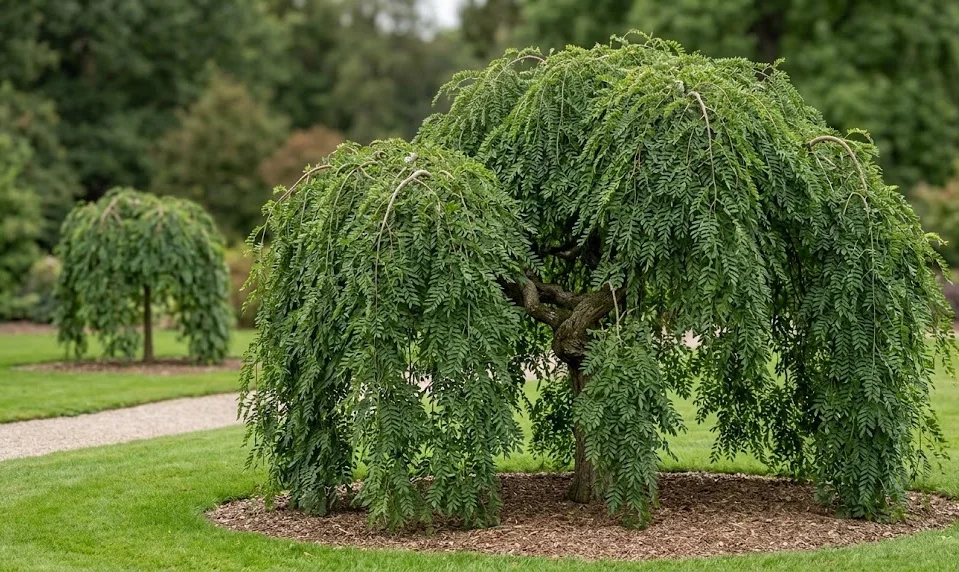

Pruning a weeping Japanese pagoda tree requires a light hand, because the tree’s beauty depends on its natural cascading form. The purpose of pruning is to keep the crown healthy, balanced, and structurally clear, not to turn it into a stiff geometric shape. Poor pruning can leave awkward stubs, remove the best hanging branches, or stimulate unattractive upright growth. Careful timing, clean cuts, and respect for the grafted structure are essential.
Understanding the weeping structure
The weeping crown is the main ornamental feature of the tree. Its branches should descend naturally, creating a soft architectural outline. This form can be ruined if too many hanging shoots are shortened without reason. Before making any cut, the gardener should step back and study the whole silhouette.
Many weeping Japanese pagoda trees are grafted. The graft point is important because it determines where the desired weeping crown begins. Shoots that grow from below the graft may belong to the rootstock and can be more upright or vigorous. These should be removed promptly so they do not overtake the ornamental crown.
The tree may produce crossing or crowded shoots inside the canopy. These branches can rub against each other and create wounds. Removing selected crowded growth improves air circulation and reduces future problems. The aim is to open the crown gently while keeping its natural density.
Young trees often need observation more than pruning. Their shape may look uneven while the crown is still developing. Cutting too much at this stage can delay the formation of a mature framework. Only clearly damaged, misplaced, or rootstock shoots should be removed aggressively.
More articles on this topic
Timing and pruning technique
Late winter or early spring is usually the best time for structural pruning. The tree is still dormant, and the branch framework is easier to see before the leaves emerge. Wounds also begin to close as growth starts. This timing is useful for removing deadwood, crossing branches, and unwanted upright shoots.
Light summer pruning can be used for small corrections. If a branch is broken, diseased, or clearly spoiling the shape, it can be removed during the growing season. However, heavy summer pruning may stress the tree, especially during heat or drought. Major work should wait until conditions are more suitable.
Cuts should be clean and positioned correctly. Branches should be removed just outside the branch collar, without leaving long stubs and without cutting flush into the trunk or main limb. Poor cuts heal slowly and may invite decay. Sharp tools make a noticeable difference in the quality of pruning.
Tools should be disinfected when disease is suspected. This is especially important if cankers, dieback, or suspicious discoloration are present. Cleaning blades between cuts can reduce the spread of pathogens. Good hygiene is a simple professional habit that protects valuable ornamental trees.
More articles on this topic
Cutting back, correction, and long-term shaping
Cutting back should be conservative. Shortening every hanging branch creates a harsh, artificial look and may trigger dense, weak regrowth. Instead, individual branches should be selected based on their position, health, and contribution to the crown. The most graceful weeping lines should be preserved whenever possible.
Branches that reach the ground can be managed in different ways. In formal gardens, they may be lightly lifted to reveal the trunk or allow maintenance underneath. In naturalistic settings, some branches may be allowed to sweep close to the ground for dramatic effect. The decision should match the design purpose and practical use of the space.
If the tree has been neglected, correction should be done gradually. Removing too much wood in one season can weaken the tree and produce a poor response. A staged approach over two or three years is safer for major reshaping. This allows the tree to recover and the gardener to refine the crown thoughtfully.
A mature weeping Japanese pagoda tree should not need frequent hard pruning. Once the framework is established, annual maintenance can be limited to deadwood, rootstock shoots, and small structural adjustments. The best pruning is often almost invisible. When done well, it leaves the tree looking natural, healthy, and quietly elegant.