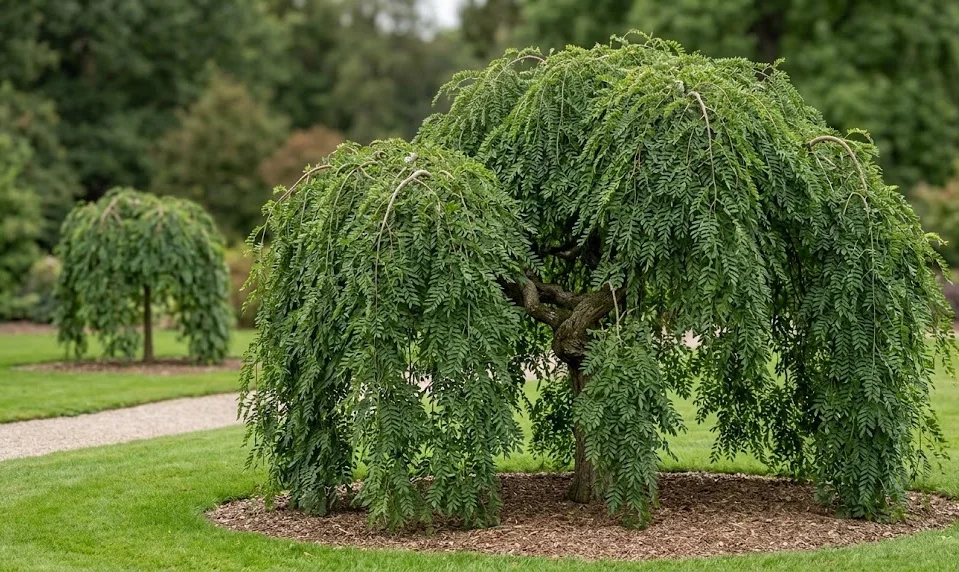

A weeping Japanese pagoda tree is generally capable of handling winter when it is well established, but young trees and recently planted specimens need thoughtful protection. Winter damage often results from a combination of cold, wind, fluctuating temperatures, dry soil, and mechanical injury rather than from frost alone. Preparing the tree properly in autumn helps it enter dormancy in a stronger condition. The best overwintering strategy protects the roots, trunk, and weeping crown without wrapping the plant so tightly that moisture and disease become problems.
Preparing the tree before winter
Autumn watering is an important part of winter preparation. If the weather is dry, the tree should be watered deeply before the ground freezes. Moist soil holds temperature more evenly than dry soil and helps roots remain protected. A dehydrated tree is more vulnerable to winter wind and early spring stress.
Fertilizing should stop well before the end of the growing season. Late feeding may encourage soft shoots that are not ready for cold weather. These tender shoots can be damaged by frost and may die back during winter. Spring and early summer are much safer times for nutrient support.
The root zone should be mulched before hard winter conditions arrive. A moderate layer of organic mulch protects roots from sudden temperature swings. It also reduces moisture loss from exposed soil. The mulch should be kept away from the trunk to prevent bark problems.
The tree should be inspected for weak, broken, or diseased branches before winter. Damaged branches may break under snow or ice, especially in a weeping crown. Light corrective pruning can reduce this risk. Heavy shaping, however, is better left for late winter or early spring.
More articles on this topic
Protecting young and newly planted trees
Young trees are more sensitive because their root systems are not yet fully established. The first two or three winters after planting deserve extra attention. A stable mulch layer and proper watering before freeze-up are usually the most important protections. In exposed locations, wind protection may also be useful.
Trunk protection can help prevent frost cracks, sunscald, and animal damage. A breathable tree guard or light-colored trunk wrap may be used during winter, especially on young trees. It should be removed or checked in spring so it does not trap moisture or restrict growth. Plastic materials that hold water against the bark should be avoided.
Stakes and ties should be checked before winter storms. A loose young tree may rock in strong winds, damaging new roots. At the same time, ties should not be so tight that they cut into the bark. The tree needs support, but it also needs slight movement to strengthen naturally.
Rodent and rabbit damage can be serious during winter. When food is scarce, animals may chew bark near the base of young trees. Protective guards should extend low enough to cover the vulnerable trunk area. Snow can raise the feeding level, so guards may need to be taller in snowy regions.
More articles on this topic
Managing snow, ice, and winter wind
The weeping crown can catch snow differently from upright trees. Wet, heavy snow may weigh down hanging branches and cause bending or breakage. If snow accumulates dangerously, it can be gently brushed off with upward movements. Branches should not be shaken violently, because frozen wood can snap.
Ice is more difficult to manage than snow. Ice-coated branches should usually be left alone, because attempts to remove ice often cause more damage. The safest approach is prevention through good structure and careful pruning before winter. After an ice event, broken limbs can be cleaned up when conditions are safe.
Winter wind can dry shoots and buds, especially when the ground is frozen and roots cannot replace lost moisture. A sheltered planting site greatly reduces this risk. Temporary windbreaks may help young trees in very exposed gardens. These should block harsh wind without enclosing the tree completely.
Avoid using salt near the root zone. De-icing salts from paths and driveways can damage roots and foliage when splashed or washed into the soil. If the tree is near a paved area, snow containing salt should not be piled over its roots. Salt stress may not become visible until spring, when growth begins poorly.
Spring inspection after winter
Spring inspection should begin as soon as severe cold has passed. The trunk, graft area, branches, and root zone should be checked carefully. Cracks, dead shoots, animal chewing, or loosened soil around the base should be noted. Early attention prevents minor winter damage from becoming a long-term problem.
Not all delayed growth means the tree is dead. Some ornamental trees leaf out later than surrounding shrubs and perennials. Before pruning, branches can be checked for flexibility and green tissue beneath the bark. Patience is important, especially after a cold or fluctuating winter.
Winter-damaged shoots should be removed back to healthy wood. Clean cuts help the tree recover and reduce the risk of disease entry. Pruning should be conservative at first, because some buds may still break later. A second light correction can be made once the full extent of damage is clear.
Spring care should focus on recovery, not forcing growth. Moderate watering, renewed mulch, and gentle soil care are usually enough. Heavy fertilizer after winter injury can push weak growth before the roots are ready. A steady return to active growth is healthier than a sudden artificial boost.