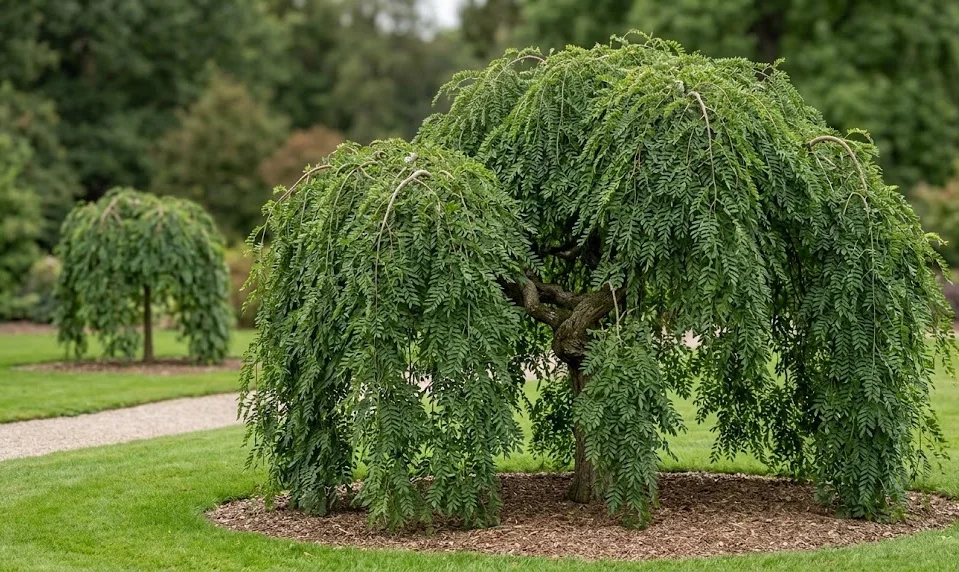

A weeping Japanese pagoda tree brings a calm, architectural presence to the garden, but its graceful crown only develops properly when the tree is given steady, thoughtful care from the beginning. This ornamental tree is valued for its hanging branch structure, refined foliage, and mature character, especially in courtyards, front gardens, and carefully composed landscape beds. Although it is generally resilient once established, young specimens need attentive watering, careful staking, and protection from avoidable stress. Good care is less about constant intervention and more about creating balanced conditions that allow the tree to grow slowly, evenly, and strongly.
Choosing the right garden position
A weeping Japanese pagoda tree performs best in a bright, open position where its canopy can develop without being crowded by walls, fences, or vigorous neighboring plants. Its hanging branches need physical space, because the ornamental effect depends on the free fall of the crown rather than on dense competition. A cramped position may force uneven growth and can make later pruning more difficult. When placing the tree, it is worth imagining its mature outline rather than judging only the size of the young plant.
The site should offer good air movement without exposing the tree to harsh, drying winds all day. Gentle airflow helps the foliage dry after rain and reduces the risk of fungal problems. Constant strong wind, however, may damage young shoots and dry the soil too quickly around newly planted trees. A sheltered but not enclosed position usually gives the best long-term result.
Soil drainage is one of the most important conditions for healthy growth. The tree does not appreciate waterlogged ground, especially during the colder months when roots are less active. Heavy clay can be improved with structural organic matter and careful soil preparation, but the planting hole should never become a water-filled basin. If water remains in the hole for many hours after rain, the site needs improvement before planting.
The visual role of the tree also matters. A weeping Japanese pagoda tree is usually strongest as a specimen plant, where its silhouette can be seen clearly. It works well near lawns, gravel surfaces, low groundcover, or restrained perennial planting. Overly busy surroundings can hide the elegant structure that makes the tree valuable in the first place.
More articles on this topic
Soil quality and root-zone care
Healthy soil supports steady growth and reduces the need for emergency corrections later. The ideal soil is moderately fertile, deep, and well drained, with enough organic matter to hold moisture without becoming compacted. The roots need oxygen as much as water, so the soil should remain open and crumbly. Compacted ground around paths or driveways should be loosened before planting.
Mulching is one of the most useful maintenance practices for this tree. A layer of bark mulch, leaf mold, or composted organic material helps regulate soil temperature and conserves moisture during dry periods. The mulch should be spread over the root zone but kept away from direct contact with the trunk. When mulch is piled against the bark, it can encourage rot and create shelter for pests.
The root zone should not be repeatedly disturbed. Deep hoeing, digging, or planting aggressive perennials too close to the trunk can damage the fine roots that absorb water and nutrients. Shallow-rooted groundcovers are usually safer than plants that require frequent division or heavy cultivation. A quiet, protected root area leads to better establishment and more reliable canopy development.
Soil improvement should be gradual and measured. Too much rich compost or high-nitrogen feeding can encourage soft growth that is more vulnerable to stress. The aim is not rapid expansion, but firm, balanced growth that supports the weeping framework. A well-prepared soil at planting time often matters more than frequent later feeding.
More articles on this topic
Watering throughout the growing season
Young weeping Japanese pagoda trees need consistent watering until their roots have reached into the surrounding soil. The first two or three growing seasons are especially important, because drought stress during this period can limit crown development and weaken new shoots. Water should soak deeply into the soil rather than merely wetting the surface. Deep watering encourages roots to move downward, where moisture remains more stable.
Established trees tolerate short dry spells better, but they still benefit from watering during prolonged heat or drought. Signs of stress may include dull foliage, premature yellowing, or slight wilting during the hottest part of the day. These symptoms should not be ignored, especially in sandy or shallow soils. A slow, thorough watering is usually more effective than frequent light sprinkling.
The timing of watering also influences plant health. Morning watering is generally preferable, because the soil has time to absorb moisture before midday heat becomes intense. Evening watering can also be useful in hot weather, but wet foliage should not remain damp overnight if disease pressure is high. The goal is to water the root zone, not the leaves.
Overwatering is just as damaging as drought. Constantly saturated soil can suffocate roots and make the tree more vulnerable to decline. Before watering again, the upper layer of soil should be checked by hand. If it remains cool and moist below the surface, additional water can usually wait.
Feeding and nutrient balance
A weeping Japanese pagoda tree does not usually need heavy feeding when it is planted in decent garden soil. Excess fertilizer can create long, weak shoots that spoil the balanced form and require unnecessary pruning. Moderate nutrition is much more suitable for an ornamental tree with a refined habit. The best feeding program supports root strength, foliage quality, and gradual woody growth.
In spring, a light application of mature compost around the root zone is often enough. It improves soil life, adds gentle nutrients, and helps moisture retention. If the soil is poor, a slow-release balanced fertilizer may be used carefully according to the product instructions. Strong, fast-acting nitrogen fertilizers should be avoided unless a clear deficiency has been identified.
Leaf color can provide useful clues, but it should be interpreted carefully. Pale foliage may point to nutrient shortage, drought stress, poor drainage, or root damage. Feeding without understanding the cause can make the problem worse. When several symptoms appear together, soil condition and watering should be checked before fertilizer is applied.
Late-season feeding is usually unnecessary and may be harmful. Soft growth produced late in the year may not harden properly before cold weather arrives. This can increase winter injury on young shoots and weaken the structure of the canopy. Nutrient support should focus mainly on spring and early summer, when the tree naturally begins active growth.
Pruning and shaping the weeping crown
Pruning should respect the natural weeping character of the tree. The aim is not to force a rigid shape, but to maintain a clean, balanced framework that allows the branches to hang attractively. Heavy, careless pruning can destroy the elegance of the crown for several seasons. Small, well-considered cuts are usually better than dramatic correction.
Dead, damaged, crossing, or inward-growing branches should be removed when noticed. These branches reduce air movement and can rub against healthier shoots. Clean removal helps prevent wounds from becoming entry points for disease. Sharp, disinfected tools should always be used to make smooth cuts.
The graft union deserves special attention. Many ornamental weeping forms are grafted, and shoots that emerge from below the graft may belong to the rootstock rather than the desired weeping cultivar. These upright or vigorous shoots can quickly spoil the appearance of the tree. They should be removed cleanly as soon as they are identified.
Pruning is usually safest in late winter or early spring, before strong growth begins. Light corrective pruning can also be carried out during the growing season if a branch is damaged or clearly misplaced. Avoid heavy pruning during periods of heat, drought, or active stress. A tree that is already struggling should be stabilized before significant shaping is attempted.
Seasonal maintenance and observation
Spring care begins with a careful inspection of the trunk, crown, and root zone. Any winter damage, cracked bark, dead shoots, or loosened stakes should be checked before growth accelerates. Mulch can be refreshed, but it should remain loose and breathable. This is also a good time to confirm that the tree is not planted too deeply and that the trunk base is visible.
During summer, the main tasks are watering, monitoring, and protecting the tree from stress. Hot periods can dry young trees quickly, especially in exposed gardens. Leaves should be watched for discoloration, spotting, curling, or pest activity. Early detection allows small issues to be corrected before they become serious.
Autumn care should help the tree prepare for dormancy. Fallen leaves can be removed if they show signs of disease, because infected material may carry problems into the next season. Watering may still be needed during dry autumn weather, particularly for recently planted trees. A tree that enters winter well hydrated usually copes better with cold and wind.
Winter maintenance is mostly protective rather than active. Young trees may need guarding against frost cracks, rodent damage, or mechanical injury from tools and snow clearing. Heavy snow should be gently shaken from delicate hanging branches if it threatens to break them. The tree should otherwise be left undisturbed while dormant.
Long-term health and ornamental value
The long-term beauty of a weeping Japanese pagoda tree depends on patience. It is not a plant that should be rushed into a perfect shape within a few years. Its character deepens as the crown matures and the hanging branches form a layered, sculptural outline. Good early care creates the foundation for decades of ornamental value.
Consistency matters more than intensity. Regular observation, correct watering, light pruning, and soil protection are usually enough to keep the tree healthy. Over-management can be as harmful as neglect, especially when pruning or fertilizing is excessive. The tree responds best to stable conditions and calm, seasonal care.
A mature specimen can become a strong focal point in both formal and naturalistic gardens. Its canopy can frame a seating area, soften a paved courtyard, or bring movement to a quiet lawn. Underplanting should remain low and restrained, so the structure of the tree remains visible. The best planting designs let the tree breathe visually and physically.
Problems are easiest to prevent when the gardener understands the plant’s growth habit. The weeping crown, grafted structure, and moderate growth rate all influence care decisions. With the right site and a balanced maintenance routine, the tree becomes surprisingly dependable. Its elegance is the reward for thoughtful, informed gardening rather than constant correction.