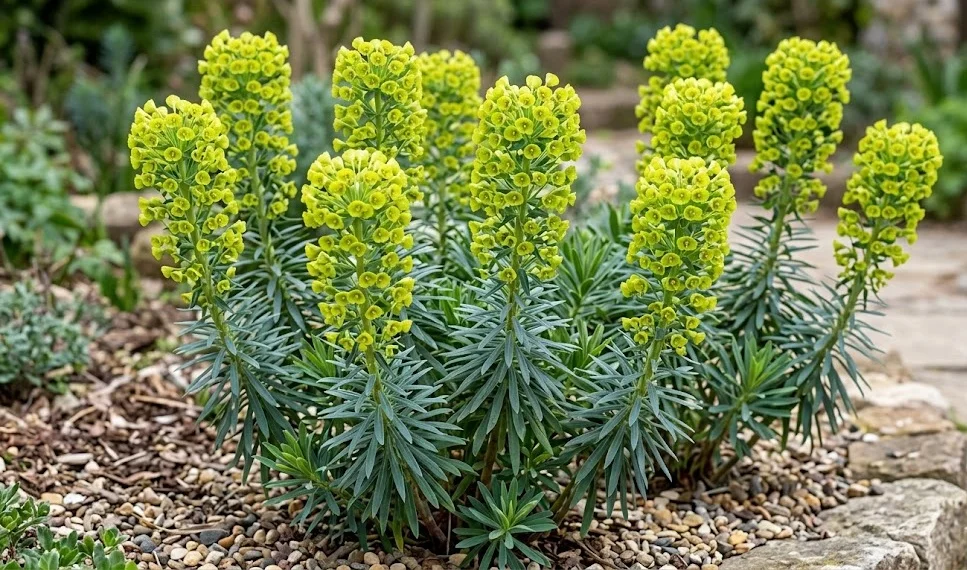

Mediterranean spurge is generally a robust plant when grown in the right place, and many problems begin with unsuitable conditions rather than aggressive pests. Good light, free drainage and moderate fertility are the first line of defence. When the plant is crowded, shaded or kept too wet, its natural resistance is weakened. A professional diagnosis therefore starts with the site before reaching for treatments.
Root and crown problems
Root and crown rot are among the most serious issues for Mediterranean spurge. They are most likely in heavy, wet soil or where the crown is buried too deeply. The plant may yellow, wilt, collapse or fail to produce strong new basal shoots. Because the symptoms can resemble drought stress, soil inspection is essential.
A waterlogged root zone deprives roots of oxygen. Damaged roots then cannot support the top growth, even if the soil is wet. This is why a plant can appear wilted in saturated ground. Watering such a plant again only increases the stress.
Prevention is far more effective than cure. Planting high, improving drainage and avoiding thick wet mulch around the crown all reduce risk. In containers, drainage holes must remain open and the pot should not stand in water. A gritty medium is especially important in winter.
If rot is advanced, removal may be the only practical solution. A collapsing plant should not be composted if disease is suspected. The planting area should be improved before another specimen is installed. Replanting into the same wet conditions will simply repeat the failure.
More articles on this topic
Fungal leaf and stem issues
Fungal leaf spots can occur when foliage remains damp and air movement is poor. Spots may appear on older leaves first, especially inside crowded clumps. While minor spotting is not always serious, it signals that conditions are less than ideal. Dense planting and overhead watering often contribute.
Stem dieback may follow physical damage, winter stress or persistent wetness. Affected stems should be removed with clean tools. Cuts should be made back to healthy tissue without damaging new shoots. Protective gloves and eye care remain necessary because the sap is irritating.
Improving air circulation is often the most effective treatment. Remove old flowering stems after they finish, thin congested neighbouring plants and avoid planting too closely. Water should be directed to the soil, not sprayed repeatedly over the foliage. These cultural measures reduce the environment that fungal problems need.
Chemical control is rarely the first answer in a well-managed ornamental border. Many minor fungal symptoms can be contained through sanitation and corrected growing conditions. If a plant repeatedly suffers, the site is probably too damp or shaded. Moving or replacing the plant may be more professional than repeated intervention.
More articles on this topic
Aphids and sap-feeding insects
Aphids may occasionally gather on tender new growth or developing flower stems. They feed by sucking sap and can cause distorted shoots if populations build up. They may also leave sticky honeydew on foliage. In many gardens, natural predators keep them below damaging levels.
Inspection should focus on young shoots in spring. Early colonies are easier to manage than heavy infestations. A firm jet of water may dislodge small numbers, provided the plant is not damaged. Hand removal is possible, but gloves should be worn because broken shoots release sap.
Encouraging beneficial insects is a sensible long-term strategy. Hoverflies, ladybirds and lacewings all contribute to aphid control. Mediterranean spurge also has value in pollinator-friendly planting when in flower, so broad insecticide use can be counterproductive. A balanced garden usually experiences fewer persistent outbreaks.
If treatment is necessary, it should be targeted and proportionate. Avoid spraying during flowering when pollinators are active. Always choose methods compatible with the wider planting and local regulations. The aim is plant health, not sterile perfection.
Slugs, snails and physical damage
Slugs and snails are not usually the main enemies of mature Mediterranean spurge. The foliage is not as attractive to them as soft, lush growth on many other perennials. However, young seedlings and fresh basal shoots can be damaged in damp conditions. This is more likely in shaded, mulched or crowded areas.
Physical damage from wind, pets, tools or foot traffic can be more significant than pest feeding. Broken stems not only spoil the plant’s outline but also release sap. Repeated damage weakens the clump and opens tissue to infection. Good placement reduces these risks.
Gardeners should avoid working roughly around the crown. Weeding, edging and nearby planting should be done with awareness of brittle stems. A plant set back from busy paths is less likely to be knocked. This is especially important once flower heads become tall and heavy.
Where wind exposure is severe, the plant still needs sun but may benefit from structural companions. Low shrubs, grasses or stones can reduce turbulence without creating shade. Staking is rarely attractive on this plant. Better design usually solves the problem more elegantly.
Preventive plant health management
The healthiest Mediterranean spurge is usually the one grown in the most suitable conditions. Full sun, drainage, space and moderate nutrition prevent many problems before they appear. This plant should not be forced into damp shade and then treated repeatedly for the consequences. Cultural fit is the foundation of disease resistance.
Sanitation is also important. Remove spent stems, fallen leaves and rotting debris from the crown. Clean tools after pruning, especially if any dieback is present. These small habits reduce the spread of pathogens and keep the plant visually fresh.
Monitoring should be regular but calm. Not every blemish requires intervention, and older leaves naturally decline. The key is to notice patterns, such as repeated collapse after wet winters or aphids appearing every spring in a sheltered corner. Patterns reveal the underlying cause.
Replacement should be viewed as part of professional maintenance. Mediterranean spurge can be long-lived, but individual plants may decline after several seasons. Raising cuttings or keeping selected seedlings ensures continuity. This approach keeps the planting strong without relying on exhausted specimens.