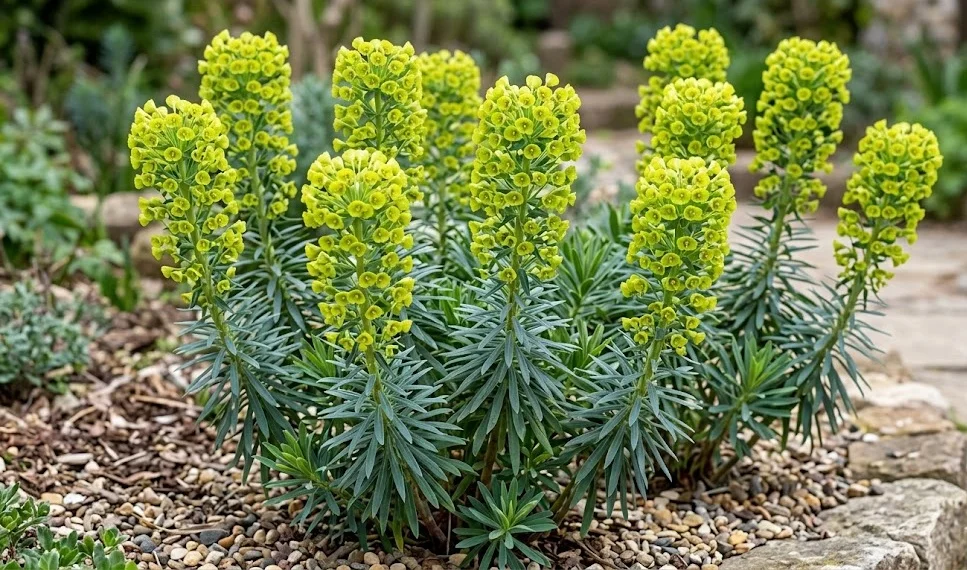

Pruning Mediterranean spurge is a matter of renewal, not shaping it into a formal shrub. Each flowering stem has a life cycle, and the gardener’s job is to remove spent stems while preserving strong young shoots from the base. The plant should never be clipped casually into a mound, because that destroys its natural structure and can expose the crown. Safe handling is essential because cut stems release irritating milky sap. RHS+1
When to prune
The main pruning moment comes after flowering. Once the spring bracts fade and the stems begin to look tired, old flowering stems can be removed. This gives space and light to young basal shoots. It also prevents the plant from becoming congested and woody.
Timing should be adjusted to the local climate. In mild gardens, pruning can often be done soon after the display declines. In colder or wetter areas, avoid cutting so late that tender regrowth is exposed to winter. The aim is to work with the plant’s growth rhythm rather than against it.
Do not cut all stems automatically. Some stems may still be useful if they have not flowered or if they are supporting the plant’s structure. A selective approach creates a better result than a blanket cut. Look closely before making each cut.
Avoid pruning during very hot, dry stress or during freezing weather. Stressed plants recover more slowly, and cut tissue may suffer further damage. A dry, mild day is usually preferable. Good conditions reduce both plant stress and disease risk.
More articles on this topic
How to cut correctly
Wear gloves, long sleeves and eye protection before cutting. The milky sap can irritate skin and eyes, and accidental contact should be avoided. Secateurs should be sharp so stems are cut cleanly. Ragged cuts heal poorly and look untidy.
Remove spent flowering stems near the base without damaging new shoots. The replacement shoots are often clustered around the crown and can be brittle. Cutting too quickly may remove the very growth needed for the next display. Slow, deliberate pruning is the professional method.
Do not shear the plant across the top. Shearing leaves cut stems, damaged foliage and an unnatural outline. It can also encourage dense, weak regrowth in the wrong places. Mediterranean spurge looks best when its individual stems remain readable.
Clean tools after pruning. Sap residue can remain on blades and handles. Cleaning is also good plant hygiene, especially if any dieback or disease was present. This habit protects both the gardener and the rest of the planting.
More articles on this topic
Renovation and long-term cutting back
Older plants may become woody, open or misshapen. If there are strong basal shoots, gradual renovation can restore the clump. Remove the oldest stems first and allow younger growth to take over. This avoids shocking the plant with one severe cut.
If few new shoots are present, hard cutting may not solve the problem. An exhausted crown may respond weakly or not at all. In that case, propagation or replacement is often more reliable. Mediterranean spurge should be renewed before it becomes completely worn out.
Seed control can be part of pruning. Removing spent flower heads before seed ripens reduces self-sowing. This is useful in small gardens or where seedlings would disrupt a formal design. In naturalistic plantings, some seedling recruitment may be welcome.
Cut material should be handled carefully. Do not leave fresh stems on paths or lawns where people or animals may touch them. Move waste directly to a safe disposal area. Pruning is simple, but the sap means it should never be careless.