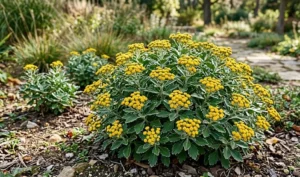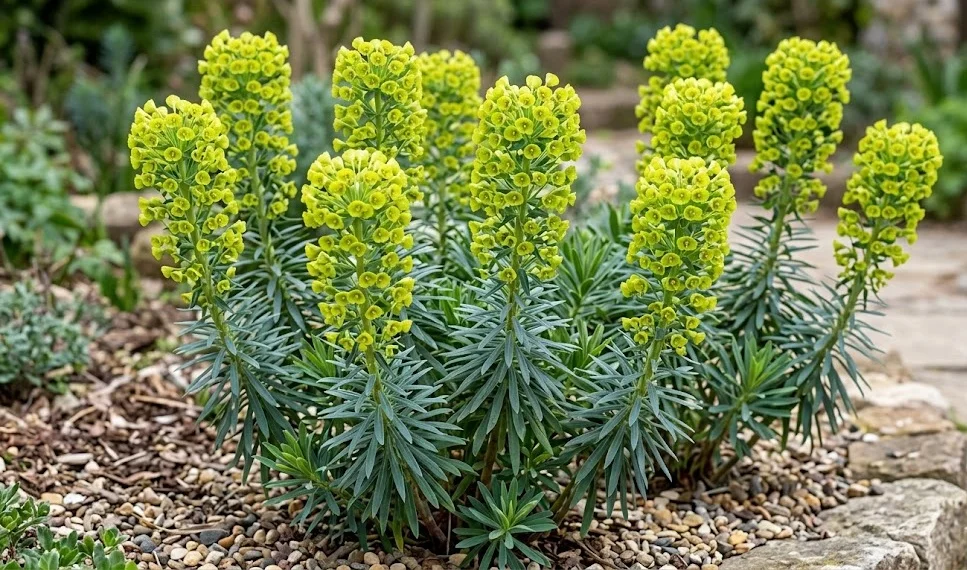

Mediterranean spurge performs best when light is treated as a central cultural requirement, not a decorative preference. Its upright stems, blue-green leaves and spring bracts all develop more strongly in open, bright positions. Full sun is generally the safest recommendation, especially in climates that are not extremely hot. Where light is insufficient, the plant often becomes loose, leaning and less floriferous. RHS+1
Full sun and plant structure
Full sun encourages compact, sturdy growth. The stems mature more firmly, and the plant keeps the architectural outline that makes it valuable in design. Blue-green foliage also looks cleaner and more intense in strong light. This is why the plant is so often associated with gravel gardens and open Mediterranean borders.
Flowering is closely linked to light quality. In a sunny position, the spring bracts develop with better density and colour. The plant also tends to produce stronger replacement shoots at the base. These shoots are essential for long-term renewal.
Sunlight helps keep the crown drier after rain. This reduces the damp, stagnant conditions that favour disease. A shaded plant may remain wet for longer, especially in still air. For a drought-adapted plant, this can be more harmful than moderate summer heat.
Full sun does not mean neglecting establishment. Young plants still need enough water to root during their first season. Once established, however, they usually cope well with bright exposure if the soil drains properly. The combination of sun and drainage is more important than either factor alone.
More articles on this topic
Partial shade and regional variation
Light afternoon shade can be useful in very hot climates. It may reduce leaf stress during heatwaves and help container plants avoid extreme drying. The shade should be open and bright rather than dense. Morning sun with light afternoon protection can work well in harsh summer regions.
In cooler or cloudier climates, partial shade is less suitable. The plant may stretch toward light and lose its firm habit. Flowering can become weaker, and stems may lean outward. In these conditions, the brightest available site is usually best.
Shade from neighbouring plants often develops gradually. A young border may begin open and sunny, then become crowded as shrubs and perennials mature. Mediterranean spurge can decline slowly under this increasing competition. Regular editing of nearby plants helps preserve light and airflow.
Walls and paving can influence light and heat. A south-facing wall may create excellent conditions in cool regions but excessive heat in very warm ones. Reflected light from gravel or pale stone often benefits the plant. These microclimates should be used thoughtfully.
More articles on this topic
Signs of incorrect light exposure
A plant receiving too little light often becomes tall, open and weak. Stems may lean, and the lower part of the clump may look bare. Flower heads can be smaller or fewer than expected. These symptoms are frequently mistaken for feeding problems.
Too much shade also increases moisture-related stress. Soil dries more slowly, leaves remain damp longer and air movement may be reduced. This combination encourages fungal issues and poor winter survival. Moving the plant is often better than trying to compensate with pruning.
In very intense sun, young or container-grown plants may show leaf scorch or temporary wilting. This is most common before roots are fully established. Improving watering depth and reducing reflected heat can help. Mature plants in the ground usually cope better if drainage is good.
The best correction is based on observation over a full season. If the plant flowers well, stands firmly and produces new basal shoots, the light is probably suitable. If it repeatedly flops, flowers poorly or suffers damp-related decline, light and site should be reassessed. Mediterranean spurge is forgiving in many ways, but it cannot perform at its best in deep shade.