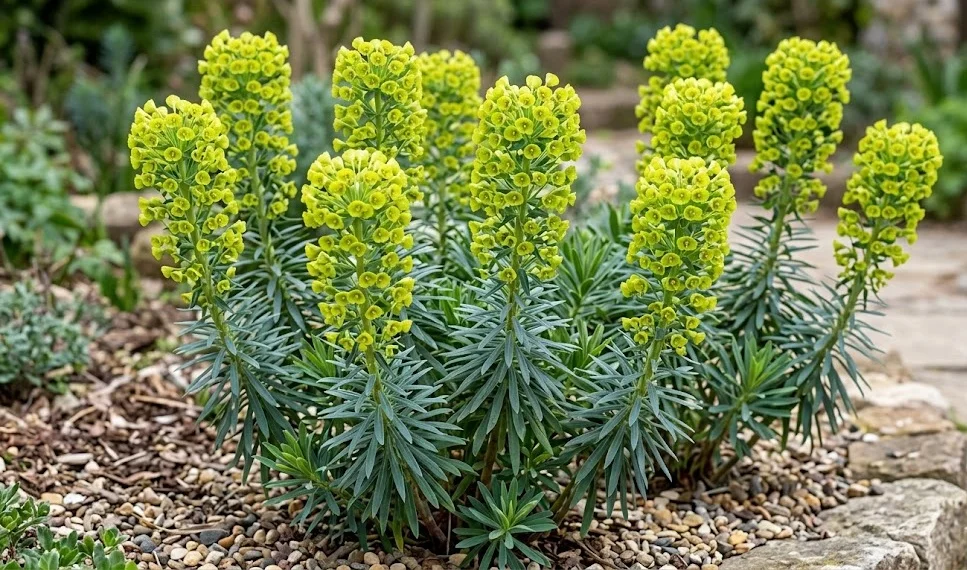

Mediterranean spurge is often described as drought tolerant, but that phrase should be understood correctly. It does not mean the plant should be neglected immediately after planting, nor does it mean a container-grown specimen can survive indefinitely without attention. It means that once roots are established in suitable soil, the plant generally prefers restrained watering and moderate fertility. The most common mistake is giving it the moist, rich treatment better suited to lush bedding plants. rhsplants.co.uk+1
Watering after planting
Newly planted Mediterranean spurge needs a careful establishment period. The first watering should be deep enough to settle soil around the root ball. After this, the gardener should allow the upper soil to begin drying before watering again. Constantly wet soil can slow root development and increase the risk of root problems.
The frequency of watering depends on soil texture and weather. Sandy soil drains quickly and may require more checks during warm spells. Clay soil holds moisture longer and should be watered with much more caution. The goal is to encourage roots to move outward and downward, not to keep the surface permanently damp.
Deep, occasional watering is usually better than light daily sprinkling. A deep watering reaches the root zone and supports resilient growth. Shallow watering evaporates quickly and can create soft surface roots. This difference is especially important during the first summer.
Observation is more reliable than a fixed calendar. If leaves remain firm and the soil below the surface is slightly moist, watering can wait. If young growth wilts during a prolonged dry period and the root zone is dry, a thorough watering is appropriate. Learning this balance is central to successful cultivation.
More articles on this topic
Watering established plants
Once established, Mediterranean spurge usually needs little supplementary water in open ground. Its foliage and growth habit are adapted to bright, relatively dry conditions. Overwatering can make stems softer and less stable. It can also reduce the plant’s natural durability.
In climates with regular summer rainfall, irrigation may not be necessary at all. In hot, dry regions, occasional deep watering may help maintain appearance during extreme drought. Even then, the soil should be allowed to drain and dry between waterings. The plant should never be managed like a moisture-loving perennial.
Winter watering is rarely needed in the ground. In fact, winter wet is more dangerous than short summer dryness. If the plant declines in winter, the cause is often poor drainage rather than drought. Keeping the crown dry is a higher priority than adding moisture.
Mulching can influence watering needs. Gravel mulch helps conserve some soil moisture while keeping the surface open and dry. Thick organic mulch can hold too much dampness near the crown. For Mediterranean spurge, mineral mulches are usually the better match.
More articles on this topic
Feeding in garden soil
Mediterranean spurge does not require heavy feeding. In moderately fertile soil, it can grow and flower well without routine fertiliser. Overfeeding may produce long, soft stems that lean or split. It can also make the plant look coarse rather than architectural.
If the soil is extremely poor, a light feeding in spring may be enough. A balanced, slow-release fertiliser used sparingly is safer than repeated liquid feeds. The aim is to support steady growth, not rapid lushness. Strong colour and firm stems are better indicators of success than sheer size.
Compost should be used for soil structure rather than as a rich blanket around the crown. A small amount worked into poor soil before planting can be helpful. Annual heavy composting is usually unnecessary and may retain excess moisture. This is especially true in cool, damp climates.
Plants growing among other drought-tolerant species benefit from a consistent low-input regime. Lavender, rosemary, santolina and ornamental grasses do not want rich, wet soil either. Managing the whole bed as a lean planting system produces better harmony. It also reduces disease and maintenance pressure.
Feeding container-grown plants
Container-grown Mediterranean spurge has different needs because roots cannot explore a wide soil volume. Nutrients leach from pots more quickly than from garden soil. Even so, feeding should remain moderate. Too much fertiliser in a container can create rapid top growth that the restricted root system cannot support.
A gritty, free-draining potting mix is essential. Feeding should begin only once the plant is actively growing and settled. A light spring application of controlled-release fertiliser is often sufficient. Liquid feeding, if used, should be dilute and occasional.
Watering and feeding are closely linked in containers. A pot that is watered frequently will lose nutrients faster, but frequent watering may also signal that the potting mix is too light or the container too small. A mature plant in a cramped pot may need repotting rather than stronger feeding. Root health should always be considered before adding fertiliser.
In winter, feeding should stop. The plant needs firm, mature growth to withstand cold and damp conditions. Late feeding can encourage tender shoots that are more vulnerable to damage. A container should be kept bright, drained and slightly on the dry side during the dormant or slow-growth season.
Recognising imbalance
A thirsty young plant may wilt, but a waterlogged plant can also look weak. This is why checking the soil is essential before reacting. Yellowing leaves, collapsing stems and a sour smell from the root zone suggest excess moisture rather than drought. Adding more water in that situation makes the problem worse.
Soft, floppy stems often indicate too much shade, too much nitrogen or too much water. These factors can work together, especially in fertile borders with automatic irrigation. A plant grown leaner and brighter usually has a better framework. Correcting the growing conditions is more effective than trying to prop up weak stems.
Poor flowering may result from insufficient sun, excessive feeding or overly wet soil. Mediterranean spurge flowers best when growth is firm and seasonal rhythms are clear. A plant pushed into lush leaf production may produce less impressive bracts. Restraint is therefore a productive form of care.
Healthy plants have firm stems, clean foliage and a steady supply of new basal shoots. They do not need to look artificially lush to be performing well. In dry-garden planting, compact strength is more desirable than soft abundance. Water and fertiliser should be used to support that strength, not undermine it.