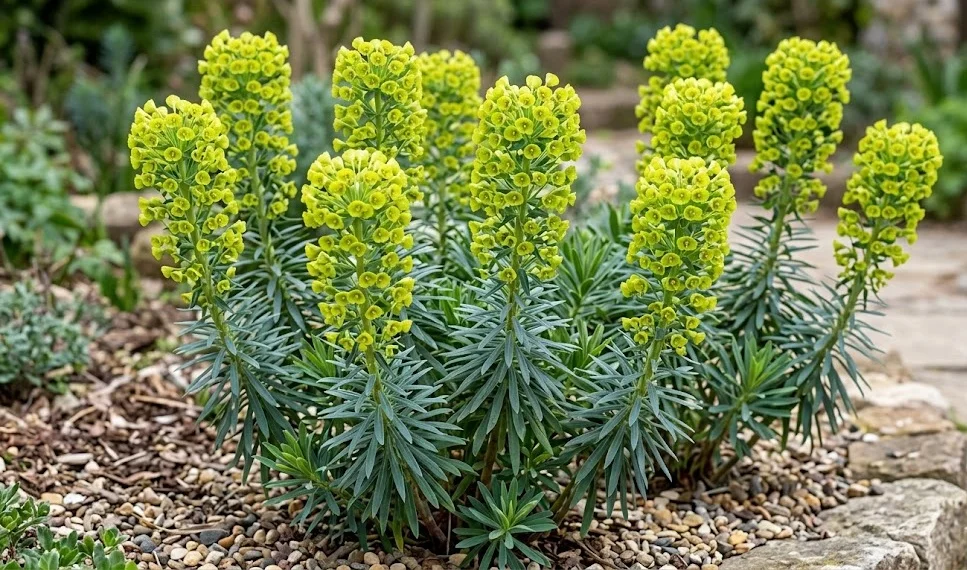

Mediterranean spurge is often hardy in suitable gardens, but winter success depends strongly on drainage, exposure and the maturity of the plant. Cold alone is not always the main threat. A wet crown, saturated roots and icy winds can do more damage than a short period of low temperature. Preparing the plant for winter therefore means keeping it firm, open and dry rather than wrapping it like a tender tropical. missouribotanicalgarden.org+1
Preparing plants before winter
Preparation begins in late summer and early autumn. Avoid heavy feeding at this stage, because late soft growth is more vulnerable to cold and wet. The plant should enter winter with firm stems and mature tissue. A lean regime produces stronger overwintering growth.
Remove debris from around the base before persistent wet weather arrives. Fallen leaves can trap moisture against the crown and create a sheltered place for decay. This is especially important under deciduous trees or near large shrubs. A clear crown dries faster after rain.
Do not cut the entire plant hard before winter. The existing stems provide structure and some protection to the crown. Severe autumn cutting can expose tender basal growth to weather. Major renewal pruning is usually better after flowering or during active growth, depending on the plant’s condition.
Check drainage before the coldest months. If water collects around the plant after rain, create channels or improve the surrounding surface. In pots, make sure drainage holes are clear and the container is raised from the ground. These practical measures are more useful than decorative winter protection.
More articles on this topic
Managing cold and wet conditions
Mediterranean spurge can tolerate cool weather better when the soil is dry and airy. Wet soil conducts cold and suffocates roots, making damage more likely. A plant in sharp drainage may survive conditions that would harm one in compacted clay. This explains why the same plant can be easy in one garden and unreliable in another.
In colder regions, shelter from harsh drying winds can be helpful. Shelter should not mean shade or stagnant air. A wall, open shrub framework or gravel garden setting can moderate exposure while keeping light levels high. The best winter position is bright, drained and ventilated.
Snow is not always harmful if it is temporary and the soil drains well. Problems arise when snowmelt saturates the crown and then freezes repeatedly. Heavy wet snow can also bend or snap stems. Gently removing excessive weight may prevent breakage, but stems should not be handled roughly.
Frost-damaged leaves may look unattractive before the plant is truly dead. Wait until growth resumes before making final decisions. Premature cutting can remove stems that would otherwise recover or support new shoots. Patience is a useful winter skill with semi-evergreen plants.
More articles on this topic
Overwintering in containers
Container plants face more extreme winter conditions than plants in the ground. Roots are exposed to colder air and wider temperature swings. At the same time, pots can become waterlogged if rain repeatedly fills the compost. This combination makes drainage and placement essential.
Move containers to a bright, sheltered position if winter conditions are severe. A spot near a wall, under an open overhang or away from persistent rain can be useful. The plant still needs light and air, so it should not be shut into a dark, damp space. Protection should reduce excess wetness, not create stagnant humidity.
Water sparingly in winter. The compost should not become bone dry for months, but it should never remain saturated. Check moisture below the surface before adding water. Cold, wet compost is one of the greatest risks for container-grown Mediterranean spurge.
The pot itself should be frost-resistant and raised on feet. This allows water to escape freely and reduces freezing around the base. A heavy container also prevents wind from toppling the plant. Stability matters because broken stems release irritating sap and spoil the framework.
Recovery after winter
Spring assessment should be gradual. Remove only stems that are clearly dead, rotten or badly damaged. Healthy basal shoots should be protected, because they form the next season’s structure. Cutting too aggressively can leave the plant thin and slow to recover.
If the plant looks sparse but the crown is firm, give it time. Mediterranean spurge may replace damaged foliage as temperatures rise. A light tidy can improve appearance without sacrificing recovery. The main decision is whether the base is still producing vigorous new growth.
Plants that repeatedly suffer winter damage may be in the wrong site. Moving them to a raised, sunnier or better-drained position can improve performance. In very cold or wet gardens, a container may be easier to manage than open-ground planting. Alternatively, gardeners can treat the plant as a shorter-lived feature and replace it periodically.
After winter, feeding should remain modest. A stressed plant does not need a strong fertiliser push. It needs warmth, drainage and time to rebuild roots and shoots. Once active growth is visible, a light feed may be used only if the soil is genuinely poor.