
Cultivating a thriving bougainvillea requires a deep appreciation for its tropical origins and unique growth habits. These stunning woody vines are celebrated worldwide for their explosive displays of colorful bracts, which are often mistaken for true flower petals. Achieving a spectacular show requires careful attention to environmental conditions and daily maintenance schedules. Experienced growers understand that balancing neglect with targeted intervention is the secret to unlocking the full aesthetic potential of these plants.
The core philosophy of successful management relies heavily on replicating a warm, semi-arid Mediterranean or tropical climate. Root systems are surprisingly delicate despite the robust appearance of mature specimens, making soil structure a critical consideration. Poor drainage or excessive moisture will quickly sabotage growth before any blooms can even form. Consequently, providing an environment that prioritizes aeration and controlled hydration forms the baseline of any professional maintenance strategy.
Vegetative growth must be carefully managed to ensure energy is directed toward bract production rather than endless green foliage. High nitrogen levels can cause the plant to produce massive amounts of leaves while completely failing to bloom. Striking the right balance involves monitoring nutritional inputs and allowing the plant to experience controlled stress levels. This deliberate management technique mimics natural seasonal transitions, prompting the plant to enter its reproductive phase.
Structural support is another vital component that directly influences the health and presentation of the vine. Because these plants lack traditional climbing structures like tendrils, they rely on physical leaning and sharp thorns to ascend surfaces. Gardeners must provide sturdy frameworks or trellis systems to secure the heavy, woody branches safely. Regular check-ups ensure that the plant remains stable and well-positioned to catch the maximum amount of daily sunlight.
Soil quality and container selection strategies
The selection of a growing medium directly dictates the long-term vitality of the root system. A premium mix should consist of coarse sand, perlite, and organic peat moss to guarantee rapid drainage. Heavy clay elements must be avoided completely as they trap stagnant water and promote destructive fungal pathogens. Professional horticulturists often test the soil pH to ensure it remains within the ideal slightly acidic range of 5.5 to 6.5.
More articles on this topic
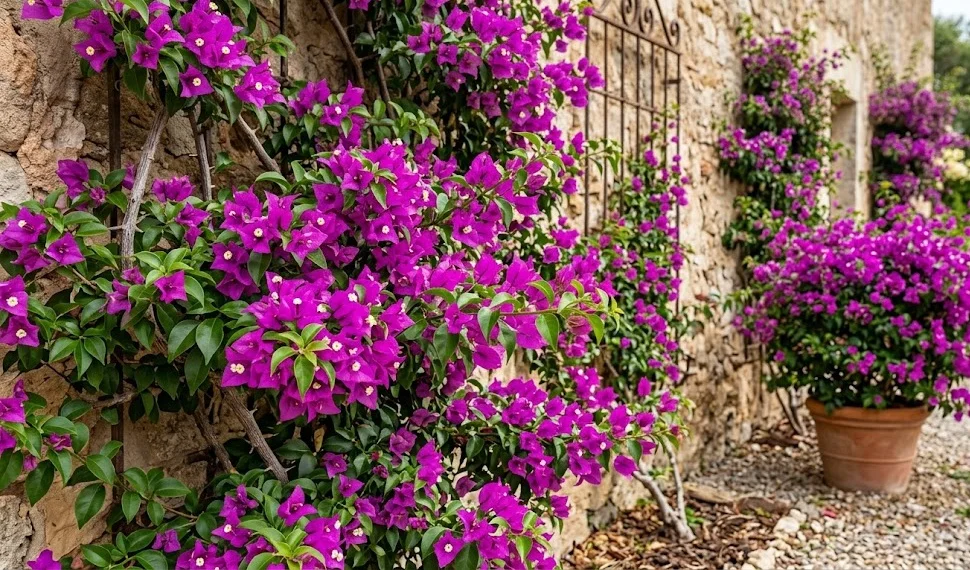
Container choice is equally significant for specimens that cannot be grown directly in open ground due to regional climate variations. Unglazed clay or terracotta pots are highly recommended because their porous walls allow excess moisture to evaporate efficiently. The pot must feature multiple drainage holes at the base to prevent any water accumulation around the delicate roots. Choosing an oversized container can backfire by holding too much moisture, so gradual up-sizing is always the preferred method.
Root confinement actually serves as an effective trigger for more prolific flowering cycles throughout the season. When the root system feels slightly restricted, the vine transitions its energy from expanding underground to producing vibrant aerial displays. This physiological response means that frequent repotting is not only unnecessary but can actively delay blooming for months. A mature specimen can comfortably remain in the same container for several years if top-dressed annually with fresh compost.
Ground-planted vines require careful site preparation to ensure they do not suffer from subterranean water pooling. Creating a raised mound or planting on a gentle slope can significantly improve drainage dynamics in heavy garden soils. Incorporating fine gravel or expanded clay pebbles into the planting hole enhances structural aeration over the years. This proactive approach establishes a stable foundation that allows the root network to expand without risking root rot during heavy rainfall.
Structural training and support management
Guiding the growth of these vigorous vines requires early intervention and robust physical structures. Heavy-duty wooden trellises, wrought iron arbors, or sturdy wire systems anchored to stone walls work best. The main structural canes must be tied loosely with flexible garden tape to prevent the binding material from cutting into the expanding bark. As the plant matures, the wood hardens and begins to hold its own weight, though the upper canopy still needs guidance.
More articles on this topic
Horizontal training is a clever horticultural technique used to maximize the density of the colorful bracts. When branches are trained to grow horizontally rather than vertically, apical dominance is disrupted along the stem. This encourages the development of numerous lateral shoots, each capable of producing a dense cluster of flowers. Utilizing this method allows growers to cover bare walls or fences much more efficiently with a uniform blanket of color.
Regular monitoring of the tying points prevents girdling, which can choke off essential nutrient flow to the upper branches. Winds can cause heavy friction between the thorny stems and the support structure, leading to open wounds. Applying protective buffering materials at high-stress contact points safeguards the plant against physical damage and secondary infections. Keeping a clean line of sight through the structure also helps in identifying any structural failures early on.
Pruning for structural integrity involves removing weak, spindly inner growth that blocks airflow through the center of the vine. A dense, tangled interior creates a humid microclimate that invites pests and compromises overall plant health. Clearing out these non-productive stems ensures that energy is distributed exclusively to strong, sun-facing structural branches. This creates a clean, architectural silhouette that enhances both the aesthetic value and the physical resilience of the plant.
Navigating the blooming cycles and environmental triggers
The spectacular colors associated with this plant are not actually flowers, but specialized leaves known as bracts. The true flowers are small, white, trumpet-shaped blossoms nestled directly within these brightly colored modified leaves. Understanding this distinction helps growers focus on the specific environmental factors that induce bract coloration. The primary trigger for a massive bloom cycle is a combination of intense light, restricted water, and stable temperatures.
A typical blooming cycle lasts for several weeks, followed by a period of vegetative rest and resource accumulation. During the resting phase, the plant focuses on extending its green shoots and strengthening its root system. It is crucial to resist the temptation to overwater during this quiet period in an attempt to force new color. Allowing the plant to naturally transition between these phases ensures long-term vigor and prevents premature exhaustion of the specimen.
Short-day photoperiods can also influence the intensity and timing of the flowering phenomenon in certain geographic regions. As autumn approaches and daylight hours naturally decrease, many varieties experience a surge in bract development. Professional growers can simulate these conditions in greenhouse environments to manipulate blooming times for specific exhibitions. However, under natural conditions, consistent solar exposure remains the most reliable driver of color production.
When a bloom cycle draws to a close, the bracts gradually fade, dry out, and drop from the stems. Cleaning up this fallen debris is necessary to maintain a tidy growing area and prevent mold development. Once the old bracts are shed, a light trim can stimulate the next wave of lateral buds. This continuous management keeps the vine looking refreshed and shortens the time required for the next colorful display to emerge.
Container versus open field cultivation dynamics
Cultivating these tropical vines in containers offers unparalleled control over soil conditions and seasonal mobility. In regions prone to frost, container gardening is the only viable method to ensure the survival of the species. Pots can be moved to optimized sunny locations during the spring and brought indoors before winter temperatures arrive. The main challenge of this approach is the rapid depletion of nutrients and moisture within the limited soil volume.
Open field cultivation allows the plant to reach its true, monumental potential, often swallowing entire facades or climbing high into mature trees. Ground-planted specimens develop deep, resilient taproots that make them highly drought-tolerant once fully established. The trade-off is the absolute requirement for a frost-free climate and naturally excellent soil drainage across the entire site. In the ground, managing the sheer physical size of the vine becomes the primary maintenance task.
Nutrient management varies drastically between these two distinct cultivation methods due to root accessibility. Container plants require regular, low-dose feeding because watering routinely leaches essential minerals out of the potting medium. Ground plants, conversely, can forage deeply for micronutrients, often requiring only an annual top-dressing of organic matter. Over-fertilizing a ground specimen can result in an unmanageable jungle of green leaves with zero color.
Root temperature regulation is another factor where these two methods diverge significantly. Soil in containers heats up and cools down much faster than the earth, exposing roots to temperature extremes. Utilizing light-colored pots or shading the container itself can protect the delicate root zone during intense heatwaves. Ground plants benefit from the thermal mass of the earth, which keeps root temperatures stable regardless of daily atmospheric shifts.
Seasonal adaptation and climate management
As the seasons change, the physiological demands of the vine shift dramatically, requiring corresponding adjustments in care. Spring is a period of rapid awakening, where increasing light levels trigger explosive new growth and initial budding. This is the optimal time to establish watering routines and ensure the plant has fully recovered from winter rest. Protective coverings used during the colder months should be removed gradually to avoid shocking the new shoots.
Summer represents the peak performance phase, demanding maximum sun exposure and careful hydration management. High temperatures accelerate evaporation, meaning container plants may require more frequent checks to prevent total dehydration. Despite the heat, the plant thrives in dry atmospheric conditions, provided its roots have access to basic moisture. Ensuring adequate airflow during humid summer weeks helps prevent common foliage diseases from gaining a foothold.
Autumn acts as a transitional phase where the plant begins to slow down its metabolic processes in response to cooling nights. Watering frequencies must be systematically reduced to signal to the vine that a rest period is approaching. New vegetative growth should be discouraged at this stage, as tender green shoots will easily succumb to early cold snaps. This period is all about hardening existing wood and preparing the structural framework for the upcoming winter.
Winter care focuses entirely on preservation and survival, particularly in non-tropical zones where freezing temperatures are common. The plant enters a state of semi-dormancy, often dropping its leaves to conserve internal moisture and energy. Hydration during this cold period should be minimal, only keeping the soil from becoming bone-dry. Protecting the root system from freezing is the single most important objective during these challenging months.
Long-term preservation and rejuvenation methods
Over several years, mature specimens can develop thick, gnarly trunks and an extensive network of old, unproductive wood. Rejuvenation becomes necessary when the lower sections of the vine become completely bare and flowering is confined to the distant tips. A systematic approach to renewing old wood involves selecting a few ancient canes each year and cutting them back significantly. This stimulates dormant buds low on the trunk to push forward with fresh, vigorous growth.
Soil exhaustion is a common issue for old container-grown plants that have not been repotted for many seasons. To fix this without damaging the massive plant, root pruning can be performed during the early spring dormancy period. Carefully removing the plant from its pot and trimming the outer edge of the root ball allows room for fresh, nutrient-rich soil. This practice revitalizes the specimen, giving it the structural support and nourishment needed for future decades.
Monitoring the structural integrity of old support systems is vital, as the weight of a mature vine can easily collapse old wooden trellises. Replacing or reinforcing supports around a living, thorny plant requires patience and protective gear. It is often best to perform major structural work immediately after a heavy pruning session when the plant is lightest. Securing the main trunk firmly to a new, durable iron or steel anchor ensures stability for the foreseeable future.
Documenting the performance, bloom durations, and health history of your plants over the years provides invaluable insights. Every microclimate behaves slightly differently, and a variety that thrives on one wall might struggle on another. Paying close attention to how your specific specimen responds to local environmental shifts allows you to fine-tune your care routine perfectly. With consistent, expert maintenance, these magnificent plants can easily outlive their growers, providing decades of breathtaking color.