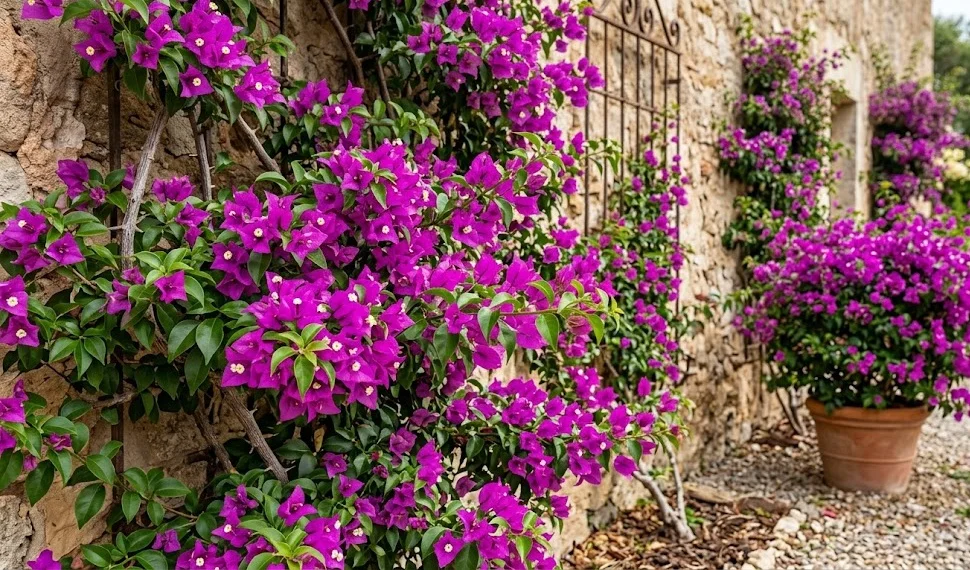

Mastering the art of pruning is an indispensable skill for anyone dedicated to maintaining a spectacular, free-flowering bougainvillea. Because these tropical climbers are incredibly vigorous growers, they can quickly transform into an unmanageable, tangled thicket if left to their own devices. Regular cutting back is not merely about keeping the plant within its structural boundaries; it is a vital horticultural practice that directly drives the production of color. Understanding the relationship between pruning cuts and the plant’s growth response is key to achieving optimal results.
The most critical biological fact to remember is that this species produces its colorful bracts exclusively on fresh, current-season growth. Old, woody branches that have already bloomed in previous years will never produce flowers directly from that aged bark again. Therefore, strategic pruning is required to continuously stimulate the development of fresh lateral shoots along the entire framework. By systematically cutting back old wood, you force the plant to awaken dormant buds, ensuring a continuous supply of flower-bearing stems.
Pruning also plays a vital role in maintaining the physical health and structural safety of the vine over its long lifespan. Removing dead, damaged, or diseased wood eliminates potential entry points for destructive insect pests and fungal pathogens. Clearing out the weak, spindly interior twigs opens up the center of the canopy to essential sunlight and fresh airflow. This improved ventilation dries out the foliage quickly after rain, reducing the risk of fungal leaf spot outbreaks.
Finally, regular intervention allows you to control the natural defenses of the vine, specifically its sharp, rigid thorns. Unmanaged branches can quickly extend into walkways, doorways, or neighboring properties, creating physical hazards for anyone passing by. Trimming away these rogue stems keeps the plant well-behaved and safely integrated into your shared garden landscape. With a disciplined, proactive approach to pruning, you can shape this vigorous climber into a breathtaking architectural asset.
Timing and execution of seasonal maintenance cuts
The primary structural pruning session must be scheduled for early spring, just as the plant begins to emerge from its winter rest. This timing is ideal because the vine is devoid of tender new growth, allowing you to clearly see the underlying branch framework. Performing major cuts at this stage ensures that the plant’s initial spring energy is directed exclusively into strong, well-placed structural canes. Avoid pruning too early in the winter, as cold snaps can freeze the newly exposed cut tips and cause deep wood dieback.
More articles on this topic
Always equip yourself with the proper protective gear and high-quality, razor-sharp tools before approaching a mature specimen. Heavy-duty leather gardening gloves and long sleeves are mandatory to shield your skin from the formidable thorns. Use bypass pruners for smaller twigs and a sturdy lopper or sharp pruning saw for thick, woody structural trunks. Ensure all cutting blades are meticulously cleaned and disinfected with rubbing alcohol to prevent spreading diseases between plants.
When making a pruning cut, always position your blade at a clean 45-degree angle approximately one-quarter inch above a healthy, outward-facing bud. This angled cut allows rainwater to slide off easily, preventing moisture from pooling on the raw wound and inviting rot. Selecting an outward-facing bud ensures that the resulting new branch grows outward away from the center of the plant. This simple technique keeps the interior of the canopy open and prevents future branch crossing and tangles.
During the active summer growing season, transition from heavy structural cutting to light pinching and tipping maintenance. Pinching off the soft green growing tips of young shoots after a bloom cycle finishes encourages immediate lateral branching. This practice quickly multiplies the number of flower-bearing tips on a single branch, leading to a much denser display of color. Avoid performing any major, heavy pruning cuts late in the summer, as this will stimulate soft growth that cannot survive winter.
Hard pruning techniques for rejuvenation and restoration
Over several years of rapid growth, a bougainvillea can become excessively top-heavy, with long, bare wooden legs and all color confined to the distant canopy. Rejuvenation pruning, also known as hard cutting back, becomes necessary to restore balance and bring color back down to eye level. This aggressive technique involves cutting the main structural trunks back significantly, sometimes leaving only a basic skeleton two to three feet from the ground. While this process looks drastic, the resilient nature of the vine allows it to recover with immense vigor.
More articles on this topic
Execute hard rejuvenation pruning exclusively in the early spring, giving the plant a full growing season ahead to rebuild its canopy. Begin by identifying the primary structural trunks that form the core architectural foundation of the vine. Cut away all weak, secondary branches entirely, leaving only three or four strong main canes to form the new framework. Shorten these remaining main trunks back to the desired height, making clean cuts just above dormant structural nodes.
Immediately following a hard pruning session, the plant’s water demands will drop significantly because it no longer has foliage to support. Adjust your irrigation schedule accordingly to prevent the root ball from becoming waterlogged while it lacks leaves. As the soil warms up in the spring sun, the dormant buds along the old bark will swell and burst forward with fresh shoots. These new branches will grow with remarkable speed, fueled by the expansive, established root system below.
Select the strongest, best-positioned new shoots to form your fresh canopy, and rub off any weak or redundant buds by hand. Train these chosen branches carefully along your support structures, securing them loosely to guide their direction. Within a single season, a hard-pruned specimen can completely rebuild its form, resulting in a compact, highly productive, and completely revitalized vine. This masterful intervention ensures that your tropical climbers remain structurally sound and visually spectacular for decades to come.