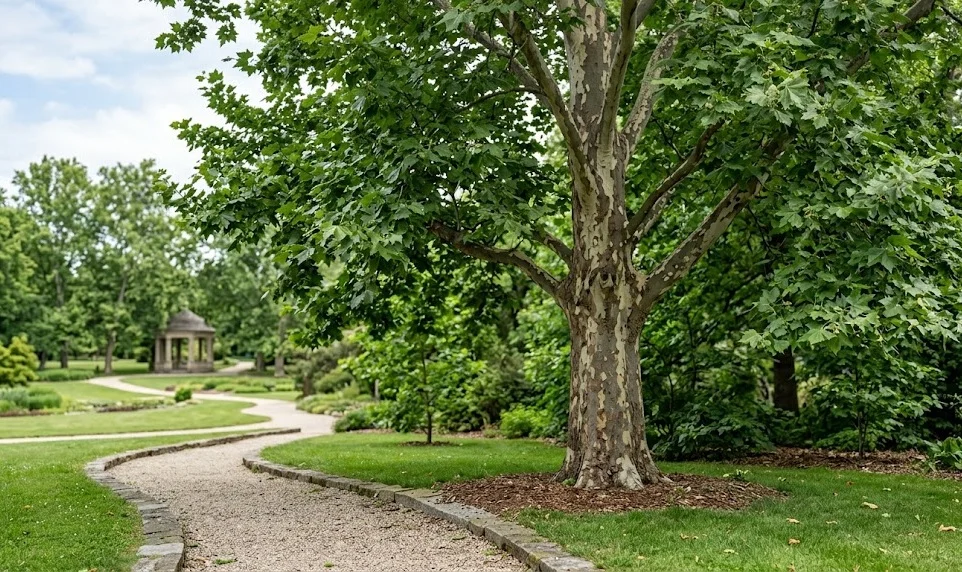

Providing the correct amount of water and nutrients is essential for maintaining the rapid growth and structural health of the London plane throughout its life. While mature trees are quite drought-tolerant, young specimens require a dedicated irrigation schedule to establish a deep and wide root system. The goal of a professional watering program is to mimic natural rainfall patterns while ensuring the tree has access to moisture during critical growth periods. Proper fertilization complements this by providing the building blocks for healthy foliage and a robust vascular system.
Watering should always be focused on the drip line of the tree, which is the area directly beneath the outer edge of the canopy. This is where the most active feeder roots are located, and they are responsible for absorbing the majority of the water and nutrients. Deep, infrequent watering is far more effective than frequent shallow sprinkling, as it encourages the roots to grow deeper into the soil. During the height of summer, a large tree may require several hundred liters of water per week to maintain its metabolic processes and cooling functions.
Designing an irrigation schedule
The frequency of irrigation depends heavily on the local climate, soil type, and the age of the individual London plane tree. In sandy soils that drain quickly, more frequent watering may be necessary to prevent the tree from experiencing significant moisture stress. Heavy clay soils, on the other hand, retain moisture for longer periods and require a more cautious approach to avoid suffocating the roots. Monitoring the soil moisture with a simple probe or by digging a small hole can provide an accurate picture of when the tree truly needs a drink.
Automated irrigation systems can be a great asset for managing large numbers of trees in professional landscapes or public parks. Drip irrigation or soaker hoses are particularly effective because they deliver water directly to the soil with minimal evaporation loss. These systems can be programmed to run during the early morning hours when the air is cool and the wind is low. Regular maintenance of the irrigation hardware is necessary to ensure that emitters are not clogged and that the water is being distributed evenly around the root zone.
Understanding nutrient requirements
Fertilization should be based on the specific needs of the tree as determined by a professional soil analysis and visual inspections. Nitrogen is the most important nutrient for the London plane, as it drives the production of chlorophyll and the growth of new leaves. Phosphorus and potassium are also essential for root development and overall disease resistance, making a balanced fertilizer often the best choice. It is important to avoid over-fertilization, which can lead to excessive, weak growth that is more susceptible to storm damage and pests.
More articles on this topic
The best time to apply fertilizer is in early spring just as the buds begin to swell and the tree enters its most active growth phase. This ensures that the nutrients are available in the soil when the tree needs them most for developing its new canopy. In some cases, a second, lighter application in early summer can help the tree maintain its vigor through the hottest months of the year. Professional arborists sometimes use deep-root injection techniques to deliver liquid fertilizers directly into the root zone for more immediate and targeted results.
Application techniques and safety
When applying granular fertilizers, it is important to spread the product evenly over the entire root zone to avoid concentrated “hot spots.” The fertilizer should be watered in immediately after application to help the nutrients move down into the soil where the roots can reach them. Care must be taken to keep the fertilizer away from the direct base of the trunk to prevent chemical burns on the bark. Using slow-release formulations can provide a steady supply of nutrients over several months, reducing the risk of leaching and environmental runoff.
Organic fertilizers, such as well-rotted manure or high-quality compost, are excellent alternatives to synthetic products for long-term soil health. These materials not only provide nutrients but also improve the soil structure and encourage the growth of beneficial mycorrhizal fungi. These fungi form a symbiotic relationship with the tree’s roots, significantly increasing their ability to absorb water and minerals from the earth. Integrating organic matter into the landscape plan supports a more sustainable and resilient environment for the London plane to thrive in for generations.
Managing water and nutrient stress
Recognizing the signs of water or nutrient stress early is key to preventing long-term damage to the health of the London plane. Yellowing leaves, also known as chlorosis, often point to a lack of iron or nitrogen, or possibly a drainage issue that is preventing nutrient uptake. Scorched leaf margins are a classic sign of drought stress, indicating that the tree cannot move water fast enough to its furthest extremities. Professional intervention may include the use of wetting agents to improve water penetration or targeted foliar sprays for rapid nutrient correction.
More articles on this topic
Over-watering can be just as damaging as drought, as it leads to oxygen deprivation in the soil and promotes the growth of harmful pathogens. If the soil remains saturated for extended periods, the roots may begin to die back, leading to a general decline in the tree’s canopy. Ensuring proper drainage and adjusting irrigation based on actual weather conditions is the hallmark of a professional tree care program. By balancing water and fertilizer inputs, you create an environment where the London plane can reach its full majestic potential while remaining healthy and strong.