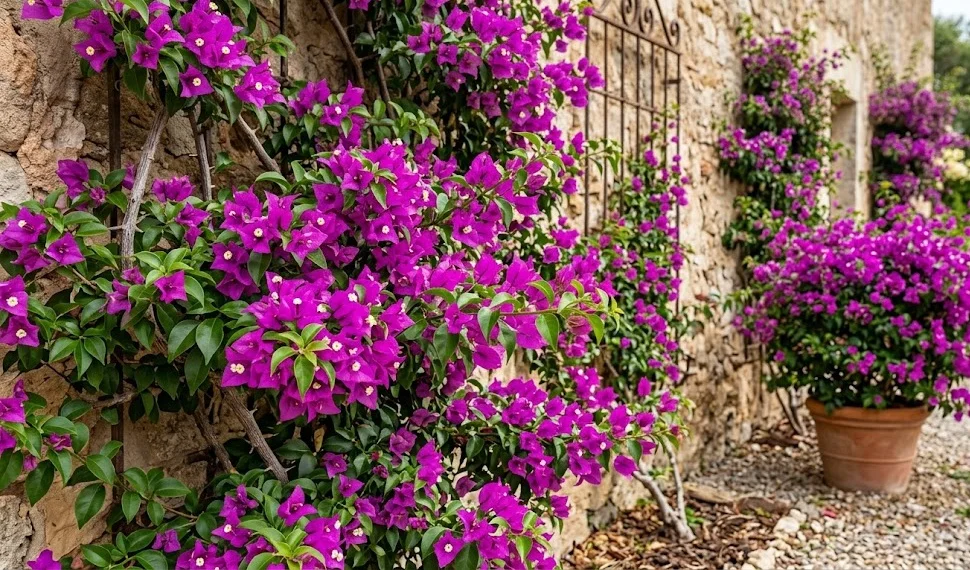

Unlocking the true visual splendor of a bougainvillea depends almost entirely on providing an abundance of intense, direct sunlight. These magnificent tropical climbers are highly heliophilic organisms, meaning they possess an absolute biological requirement for solar energy to thrive. Sunlight drives the complex photosynthetic processes that fuel the vine’s rapid vegetative growth and subsequent reproductive cycles. Without sufficient light energy, the plant simply cannot accumulate the resource reserves needed to transform ordinary leaves into colorful bracts.
To achieve the dense, wall-to-wall blanket of color that defines a well-grown specimen, aim for a minimum of six to eight hours of direct sunlight every day. Unfiltered morning and afternoon sun are equally valuable, though the intense light of midday provides the highest concentration of usable energy. When grown under these ideal radiant conditions, the plant responds by producing short, sturdy stems with closely spaced nodes. This compact growth habit creates a much denser canopy, providing a far more impactful canvas for future color displays.
When light levels fall short of these rigid biological requirements, the physical architecture of the vine undergoes a dramatic, negative transformation. The plant enters a state of elongation, stretching its stems rapidly toward the nearest light source in a process known as etiolation. This results in weak, spindly branches with abnormally large distances between the leaf nodes, creating a sparse, leggy silhouette. Furthermore, the sharp thorns often become elongated and prominent while the actual foliage looks thin and structurally fragile.
Sunlight Availability vs. Plant Response:
┌─────────────────────────────┬───────────────────────────────┐
| Full Sun (6-8+ hours) | Partial Shade / Indoors |
├─────────────────────────────┼───────────────────────────────┤
| - Short internodes | - Elongated, spindly stems |
| - Compact, dense canopy | - Leggy, sparse appearance |
| - Vibrant, abundant bracts | - Dull green leaves, no color |
└─────────────────────────────┴───────────────────────────────┘
The production of the colorful bracts is a high-energy reproductive event that is triggered directly by light saturation thresholds. When the vine receives maximum solar radiation, it synthesizes the specific hormones and pigments responsible for brilliant coloration. In shady environments, the plant remains stuck in a permanent vegetative loop, focusing its limited energy exclusively on basic leaf survival. Therefore, managing light exposure must be viewed as the foundational element around which all other maintenance practices revolve.
Optimizing garden placement and architectural exposure
Maximizing solar capture requires strategic thinking when choosing where to place or plant your vine within the landscape architecture. South- and west-facing exposures are prized by professional horticulturists because they receive the longest, most intense periods of daily sunshine. Placing the plant against a reflective brick wall, light-colored stucco fence, or concrete patio further amplifies the available light. These hardscape surfaces bounce extra light energy back into the lower, interior sections of the canopy that might otherwise sit in shadow.
More articles on this topic
Avoid placing these sun-loving climbers beneath the dense canopies of large overhanging trees or in the permanent shadows cast by multi-story buildings. Even filtered shade from a light tree canopy can cut down the available light energy by half, which is enough to halt blooming completely. If you must plant near structures, ensure the vine is positioned far enough forward to clear any morning or afternoon shade lines. Mapping the movement of shadows across your garden over the course of a full day will help prevent costly placement mistakes.
For container-grown specimens, the flexibility of mobility allows you to fine-tune light exposure as the seasons shift across the year. In early spring, move pots to the warmest, brightest spots available to warm up the soil and kickstart early vegetative development. As the summer sun shifts higher into the sky, rotate the containers occasionally to ensure all sides of the plant receive equal illumination. This uniform exposure prevents one side of the vine from becoming bare and leggy while the other side thrives.
Indoor cultivation presents unique challenges due to the dramatic reduction in light intensity caused by standard window glass. Even the brightest residential window filters out significant amounts of ultraviolet and infrared spectrums that plants rely on for advanced reproduction. Always place indoor specimens directly against a south-facing window, keeping sheers or blinds completely open during the day. Clean the window glass inside and out regularly to ensure that dust and grime do not further reduce the incoming solar energy.
Identifying and managing light deficiency symptoms
Recognizing the early warning signs of light starvation allows you to intervene before the plant suffers from long-term decline or structural weakness. The most immediate indicator of insufficient light is a complete lack of colorful bract development during the peak summer season. The plant will look perfectly healthy from a distance, exhibiting rich, deep green leaves, but it will fail to produce a single blossom. This condition, often called blind growth, confirms that the vine is using all its resources just to maintain its basic foliage.
More articles on this topic
Another clear symptom of light distress is the rapid shedding of older, lower leaves along the main structural canes. When the upper canopy shades out the lower branches, the plant recognizes those lower leaves as energy drains rather than assets. In response, it systematically reabsorbs nutrients from them, turns them yellow, and drops them to conserve resources. This self-shading phenomenon quickly results in a top-heavy plant with bare, unsightly wooden trunks at the base.
To correct these light deficiencies in established ground plants, surrounding vegetation may need to be selectively pruned or thinned out. Cutting back overhanging tree branches opens up the sky, allowing a flood of fresh, direct sunlight to reach the vine below. If the surrounding structures make light improvement impossible, the only viable solution may be to transplant the vine to a better location. While transplanting a mature specimen carries risks, it is preferable to letting it slowly decline in an unsuitable, shady corner.
When transitioning a light-starved plant back into full sun, you must proceed with caution to avoid severe leaf scorch or sun bleaching. Foliage that has adapted to shady conditions develops a thin protective cuticle layer and cannot instantly handle intense UV radiation. Move the plant into direct sunlight gradually over several days, starting with just an hour of early morning sun. This careful acclimation allows the leaf tissues to strengthen, preventing structural shock and ensuring a smooth transition to high-energy blooming.