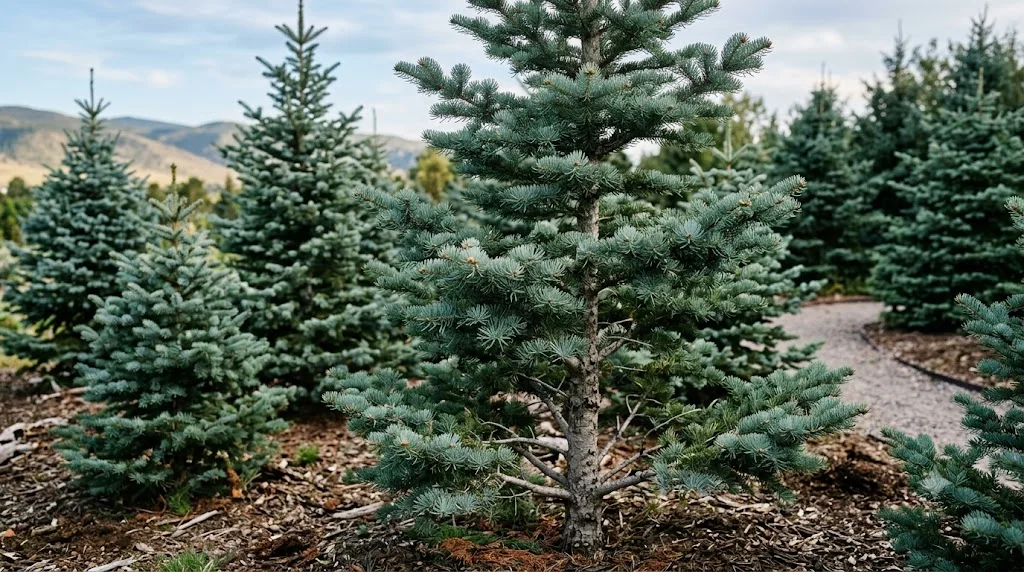

Colorado white fir is an elegant evergreen valued for its soft blue-green needles, symmetrical outline, and calm architectural presence. Although it is more adaptable than many other fir species, it still performs best when its basic environmental needs are understood from the beginning. Good care depends less on frequent intervention than on choosing a suitable site, protecting the root system, and preventing prolonged stress. With thoughtful management, the tree can remain vigorous and attractive for many decades.
Choosing the right growing environment
Colorado white fir grows best in a spacious position where its crown can develop without being crowded by buildings, overhead cables, or competing trees. A mature specimen can become broad as well as tall, so the planting area should be planned according to its eventual dimensions rather than its nursery size. Open air movement around the branches helps foliage dry after rain and reduces conditions that favor fungal problems. A generous planting distance also preserves the naturally layered form that makes the species so attractive.
The tree is well suited to cool and cold temperate climates with distinct seasonal changes. It generally tolerates winter frost reliably when properly established, but repeated heat combined with dry soil can weaken young trees. Areas with cool nights and moderate summer temperatures tend to produce the strongest color and densest growth. In warmer regions, careful siting and moisture management become especially important.
Colorado white fir is more tolerant of urban conditions than many other true firs, but it should not be treated as an indestructible city tree. Compacted soil, reflected heat, restricted rooting space, and road salt can gradually reduce vigor. A lawn edge, large garden bed, or open park-like setting is usually better than a narrow pavement opening. The root zone should remain permeable and protected from repeated vehicle or foot traffic.
Wind exposure deserves attention because persistent drying winds increase moisture loss from evergreen foliage throughout the year. A completely enclosed position is unnecessary, yet some shelter from severe winter winds can protect young needles and reduce browning. Avoid placing the tree in a frost pocket where cold air settles and spring growth may be damaged. A gently elevated or well-drained position often provides more stable conditions.
More articles on this topic
Creating suitable soil conditions
Colorado white fir prefers a deep, moderately fertile soil that drains excess water while retaining enough moisture for steady root activity. Loamy soil with a stable crumb structure is ideal because it provides both oxygen and water around the roots. Heavy clay can be improved around the wider planting area, but replacing soil only inside a small planting hole may create a water-holding basin. The goal is to support gradual root expansion into the surrounding ground.
Slightly acidic to neutral soil is usually the most favorable for nutrient availability and root health. Strongly alkaline conditions may contribute to pale foliage when iron or other micronutrients become less accessible. Before making major amendments, it is useful to understand the existing soil texture and reaction. Correcting a real deficiency is far more effective than adding products without evidence.
Organic matter can improve difficult soils when it is incorporated carefully and in moderate amounts. Well-decomposed compost helps sandy soil hold moisture and encourages biological activity in compacted ground. Fresh manure, undecomposed wood waste, or concentrated organic material should not touch the roots. Excessively rich planting mixtures may discourage roots from growing beyond the original hole.
Drainage is one of the most important long-term requirements for Colorado white fir. Roots exposed to stagnant water lose oxygen, become less efficient, and are more vulnerable to decay organisms. Low ground with persistent winter wetness should be avoided unless drainage can be improved across the entire area. Raising the planting zone slightly may help where the soil is naturally slow to drain.
More articles on this topic
Supporting successful establishment
The first several growing seasons determine how effectively the tree develops a broad, resilient root system. Water should be supplied deeply enough to moisten the complete root ball and the soil immediately beyond it. Shallow sprinkling encourages roots to remain near the surface, where they are more exposed to heat and drought. Deep, less frequent irrigation usually produces stronger establishment.
A mulch layer helps stabilize soil temperature, reduce evaporation, and limit competition from grass. Organic mulch should be spread over a wide area rather than piled deeply near the trunk. Keep the root flare visible and leave a clear gap around the bark to prevent excessive moisture accumulation. Renew the mulch as it decomposes, but avoid allowing the layer to become unnecessarily thick.
Young trees may require staking if the root ball is unstable or the planting site is exceptionally windy. Supports should hold the root system steady while allowing slight trunk movement, which encourages natural strengthening. Ties must be broad, flexible, and checked regularly for rubbing or constriction. Stakes should be removed once the roots can support the tree independently.
Grass and aggressive groundcover plants can compete strongly with a newly planted fir for water and nutrients. Maintaining a vegetation-free circle around the tree reduces this hidden pressure during establishment. Herbicides should be used cautiously because drift or accidental contact can damage young tissues. Mulching and careful hand management are usually safer near the trunk.
Maintaining foliage and balanced growth
Healthy Colorado white fir foliage should appear full, evenly colored, and firmly attached along the shoots. Seasonal needle shedding from older interior branches is normal, particularly in autumn. Concern is more appropriate when current-year needles discolor, entire branch sections decline, or needle loss becomes strongly concentrated on one side. Regular observation makes it easier to distinguish natural aging from developing stress.
The tree normally maintains an attractive form without intensive training. A strong central leader and evenly spaced branch whorls create the classic conical outline. Competing leaders, broken branches, or crossing shoots can be corrected while they are still young. Heavy reshaping is rarely compatible with the natural biology of a fir.
Needle color can vary from green to distinctly bluish depending on genetics, light exposure, nutrition, and environmental conditions. Pale foliage does not automatically mean the tree needs fertilizer. Root damage, saturated soil, drought, or unsuitable soil reaction can produce similar symptoms. The underlying growing conditions should always be assessed before nutrients are applied.
Growth rate changes naturally as the tree matures and responds to weather. A young, well-established specimen may produce noticeable annual extension, while an older tree grows more slowly. Reduced growth after a hot or dry season may reflect temporary stress rather than permanent decline. Consistent care over several seasons is more valuable than attempting to force rapid growth.
Managing summer heat and drought
Established Colorado white fir is relatively tolerant of dry conditions compared with many fir species, but drought tolerance has limits. Extended soil dryness reduces photosynthesis, weakens fine roots, and may increase susceptibility to insects or canker diseases. The tree can remain green while stress is already developing below ground. Soil moisture should therefore be checked rather than judged only by foliage color.
Deep watering is particularly valuable during long rainless periods and unusually hot weather. Water should penetrate gradually into the active root zone instead of running away across the surface. A slow hose, drip line, or properly placed irrigation system can deliver moisture efficiently. Irrigation frequency should be based on soil type, temperature, rainfall, and tree age.
Heat reflected from walls, paving, gravel, or dark roofing materials can create a much harsher microclimate than regional weather data suggests. Needles facing these surfaces may lose water quickly and develop scorched tips. Mulch and adequate root-zone moisture can reduce stress, but severe reflected heat may remain unsuitable. Young specimens are especially vulnerable because their root systems occupy a limited soil volume.
Late-summer drought can affect both current foliage and the buds that produce the following year’s growth. Maintaining moderate soil moisture through the end of the growing season supports bud development and winter readiness. Constant saturation is not beneficial, however, and irrigation should never replace proper drainage. The objective is an evenly moist, aerated root zone.
Following a seasonal care routine
Spring is the best time to inspect the tree for winter injury, broken branches, abnormal discoloration, and damage around the trunk. Mulch can be renewed after the soil begins to warm, provided it remains clear of the bark. Irrigation systems should be checked before dry weather arrives. Any necessary corrective pruning is usually easiest before vigorous new growth expands.
During summer, moisture management and pest observation become the main priorities. Look closely at new shoots, lower branches, and foliage near the trunk, where early symptoms may be easier to detect. Dusty foliage, webbing, sticky deposits, or unusual needle flecking may indicate insect or mite activity. Prompt diagnosis is more effective than routine pesticide application.
Autumn care should focus on reducing stress before the soil freezes. A deeply watered root zone helps evergreen foliage continue replacing moisture lost during winter. Fallen diseased needles and heavily infected debris can be removed where a confirmed disease problem exists. Fertilizers rich in nitrogen should not be applied late in the season because they may encourage poorly hardened growth.
Winter is mainly a period of observation rather than active maintenance. Heavy, wet snow can bend branches, but frozen limbs should not be struck or shaken violently. Salt-contaminated snow should not be piled over the root zone. Young trees in exposed areas may benefit from temporary wind protection that does not restrict air circulation.
Preserving long-term landscape value
A Colorado white fir should be managed as a long-lived landscape structure rather than as a shrub that can be repeatedly resized. Its mature height, width, shade pattern, and relationship with nearby buildings should be considered before planting. Appropriate placement prevents future conflicts that might otherwise require damaging pruning. Good design is one of the most effective forms of tree care.
Changes around an established tree can be more harmful than they appear. Raising soil level, digging trenches, installing paving, or parking machinery over the root zone may injure large numbers of fine roots. Damage may not become visible in the crown until months or years later. Construction work near mature specimens should therefore be planned with root protection in mind.
The trunk flare should remain visible throughout the life of the tree. Soil, mulch, decorative stone, and garden edging must not be allowed to accumulate against the bark. Buried trunk tissue remains damp and may develop decay or girdling roots. Periodic inspection of the base can prevent these gradual problems.
Long-term success depends on steady, proportionate care rather than excessive intervention. Suitable soil, adequate space, deep watering during genuine drought, and early diagnosis of abnormalities are usually sufficient. Unnecessary fertilizer, repeated shearing, and constant shallow irrigation often create more problems than they solve. When its natural requirements are respected, Colorado white fir becomes one of the most graceful and dependable evergreen trees in a spacious garden.