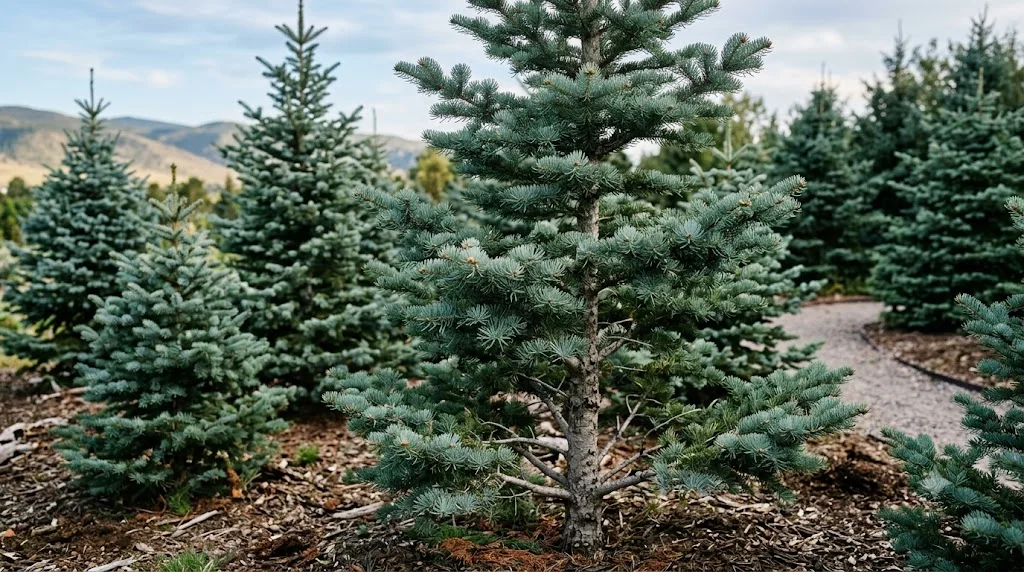

Colorado white fir is naturally adapted to cold winters, yet young, recently planted, container-grown, or stressed specimens may still require seasonal protection. Winter injury is often caused by dehydration, wind, salt, unstable temperatures, or damaged roots rather than low temperature alone. Preparation should begin before the ground freezes and should focus on maintaining a healthy root zone. Appropriate winter care supports the tree without wrapping or sheltering it so heavily that moisture and disease problems develop.
Preparing the tree before winter
A healthy tree enters winter with mature shoots, hydrated tissues, and an undisturbed root system. Avoid high-nitrogen fertilizer late in the growing season because it may encourage soft growth that does not harden properly. Normal watering should continue through dry autumn weather. The soil should be moderately moist, not saturated, when freezing conditions arrive.
Deep watering before the ground freezes is especially important after a dry summer or autumn. Evergreen needles continue to lose moisture on sunny and windy winter days. Roots in frozen or very dry soil cannot replace that moisture efficiently. Adequate autumn hydration reduces the risk of winter browning.
Inspect the tree for broken branches, damaged ties, trunk wounds, and unstable staking. Correcting these problems before snow and ice arrive prevents additional injury. Supports should not rub against the bark or restrict natural trunk movement. Remove unnecessary stakes from established trees.
Mulch should be renewed before severe frost if the existing layer has decomposed or become thin. A broad organic layer moderates temperature fluctuations and slows moisture loss. Keep it away from the trunk and do not bury the root flare. Deep mulch against the bark encourages decay and may shelter rodents.
More articles on this topic
Protecting roots and young trees
Newly planted trees have a limited root system and experience greater winter moisture stress than established specimens. Their roots may remain concentrated in the original nursery medium, which can dry differently from the surrounding soil. Moisture should be checked until the ground becomes frozen. Waterlogging must still be avoided.
Temporary wind protection can help young trees in exposed gardens. A breathable screen positioned on the prevailing-wind side reduces drying without trapping excessive humidity. The screen should not press against the needles or completely enclose the crown. Plastic wrapping is unsuitable because it can overheat in sunlight and restrict air movement.
Trunk guards may be useful where rodents or browsing animals are common. The guard should permit ventilation and should not hold water against the bark. It must be checked as the trunk expands and removed when no longer necessary. Repellents may provide additional protection when used according to their instructions.
Container-grown Colorado white fir is more vulnerable because roots above ground experience greater temperature fluctuation. The pot can be moved to a sheltered outdoor location, grouped with other containers, or insulated around the sides. Drainage holes must remain open throughout winter. Bringing the tree into a heated room is generally harmful because it disrupts dormancy.
More articles on this topic
Managing snow, ice, wind, and salt
Light snow usually causes no harm and may insulate lower branches and soil. Heavy, wet snow can bend limbs, especially on young or unusually dense trees. Snow may be brushed upward and outward with gentle movements before it freezes in place. Striking frozen branches can cause splitting.
Ice should normally be allowed to melt naturally. Attempting to break it away can tear bark, remove buds, and snap brittle branches. Support may be considered for an endangered young leader, but manipulation should remain minimal. Damaged limbs can be assessed after temperatures moderate.
Road salt can injure both roots and needles. Salty spray causes browning on the side facing traffic, while contaminated meltwater damages soil structure and roots. Avoid piling plowed snow around the tree. Where exposure is unavoidable, physical barriers and salt-tolerant planting buffers can reduce contact.
Strong winter sun followed by rapid temperature drops may stress exposed tissues. Young bark and south-facing foliage can experience greater temperature fluctuation than shaded areas. Proper siting is the best long-term protection. Temporary breathable shading may help recently planted trees in severe, open locations.
Assessing and correcting winter damage
Winter browning often becomes most visible in late winter or early spring. Needles may discolor on exposed branch tips while protected interior foliage remains green. Do not prune immediately unless the branch is clearly broken. Buds and inner tissues may still be alive despite damaged needles.
Scratch a small section of questionable twig bark to check for green, moist tissue beneath. Flexible twigs with healthy buds may recover and produce new growth. Dry, brittle shoots with brown internal tissue are less likely to survive. Final pruning decisions are best delayed until spring growth reveals the true extent of injury.
After winter, restore moderate soil moisture if conditions are dry. Do not apply strong fertilizer in an attempt to force rapid recovery. Damaged trees need stable root conditions more than accelerated shoot growth. Mulch, careful watering, and protection from additional stress support gradual repair.
Repeated winter injury indicates an underlying siting or health problem. Exposure to wind, reflected sunlight, salt, compacted soil, or poor drainage should be reconsidered. A protective screen may reduce annual symptoms, but it cannot correct severe root-zone limitations. Long-term success depends on improving the cause rather than treating browning as an isolated event.