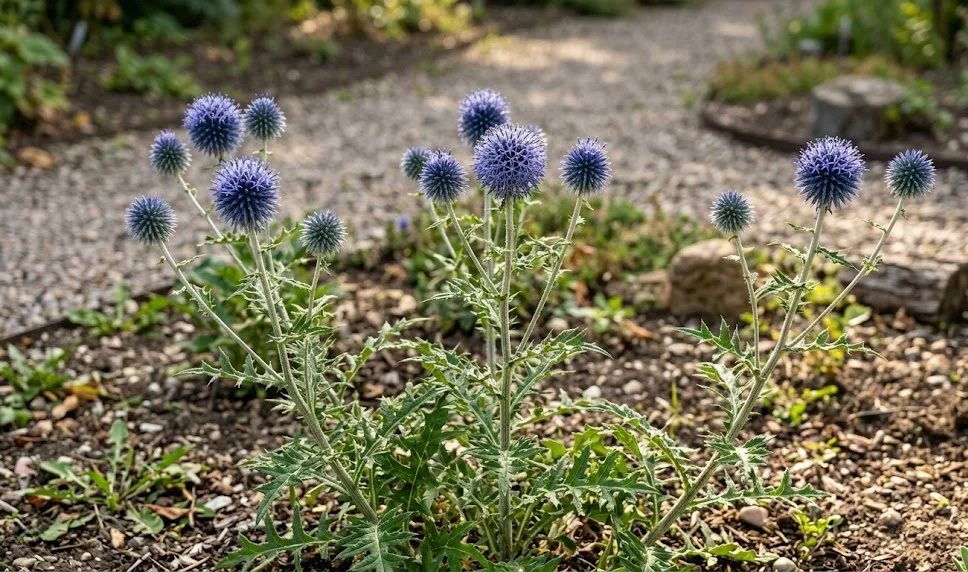

Developing a precise watering and fertilization strategy is essential for maximizing the ornamental potential of the blue globe thistle in a professional landscape. While these plants are famous for their drought tolerance, they still require consistent moisture during their initial establishment phase. Once the deep taproot is fully developed, the plant becomes much more self-sufficient and resistant to environmental stress. Balancing the supply of water and nutrients is the key to achieving those iconic deep blue spheres and healthy foliage.
The first growing season is the most critical period for managing the water needs of your newly planted thistles. You should check the soil moisture levels regularly, especially during hot and dry spells in the early summer months. Watering deeply but infrequently encourages the roots to grow downward in search of moisture rather than staying near the surface. A thorough soaking once or twice a week is usually much better than light daily sprinkling which evaporates quickly.
As the plant matures, you can gradually reduce the frequency of watering to match its natural adaptations to dry climates. Mature specimens can often go for several weeks without supplemental water once they have reached their full size. However, if you notice the leaves beginning to wilt or lose their turgidity, it is a clear sign that a deep watering is necessary. Observing the plant’s physical response to the environment is the best way to determine the correct watering schedule.
During the blooming period, providing a bit of extra moisture can help prolong the life of the flowers and keep the colors vivid. The energy required to produce large flower heads is significant, and water is a primary component of that physiological process. Try to avoid getting water on the flower heads themselves, as the weight can cause the stems to bend or break. Focusing the water at the base of the plant is the most efficient and safest method for the thistle.
Managing moisture in different soil types
The type of soil in your garden will dictate how quickly water moves through the root zone and how much is retained. Sandy soils drain very rapidly, meaning you might need to water more frequently but with less volume each time. In contrast, loamy soils hold moisture much better and provide a more stable environment for the plant’s root system. Understanding your soil’s texture allows you to customize your watering routine for the best possible results.
More articles on this topic
If you are dealing with heavy clay soil, the risk of overwatering becomes a much more serious concern for the health of the plant. Clay holds onto water for a long time, which can lead to anaerobic conditions around the roots if the drainage is poor. You should wait until the top few centimeters of soil are completely dry before even considering adding more water. This careful approach prevents root rot and ensures the plant remains healthy throughout the wet seasons.
Using a layer of organic mulch can significantly improve the moisture-holding capacity of any soil type while protecting the surface. Mulch acts as an insulating layer that reduces evaporation from the sun and wind during the peak of summer. It also prevents the soil from crusting over, which allows irrigation water to penetrate more easily to the root zone. Choosing a natural material like wood chips or shredded bark adds a professional finish to your garden beds.
Drip irrigation systems are often the preferred choice for professional gardeners because they deliver water directly to the soil surface. This method minimizes water waste and keeps the foliage dry, which is important for preventing various fungal diseases. You can set these systems on a timer to ensure consistent moisture delivery even when you are not available to garden. It is a modern solution that saves time and promotes the overall health of your perennial collection.
Nutrient requirements and soil health
Blue globe thistles are not heavy feeders, and they actually perform better in soils that are not excessively rich in nitrogen. Too much nitrogen can lead to rapid, weak growth and foliage that is more susceptible to pests and diseases. A balanced approach to nutrition ensures that the plant develops the strong, sturdy stems needed to support the heavy flowers. Focus on maintaining a healthy soil ecosystem rather than relying solely on concentrated chemical fertilizers.
More articles on this topic
In most cases, a single application of a balanced, slow-release fertilizer in the early spring is all the plant needs for the year. This provides a steady supply of nutrients as the plant enters its most active growth phase after the winter dormancy. You should look for a product that has a slightly higher phosphorus content to support strong root development and flower production. Always follow the manufacturer’s instructions to avoid the risks associated with over-fertilization.
Using high-quality compost as a top-dressing is an excellent organic alternative to commercial fertilizers for your thistles. Compost not only adds essential nutrients but also improves the soil structure and encourages beneficial microbial activity. Simply spread a thin layer around the base of the plant in the spring and let the rain wash the nutrients down. This sustainable practice builds long-term soil health and reduces the need for external inputs in your garden.
If you notice signs of nutrient deficiency, such as yellowing leaves or stunted growth, it might be time to perform a soil test. A professional test can identify exactly which minerals are missing and help you choose the right corrective measures. Sometimes the issue is not a lack of nutrients but a pH imbalance that prevents the plant from absorbing what is already there. Being proactive about soil health is the hallmark of a truly professional gardener or agriculturalist.
Application methods for fertilizers
When applying any type of fertilizer, it is important to keep the product away from the direct center or crown of the plant. Concentrated salts in fertilizers can burn the sensitive tissues and cause permanent damage to the growing points. Instead, spread the material in a circle around the drip line where the most active roots are located. This ensures the nutrients are available where they can be most effectively absorbed by the plant.
Watering the area immediately after fertilizing is a crucial step that helps move the nutrients into the soil and prevents root burn. The moisture dissolves the fertilizer particles and carries them down to the root zone where they are needed. If you are using liquid fertilizers, ensure you have diluted them correctly according to the specific needs of perennials. Proper application technique is just as important as choosing the right product for your garden.
Timing your fertilizer application with the local weather can improve the efficiency of the nutrient uptake. Applying just before a gentle rain is ideal, as the natural moisture will help integrate the fertilizer into the soil profile. Avoid fertilizing during periods of extreme heat or drought, as the plant is already under stress and may not be able to process the nutrients. A thoughtful approach to timing ensures your efforts yield the best possible results for the plant’s health.
For established plants that are several years old, you may find that they require very little in the way of supplemental feeding. Their deep roots are capable of finding nutrients in the lower layers of the soil that other plants cannot reach. If the plant looks healthy and is blooming well, it is often best to leave it alone and avoid unnecessary intervention. Monitoring the plant’s performance over time will tell you everything you need to know about its nutritional status.
Avoiding common fertilization mistakes
One of the most common mistakes in caring for blue globe thistles is treating them like high-maintenance bedding plants. Over-fertilizing can lead to a lush green plant that has very few flowers and stems that easily fall over in the wind. Remember that these plants are adapted to relatively harsh conditions where nutrients are not always abundant. Emulating their natural environment is the best way to achieve the most authentic and attractive growth habit.
Late-season fertilization should be avoided as it can encourage new growth that will not have time to harden off before winter. This soft, new tissue is very easily damaged by the first hard frost, which can compromise the overall health of the plant. Stop all feeding by mid-summer to allow the plant to focus on maturing its current stems and preparing for dormancy. This seasonal rhythm is essential for the long-term survival of any perennial species in a temperate climate.
Relying solely on one type of fertilizer for many years can sometimes lead to a buildup of certain minerals or a deficiency in others. Rotating the types of organic matter you use or occasionally using a complete micronutrient supplement can prevent these issues. Diversity in your soil management practices leads to a more resilient and balanced garden environment. Keeping an eye on the long-term trends in your garden’s health will help you stay ahead of any potential problems.
Finally, always remember that the best fertilizer is a healthy soil structure that allows roots to breathe and grow freely. No amount of chemical input can compensate for compacted or waterlogged soil that prevents the roots from functioning properly. Focus your energy on creating a well-drained, airy soil environment and the plant will mostly take care of itself. The blue globe thistle is a testament to the idea that sometimes less is more when it comes to garden maintenance.