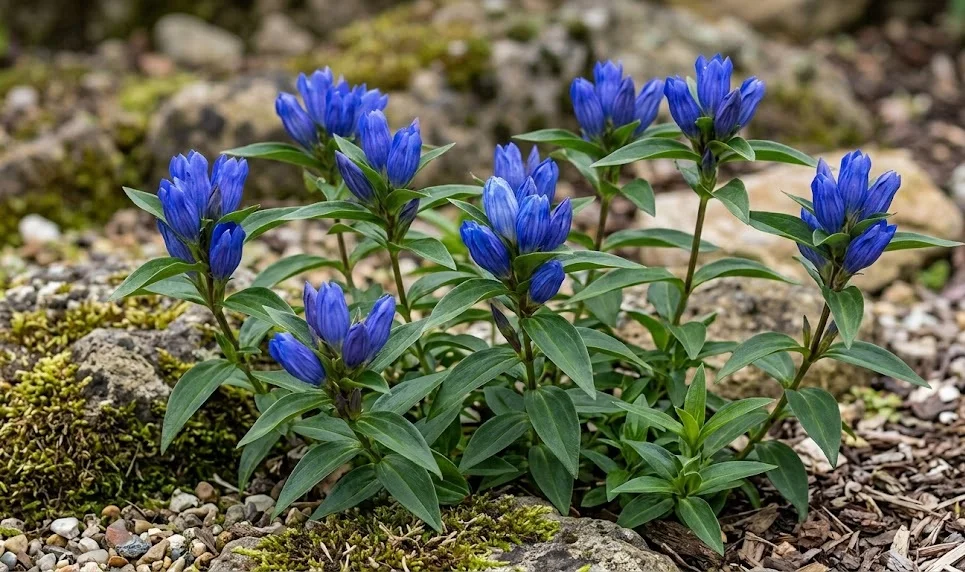

Understanding the light requirements of the makino gentian is essential for achieving those deep, iconic blue flowers that every gardener desires. This species naturally grows in alpine and sub-alpine regions where the sun can be quite intense, but the air remains cool. In a garden setting, it thrives best when it receives a significant amount of bright light without being subjected to scorching heat. Finding this balance is the key to preventing the foliage from burning or the stems from becoming weak.
In most climates, a location that offers full sun in the morning and filtered shade in the afternoon is considered the “gold standard.” The gentle morning rays provide the energy needed for photosynthesis without the extreme temperatures of the midday sun. This allows the plant to stay hydrated and active during the most productive part of the day. If the plant is kept in too much shade, you will find that it produces very few flowers and the growth becomes quite sparse.
The intensity of the sun varies greatly depending on your geographical location and the altitude of your garden. If you live in a northern region with cooler summers, the gentian may be able to handle full sun throughout the entire day. However, in southern or inland areas with high heat, afternoon protection is absolutely mandatory for the plant’s survival. Observing how the light moves through your garden at different times of the year will help you find the perfect permanent home.
The color of the flowers can actually be influenced by the amount and quality of light the plant receives during the budding phase. Bright, clear light tends to produce more intense and vibrant blues, while lower light levels might result in a more muted or pale appearance. This is why commercial growers often pay so much attention to light management in their nurseries. For the home gardener, providing the brightest possible indirect light is the best way to ensure a spectacular late-season show.
Managing the effects of intense sun
While light is necessary for growth, excessive direct sunlight during a heatwave can quickly lead to leaf scorch and plant stress. You may notice the edges of the leaves turning brown and crispy, or the overall color of the foliage becoming a pale, sickly yellow. This is the plant’s way of telling you that it is receiving more energy than it can safely process given the available moisture. In extreme cases, the flower buds may shrivel and fall off before they have the chance to open.
More articles on this topic
One effective way to mitigate the effects of intense sun is to use taller, airy companion plants to provide “moving shade.” Plants with fine foliage can act as a natural filter, breaking up the direct rays of the sun while still allowing plenty of light through. This creates a dappled environment that mimics the edge of a woodland or a mountain meadow. It also helps to keep the air immediately around the gentian slightly cooler through the process of transpiration.
Mulching is another secret weapon for protecting sun-exposed makino gentians by keeping the root zone significantly cooler. When the sun beats down on bare soil, the temperature can rise to levels that are harmful to the sensitive root hairs of the plant. A thick layer of light-colored mulch reflects some of the solar radiation and acts as a thermal barrier for the ground below. This allows the roots to continue functioning efficiently even when the leaves are in bright sunlight.
If you find that your chosen location is simply too sunny for the plant’s comfort, you don’t necessarily have to move it immediately. Temporary shade structures, like a piece of lattice or a garden umbrella, can be used during the hottest weeks of July and August. This gives the plant a much-needed break and allows it to focus its energy on flower production rather than survival. Over time, you can also plant a small shrub nearby to provide a more permanent and natural shading solution.
Adapting to low light and shade
If you must plant your makino gentian in a shadier part of the garden, there are a few things you can do to help it succeed. Select a spot that is “bright shade” rather than a dark, sunless corner under a dense evergreen tree. Light that reflects off a white wall or a light-colored fence can also provide additional energy for the plant. Even a small increase in the available ambient light can make a big difference in the plant’s overall vigor.
More articles on this topic
Plants grown in lower light conditions tend to have longer, thinner stems as they stretch toward the source of the sun. This “leggy” growth can make the plant look untidy and may require some physical support to keep the flowers from touching the ground. You might also find that the flowering period is delayed by a week or two compared to plants in sunnier locations. This isn’t necessarily a health problem, but it is something to keep in mind for your garden planning.
One risk of growing gentians in the shade is the increased likelihood of moisture-related issues like mold and mildew. Because the sun isn’t there to dry off the morning dew or rain, the leaves can stay wet for a very long time. It is extra important in shady spots to ensure that the plant has plenty of space around it for air to circulate freely. Good hygiene and careful watering become even more critical when the drying power of the sun is missing.
Ultimately, the plant will tell you if it is not getting enough light through its growth habits and flowering performance. If after two years the plant has failed to bloom and seems to be shrinking rather than growing, it is likely too dark. Moving the plant to a brighter location in the early spring is often the best solution for long-term success. Every gardener must be willing to experiment and adjust based on the unique light patterns of their specific landscape.