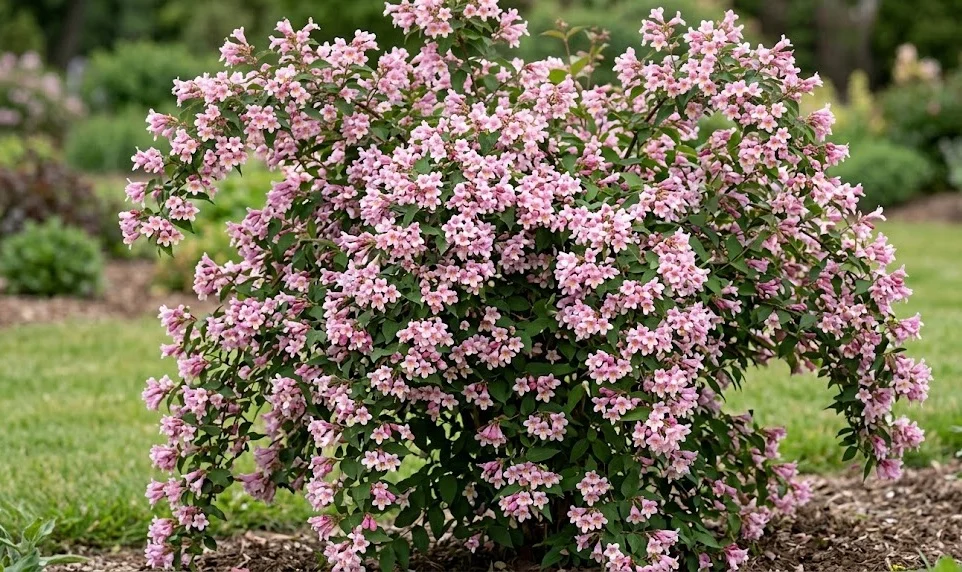

Beauty bush performs best when water and nutrients are supplied steadily rather than excessively. It is not a shrub that demands constant attention, but uneven moisture and heavy feeding can reduce flowering quality, weaken shoots, or create unnecessary stress. The aim is to support deep rooting, moderate annual growth, and strong flower-bearing wood. When irrigation and fertilization are matched to soil type and season, the shrub remains vigorous without becoming coarse or overgrown.
Water needs through the seasons
In spring, beauty bush benefits from consistent moisture as leaves expand and flower buds open. This is a period of active growth, and dry soil can shorten the flowering display or reduce shoot development after bloom. Natural rainfall may be enough in many regions, but newly planted shrubs should still be checked regularly. Early-season drought is easy to underestimate because temperatures may feel mild while roots are already active.
During summer, water demand rises as foliage matures and temperatures increase. Established plants can tolerate moderate dry spells, but prolonged drought may cause leaf wilting, edge scorch, or premature leaf drop. These symptoms are especially common in sandy soil or exposed positions. Supplemental watering during extended dry weather helps protect next year’s flowering potential.
Autumn watering is often overlooked, but it matters in dry years. A shrub entering winter with a severely dry root zone is more vulnerable to cold and wind damage. Moist soil also changes temperature more slowly than dry soil, which can reduce stress on roots. Watering before the ground freezes can be useful where autumn rainfall has been poor.
In winter, beauty bush usually needs no irrigation when planted in open ground. Exceptions may occur in mild climates with dry winters, especially for recently planted shrubs. Container-grown specimens are different because pots dry faster and roots are more exposed. Even dormant plants in containers may need occasional moisture to prevent root desiccation.
More articles on this topic
Deep watering techniques
Deep watering encourages roots to explore a larger soil volume. This makes the shrub more resilient during heat, wind, and temporary drought. A slow application with a hose, watering wand, drip line, or soaker hose is more effective than a quick surface spray. The goal is to moisten the root zone without causing runoff.
Water should be applied across the area beneath and slightly beyond the branch spread. Concentrating all irrigation at the trunk misses many feeder roots. As beauty bush matures, its active root system expands outward into the surrounding soil. A broad watering pattern supports the full plant rather than only the crown area.
The correct frequency depends on soil texture and weather. Sandy soils may need more frequent irrigation because they drain quickly and hold less water. Clay soils may require less frequent but slower watering because they retain moisture longer and absorb water more gradually. Loam usually offers the easiest balance between drainage and retention.
Checking soil moisture is more reliable than following a fixed schedule. Push a finger or small trowel into the soil near the root zone and assess moisture below the surface. If the soil is cool and slightly moist, watering can wait. If it is dry several centimeters down, a thorough soak is appropriate.
More articles on this topic
Avoiding overwatering problems
Overwatering can be just as harmful as drought. Roots need oxygen to function, and saturated soil limits oxygen availability. When roots are stressed by wet conditions, the shrub may show yellow leaves, weak shoots, or reduced vigor. These symptoms are sometimes mistaken for nutrient deficiency, leading to unnecessary fertilization.
Drainage problems should be corrected by improving the planting environment rather than simply watering less. If water remains standing after rain, the site may be unsuitable without grading, raised planting, or broader soil improvement. Beauty bush can adapt to moisture, but it cannot thrive with roots sitting in stagnant water. Good structure and drainage are long-term safeguards.
Mulch helps regulate moisture, but too much mulch can create damp conditions at the crown. A thick mound against the stems traps humidity and may encourage bark decay. Mulch should be spread evenly and kept slightly away from the base. This gives moisture benefits without creating a collar of wet organic material.
Irrigation should also avoid frequent wetting of foliage late in the day. Wet leaves overnight can encourage fungal problems in dense plantings or humid climates. Ground-level watering is cleaner and more efficient. If overhead watering is unavoidable, morning is the best time because leaves can dry quickly.
Fertilizer timing and choices
Early spring is the most suitable time for any needed fertilizer application. At this stage, roots are becoming active and can use nutrients for new growth. A balanced slow-release fertilizer may be used if soil fertility is low or growth has been consistently weak. The amount should be conservative because beauty bush does not require heavy feeding.
Compost is often the best annual amendment. It supplies nutrients gradually, improves soil structure, and supports beneficial microbial activity. A thin layer spread over the root zone can be combined with organic mulch. This method is especially useful for gardens managed with a long-term soil-building approach.
Avoid high-nitrogen fertilizers unless a clear deficiency has been identified. Excessive nitrogen can produce vigorous leafy shoots that are less sturdy and less floriferous. It may also increase the need for pruning by encouraging rapid extension growth. A shrub that grows moderately and flowers well should not be pushed harder.
Late-season fertilization is generally not recommended. Feeding too late can stimulate tender growth that may not harden properly before winter. This is particularly risky in regions with early frosts or sharp temperature swings. By late summer, the plant should be allowed to mature its wood naturally.
Reading plant signals
A healthy beauty bush usually produces moderate new shoots after flowering and maintains clean green foliage through summer. Flowering should be generous on mature stems when light conditions are good. If the shrub looks balanced, intervention should be minimal. Overmanagement can disturb a plant that is already performing well.
Weak flowering may be linked to shade, poor pruning timing, drought, or excessive nitrogen. It is rarely solved by fertilizer alone. If the shrub has been cut back in winter, the flower buds may simply have been removed. If it grows in deep shade, more light will matter more than feeding.
Yellowing leaves require careful interpretation. They may indicate nutrient shortage, waterlogged roots, drought stress, compacted soil, or natural aging of shaded interior foliage. Looking at soil moisture and site conditions helps narrow the cause. A broad diagnosis prevents inappropriate treatment.
Expert care is often about restraint and observation. Beauty bush needs enough water to avoid stress and enough nutrients to support renewal, but it does not need constant forcing. Stable soil, thoughtful irrigation, and modest feeding create the best results. This balanced approach produces strong stems, reliable flowers, and a shrub that ages gracefully.