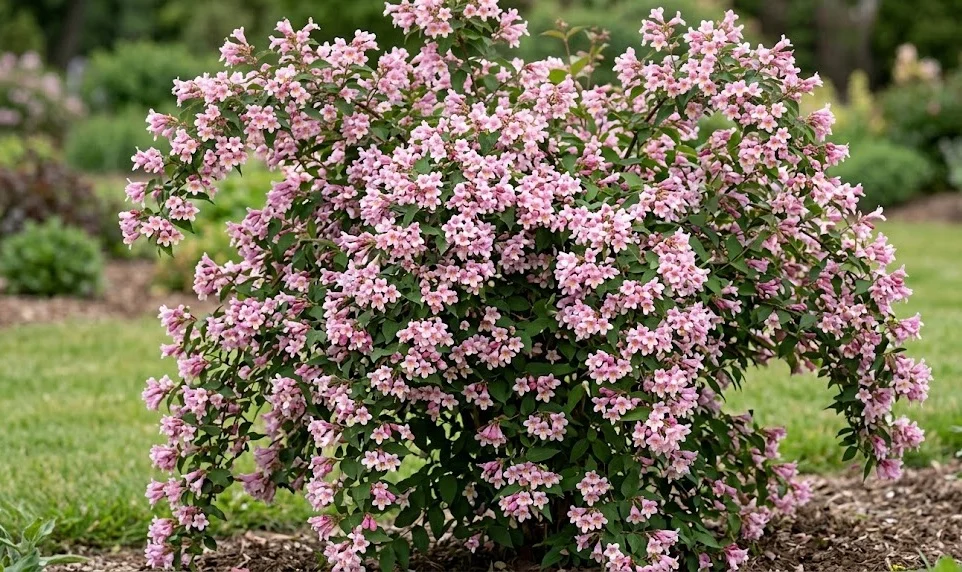

Light is one of the most important factors behind strong flowering in beauty bush. Although the shrub can tolerate some shade, it blooms most generously when it receives abundant direct or filtered sunlight. The right exposure also influences shoot strength, leaf density, plant shape, and disease resistance. A beauty bush planted in suitable light will usually need less corrective pruning and produce a fuller spring display.
Full sun and flowering performance
Full sun is generally the best exposure for maximum bloom. In a sunny site, the shrub can form more flower buds and produce stronger, better-ripened wood. This is especially important because the flowers are carried on mature stems. Good light helps create the energy reserves needed for reliable flowering.
A sunny position also supports a denser, more balanced framework. Stems are less likely to stretch weakly, and the plant develops a more attractive outline. The arching branches still look natural, but they remain sturdier and better clothed with foliage. This improves the shrub’s value after the spring bloom has ended.
Full sun does not mean the plant should be exposed to extreme stress. In very hot climates, reflected heat from walls, paving, or gravel can intensify drought pressure. Leaves may wilt or scorch if soil moisture is insufficient. A sunny border with cool, mulched soil is usually better than a harsh heat-trap location.
Water management becomes more important in full sun. The shrub may use moisture quickly during warm weather, particularly while newly planted. Deep watering and organic mulch help offset the higher evaporation rate. With these supports, full sun remains the most productive setting for flowering.
More articles on this topic
Partial shade and regional adaptation
Partial shade can still produce a healthy beauty bush, especially where summers are hot or dry. Morning sun with light afternoon shade is often a good compromise in warmer regions. This exposure gives the plant enough light for flowering while reducing peak heat stress. It can also help foliage remain fresher during summer.
The quality of shade matters more than the label itself. Bright, open shade is very different from dense shade under evergreen trees or between buildings. Beauty bush may perform acceptably with filtered light, but it will decline in dark, enclosed positions. The plant needs enough light to support both foliage and flower bud development.
In partial shade, flowering may be lighter than in full sun. The shrub may also grow more open, with longer internodes and less dense branching. This does not always make the plant unattractive, but it changes its character. Gardeners should decide whether the softer form fits the planting design.
Competition often accompanies shade. Large trees may take moisture and nutrients from the same soil volume while also reducing light. In such sites, beauty bush may struggle from both root competition and lower photosynthesis. Supplemental watering and generous spacing can help, but deep shade remains a limiting factor.
More articles on this topic
Diagnosing light-related problems
Poor flowering is one of the clearest signs that light may be insufficient. If pruning timing and plant health are correct, shade should be considered as a major cause. A shrub that produces long leafy shoots but few flowers may be receiving too little direct sun. Observing the site at different times of day can reveal how much light actually reaches the plant.
Sparse foliage on the interior can also result from low light. Some inner thinning is normal as shrubs mature, but excessive bare wood suggests poor light penetration. Selective pruning can improve openness, yet it cannot replace sunlight. If the site is fundamentally too dark, pruning alone will not solve the problem.
Leaning growth may show that the plant is reaching toward available light. This is common near walls, fences, dense trees, or taller shrubs. Over time, the beauty bush may become one-sided and harder to manage. Corrective pruning can improve balance, but better spacing or relocation may be needed for lasting results.
When planting a new beauty bush, light should be assessed through the full growing season. A site that looks sunny in early spring may become shaded after nearby trees leaf out. Seasonal shadow patterns can strongly influence flowering and vigor. Choosing the right exposure at planting is easier than correcting a poorly lit shrub later.