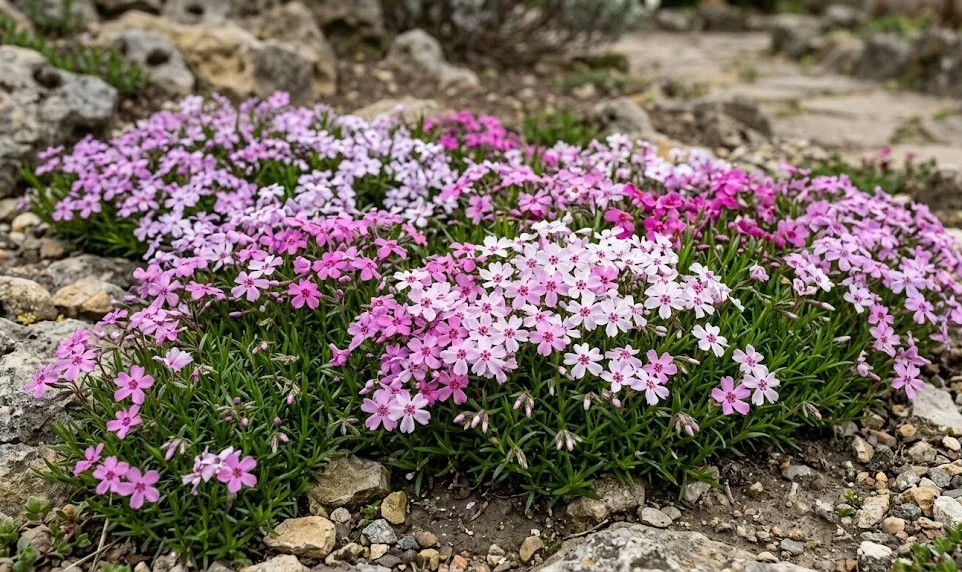

Watering and fertilizing moss phlox requires a balanced approach to ensure the plant remains healthy without becoming overly lush or weak. While this species is known for its resilience and ability to withstand dry periods, it still benefits from strategic care during specific times of the year. Understanding the natural rhythm of the plant allows you to provide exactly what it needs for the best floral display. Proper hydration and nutrition are the pillars of a long-lived and vibrant garden groundcover.
Establishing a sensible watering schedule
The watering needs of moss phlox change significantly as the plant moves through different stages of its yearly cycle. During the spring, when the plant is actively growing and preparing to bloom, it requires consistent moisture to support the flowers. You should aim to keep the soil evenly moist but never saturated, as excess water can lead to root problems. A deep soaking once a week is usually more effective than light daily sprinkling which only wets the surface.
As the heat of the summer sets in, the plant enters a period where it focuses on maintaining its green foliage. While moss phlox is naturally drought-tolerant, prolonged dry spells can cause the leaves to turn gray or brittle. If you notice the foliage looking dull, it is a clear sign that the plant needs a refreshing drink of water. Always try to water early in the morning so that the leaves have time to dry before the sun becomes too intense.
In the autumn, you should gradually reduce the frequency of watering to help the plant prepare for its winter dormancy. The goal during this time is to ensure the roots have enough moisture to survive the cold without being in soggy ground. If your region experiences a very dry autumn, a final deep watering before the ground freezes can be very beneficial. This helps prevent the evergreen foliage from drying out during the windy winter months.
The method of delivery is just as important as the amount of water you provide to your garden beds. Using a soaker hose or drip irrigation system is ideal because it delivers water directly to the soil and keeps the foliage dry. If you must use a traditional hose, try to direct the stream at the base of the plant rather than spraying the leaves. Keeping the foliage dry is a simple but effective way to prevent the development of powdery mildew and other diseases.
More articles on this topic
The impact of soil drainage on moisture levels
Soil structure plays a massive role in how effectively your watering routine supports the health of the moss phlox. If your soil is sandy, water will move through it quickly, meaning you may need to water more frequently during dry spells. In contrast, heavy clay soil holds onto moisture for much longer, which can be dangerous for this particular plant. You must adjust your schedule based on the unique characteristics of the earth in your specific garden location.
Improving the drainage of your soil is often more important than the actual act of watering itself. You can incorporate organic matter like compost to help break up heavy soil and create better pathways for water to escape. In areas where the ground stays naturally wet, you might consider planting the phlox on a slight mound or in a raised bed. These structural changes ensure that the roots always have access to the oxygen they need to survive.
You can test the drainage of your site by digging a small hole and filling it with water to see how long it takes to empty. If the water is still sitting there after several hours, you have a drainage problem that needs to be addressed. Moss phlox roots are very sensitive to “wet feet,” which can cause them to rot and die off quite rapidly. Finding the right balance between moisture and drainage is the secret to a thriving and healthy plant.
Mulching can also help manage the moisture levels in the soil by slowing down the rate of evaporation. For moss phlox, a very thin layer of fine gravel or shredded bark is usually the best choice for a mulch material. You should avoid thick layers of heavy mulch that can trap too much moisture against the delicate stems of the groundcover. A light touch is always better when trying to regulate the environment around low-growing perennial plants.
More articles on this topic
Nutrient requirements for a vibrant display
Moss phlox is not a heavy feeder and can often thrive in soils that are relatively low in nutrients. In fact, providing too much nitrogen can lead to excessive foliage growth at the expense of the beautiful spring flowers. You should aim for a balanced approach that supports the overall health of the plant without forcing it into unnatural growth. A steady, moderate supply of nutrients is much better than a sudden burst of high-strength fertilizer.
The best time to provide supplemental nutrition is in the early spring just as the new green growth begins to appear. This gives the plant the resources it needs to produce a strong crop of flower buds and healthy new stems. You will find that a single application at the start of the season is usually enough to sustain the plant for the entire year. Observation will tell you if the plant is happy or if it needs a little extra help to reach its potential.
If your soil is naturally very rich, you may find that you don’t need to fertilize your moss phlox at all. Over-fertilized plants often become leggy and lose the tight, compact form that makes them so attractive as a groundcover. They can also become more susceptible to pests and diseases if their growth is too soft and succulent. Always err on the side of caution when applying nutrients to these resilient and hardy perennials.
Slow-release fertilizers are an excellent choice because they provide a steady stream of food over a period of several months. This mimics the natural way that nutrients become available in a healthy soil ecosystem through the breakdown of organic matter. You can also use a light top-dressing of well-rotted compost to provide a gentle and natural source of nutrition. Natural methods often result in the strongest and most resilient plants in the long run.
Selecting and applying the right fertilizers
When choosing a fertilizer, look for a balanced formula such as a 10-10-10 or a slightly lower nitrogen option. These numbers represent the ratio of nitrogen, phosphorus, and potassium, which are the primary nutrients plants need. Phosphorus is particularly important for moss phlox because it directly supports the development of strong roots and vibrant flowers. Potassium helps the plant build overall resilience and improves its ability to withstand environmental stress.
Application should be done carefully to avoid getting fertilizer granules directly on the evergreen foliage of the plant. If the granules sit on the leaves, they can cause chemical burns that leave unsightly brown spots on the green carpet. It is best to spread the fertilizer around the edges of the plant and gently water it into the soil. This ensures that the nutrients reach the roots where they can be absorbed and used effectively.
Organic fertilizers are a great alternative to synthetic versions and offer many long-term benefits for your garden soil. Materials like bone meal or seaweed extracts provide a wide range of micronutrients that contribute to the plant’s health. They also encourage the growth of beneficial soil microbes that help the phlox roots take up nutrients naturally. Many professional gardeners prefer these organic options for their gentle and sustainable impact on the environment.
Always follow the instructions on the fertilizer packaging to ensure you are applying the correct amount for your garden’s size. More is definitely not better when it comes to feeding moss phlox, and over-application can lead to environmental runoff. If you are unsure about the nutrient levels in your soil, a professional soil test can provide the exact answers you need. Armed with this information, you can make informed decisions that benefit both your plants and the local ecosystem.
Recognizing signs of nutritional and water stress
Being able to read the signals your plants are sending is a vital skill for any gardener interested in moss phlox. If the plant is receiving too much water, the leaves may turn yellow and the stems might feel soft or mushy at the base. This is a clear warning that you need to reduce your watering frequency or improve the drainage in the area. Catching these signs early can save the plant from a total collapse due to root rot.
On the other hand, a plant that is too dry will often have a dull, grayish cast to its green foliage. You might also notice that the growth has slowed down significantly and the plant is not spreading as it should. A deep, slow watering will usually revive a thirsty plant quite quickly if the stress hasn’t been too prolonged. Consistent monitoring during the hottest weeks of the summer is the best way to prevent this type of damage.
Nutritional deficiencies often show up as unusual discolorations in the leaves that aren’t related to water issues. For example, a lack of nitrogen might result in older leaves turning pale green or yellow while the rest of the plant looks okay. If the plant is struggling to bloom despite having enough sun, it might be a sign that the soil is lacking in phosphorus. Understanding these subtle visual cues helps you provide the specific care your garden requires.
Finally, keep in mind that moss phlox is a very hardy plant that can recover from many minor setbacks if the core environment is good. Don’t panic if the plant looks a bit tired at the end of a long, hot summer or after a particularly cold winter. Most issues can be resolved with simple adjustments to your watering or fertilizing routine over the next few weeks. With a watchful eye and a gentle hand, you can keep your moss phlox in peak condition throughout the years.