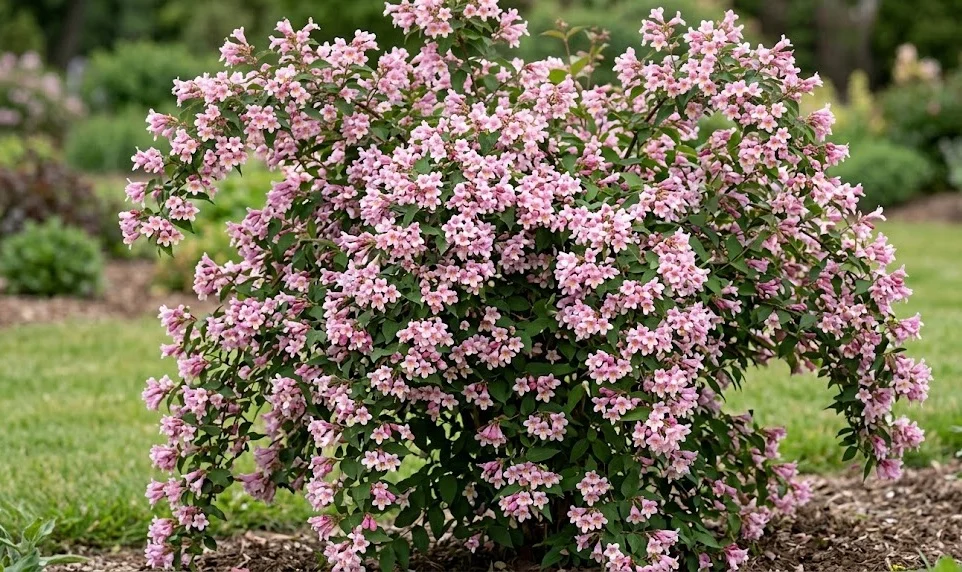

Pruning beauty bush is mainly about renewal, not strict shaping. The shrub flowers on mature wood, so careless cutting at the wrong time can remove much of the next display. A well-pruned plant keeps its arching habit, carries plenty of young replacement stems, and avoids becoming congested with old wood. The best results come from selective thinning immediately after flowering rather than routine shearing.
The best time to prune
The ideal time to prune beauty bush is shortly after the spring flowering period ends. At this point, the flowers have already been enjoyed, and the plant still has time to grow new shoots. These shoots can mature before winter and contribute to future bloom. This timing protects the ornamental cycle of the shrub.
Late winter pruning is not usually recommended for routine maintenance. Although it may seem convenient, it often removes stems that already carry flower buds. The result can be a healthy green shrub with disappointing bloom. Winter pruning should be limited to dead, broken, or hazardous branches when necessary.
Summer pruning should be light and targeted. Removing a few wayward shoots is acceptable, but heavy cutting may reduce the development of flowering wood. The shrub needs enough leaf area after bloom to rebuild energy reserves. Overpruning in summer can weaken the plant and create an uneven shape.
Autumn pruning should also be approached carefully. Large cuts late in the season may stimulate growth that does not harden before cold weather. They can also leave the shrub more exposed to winter damage. Unless there is storm damage or disease, major pruning is best delayed until after the next flowering period.
More articles on this topic
Renewal pruning technique
Renewal pruning begins by identifying the oldest, thickest, least productive canes. These are usually removed near ground level after flowering. Taking out a limited number each year opens the center and encourages fresh basal shoots. This keeps the shrub young without destroying its natural outline.
A balanced approach removes old wood gradually. Cutting out one quarter to one third of the oldest stems can be enough for a mature shrub. Removing too much at once may reduce flowering and create a flush of vigorous, awkward regrowth. Gradual renewal gives the plant time to replace structure smoothly.
Cuts should be clean and positioned carefully. When removing a cane at the base, avoid leaving a tall stub that will die back. When shortening a branch, cut to a side shoot or natural junction rather than clipping randomly. Good pruning respects how the plant will grow after the cut.
The aim is an open, layered shrub with stems of different ages. Young canes provide future flowering wood, while mature canes carry much of the current display. Very old, crowded, or damaged stems are phased out over time. This age diversity is the foundation of long-term flowering.
More articles on this topic
Cutting back overgrown shrubs
An overgrown beauty bush may need more decisive renovation. If the shrub has become tangled, sparse, or excessively woody, gradual rejuvenation is usually safest. Remove some of the oldest canes after flowering and repeat the process over two or three years. This preserves some bloom while improving structure.
Hard cutting back can be used on vigorous plants, but it has consequences. Cutting most stems close to the ground may restore size control, yet it can sacrifice flowers for at least one season. Regrowth may also be strong and uneven, requiring follow-up thinning. This method should be reserved for shrubs that are otherwise healthy but badly overgrown.
Before severe pruning, the cause of overgrowth should be considered. A beauty bush planted in too small a space will continue to outgrow the area after renovation. Repeated hard cutting may turn into an annual struggle. In some cases, transplanting a young shrub or replacing it with a smaller species is the more professional solution.
After cutting back, care should support recovery without forcing soft growth. Water during dry periods, maintain mulch, and avoid excessive nitrogen. New shoots should be thinned selectively as they develop, keeping the strongest and best-positioned canes. With patient follow-up, even an old beauty bush can regain a graceful and productive form.