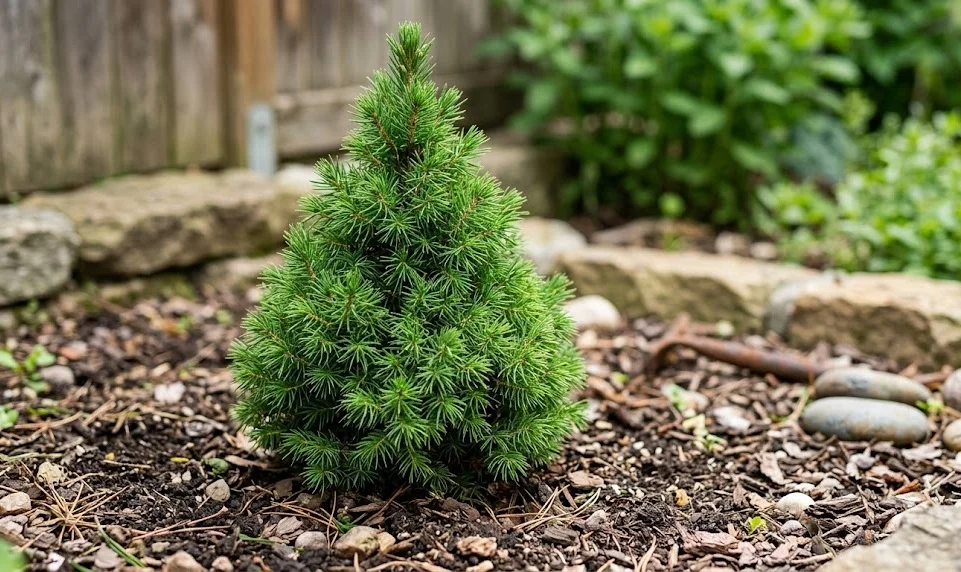

Dwarf Alberta spruce is cold hardy in suitable climates, but winter success depends on moisture, exposure, and root protection. The plant can tolerate low temperatures better than drying wind, frozen dry soil, and sudden winter sun. Damage often appears as brown needles in late winter or early spring, long after the stressful weather occurred. Good overwintering is therefore prepared in autumn rather than improvised after browning appears.
Preparing the plant in autumn
Autumn preparation begins with watering. If rainfall has been low, water deeply before the ground freezes. Evergreen needles continue losing moisture during winter, so the plant should enter dormancy well hydrated. This is especially important for newly planted or container-grown specimens.
Mulch helps protect the root zone from rapid temperature swings. Apply an organic mulch layer over the soil, keeping it away from the trunk. The goal is to moderate freezing and thawing, not to bury the stem. A wide mulch ring is more effective than a thick pile.
Do not fertilize late in the season. Late nutrients can encourage soft growth that may not mature before cold weather. Mature, firm growth withstands winter better than tender new shoots. If feeding is needed, reserve it for early spring.
Inspect the plant before winter. Remove broken or dead twigs that could trap snow or spread problems. Check for mites or other pests, because stressed foliage enters winter poorly. A clean, hydrated plant is better prepared for cold conditions.
More articles on this topic
Preventing winter burn
Winter burn is caused by moisture loss from needles when roots cannot replace water from frozen soil. It is often worst on the side exposed to sun and wind. South and west exposures can be especially risky near reflective surfaces. Damage may not become obvious until weather warms.
Water management is the most important preventive measure. Deep autumn watering helps ensure the root zone contains adequate moisture before freezing. Mulch then helps conserve that moisture. Together, these steps reduce desiccation risk.
Wind protection can help in exposed sites. A breathable screen placed on the windward side is safer than wrapping the entire plant tightly. Air still needs to circulate around the foliage. Non-breathable plastic should not be used because it can trap heat and moisture.
Avoid placing the plant where winter sun is intensified by walls, glass, or pale paving. These surfaces can warm needles during the day and increase moisture loss. Rapid temperature changes can also stress foliage. Better siting is more reliable than repeated seasonal rescue.
More articles on this topic
Winter care for container plants
Container-grown dwarf Alberta spruce needs more protection than in-ground plants. Roots in pots are exposed to cold from all sides. A cultivar that is hardy in the ground can still suffer root damage in an exposed container. The smaller the pot, the greater the risk.
Move containers to a sheltered outdoor position before severe cold arrives. A north or east side location protected from wind is often useful. The plant should remain cold and dormant, not placed in a warm indoor room. Indoor heat and low humidity can quickly weaken it.
Insulate the pot rather than the foliage alone. Grouping containers, wrapping the pot, or sinking the pot into mulch can reduce temperature extremes. Make sure drainage remains open throughout winter. Waterlogged frozen soil is damaging.
Check moisture during mild winter periods. Containers can dry out even in cold weather, especially under eaves or in windy positions. Water lightly when the mix is thawed and dry, but avoid saturating it before hard freezes. Balance is the key to winter container survival.
Spring recovery and damage assessment
Do not rush to prune winter-browned foliage immediately. Wait until spring growth begins and living buds can be identified. Some lightly damaged shoots may push new growth from surviving buds. Cutting too early can remove tissue that might have recovered.
Assess the pattern of damage. Browning on one exposed side often indicates winter burn. Browning from the top or general collapse may suggest root or trunk problems. Patchy bronzing can also point to mites, so inspect before deciding.
Remove dead shoots once it is clear they are not recovering. Cut back only to living growth and avoid cutting into bare old wood. Spruces have limited ability to resprout from leafless interior stems. Light, selective pruning is safer than drastic reshaping.
Improve the conditions that caused the damage. Add mulch, adjust watering, reduce exposure, or relocate container plants before the next winter. Repeated winter injury weakens the plant over time. Prevention is far more effective than annual correction.