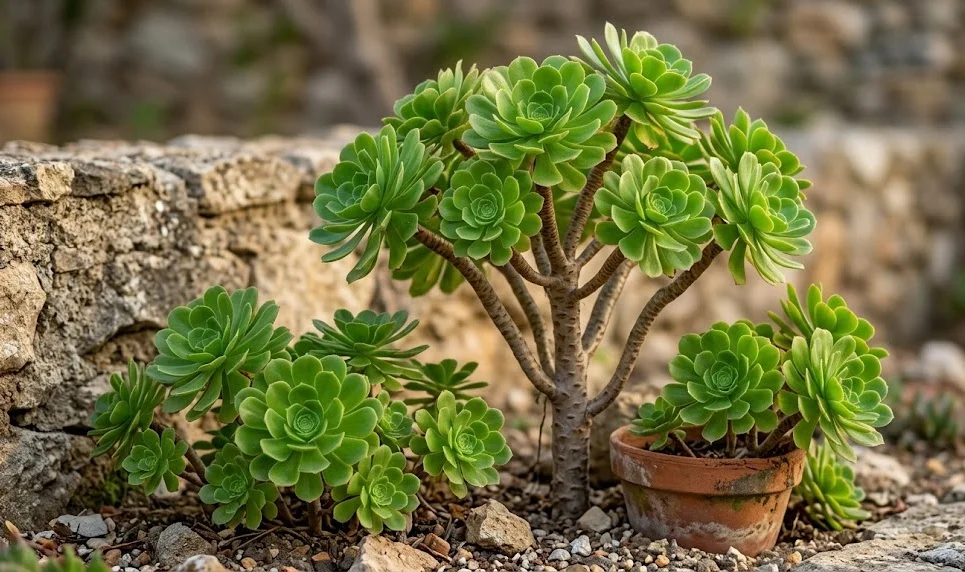

Understanding the specific watering needs of the tree aeonium is the foundation of long-term success with this beautiful succulent. Unlike many of its desert-dwelling cousins, this plant prefers a slightly more regular watering schedule during its active growth phases. The goal is to provide a deep soak that reaches the entire root zone, followed by a period where the soil dries out significantly. You should never allow the plant to sit in water, as this is the fastest way to cause fatal root rot.
The “soak and dry” method is widely considered the gold standard for succulents in the gardening community. This involves pouring water onto the soil until it runs freely out of the drainage holes at the bottom of the pot. After watering, you must wait until the top few inches of soil are completely dry before you even consider watering again. In many environments, this might mean watering once a week in the spring and much less frequently in the winter.
Seasonality plays a massive role in how much water your plant will consume at any given time. During the cool growing season of autumn and spring, the plant’s metabolic rate is higher, and it requires more hydration to support new foliage. However, when the heat of summer arrives and the plant enters dormancy, its water needs drop off dramatically. You must be observant and adjust your habits based on the plant’s behavior rather than following a strict calendar.
Water quality can also affect the health of your tree aeonium over a long period. If your tap water is very hard or contains high levels of chlorine, you might notice white mineral deposits forming on the leaves or the pot. Using rainwater or filtered water can help prevent this buildup and keep the soil pH in a more favorable range. If you must use tap water, letting it sit out overnight allows some of the chemicals to dissipate before you use it on your plants.
Signs of water stress
Being able to read the physical signs your plant is giving you will make you a much more effective gardener. When a tree aeonium is thirsty, its leaves will lose their turgidity and start to feel soft or even slightly wrinkled. The rosettes might close up more tightly than usual as the plant tries to minimize the surface area exposed to the air. These are clear signals that the plant has depleted its internal water reserves and needs a thorough drink.
More articles on this topic
Overwatering presents a different and often more dangerous set of symptoms that you need to recognize early. Leaves that are mushy, translucent, or yellowing are classic signs that the plant is receiving too much moisture. In severe cases, the stem may turn black or feel soft to the touch, indicating that rot has already started to spread through the vascular system. If you see these signs, you must stop watering immediately and check the roots for damage.
The shedding of lower leaves can sometimes be confusing for beginners as it can happen for several different reasons. If the plant is shedding only a few old leaves at the base while the rest of the rosette looks healthy, it is likely just natural growth. However, if leaves are falling off rapidly from all parts of the plant, it could be a reaction to a sudden change in watering or environmental stress. Always look at the overall health of the entire specimen before making drastic changes to your care routine.
Environmental factors like humidity and airflow will influence how quickly your plant shows signs of stress. In a very dry, indoor environment, the plant may become dehydrated much faster than it would in a humid coastal garden. Conversely, a plant kept in a damp basement might show signs of overwatering even if you are not watering it very often. Always consider the context of your plant’s environment when interpreting the signals it is sending you through its foliage.
Fertilizer selection and application
Feeding your tree aeonium provides the essential nutrients needed for vibrant color and strong structural growth. These plants are not heavy feeders, but a little supplemental nutrition during the growing season can make a significant difference. You should look for a balanced, water-soluble fertilizer specifically formulated for succulents and cacti. A fertilizer with a lower nitrogen content is usually preferred to prevent the growth from becoming too soft and leggy.
More articles on this topic
The timing of fertilizer application is just as important as the type of nutrients you choose to use. You should only fertilize during the active growing seasons of spring and autumn when the plant can actually utilize the nutrients. Never fertilize during the summer dormancy period or the coldest parts of winter when the plant is resting. Adding nutrients during dormancy can lead to a salt buildup in the soil, which can eventually damage the sensitive root hairs.
When applying fertilizer, it is a professional best practice to dilute the solution to half or even a quarter of the strength recommended on the package. Succulents have evolved to thrive in nutrient-poor soils, and a full-strength dose can be overwhelming for their systems. Always apply the fertilizer to damp soil rather than bone-dry soil to prevent root burn. This ensures that the nutrients are distributed evenly and safely throughout the root zone.
Organic options, such as diluted compost tea or worm castings, can also be excellent for maintaining long-term soil health. These natural fertilizers break down slowly and provide a steady stream of micronutrients that synthetic products might lack. If you use organic matter, be careful not to over-apply, as too much organic material can sometimes retain excess moisture. Balancing synthetic and organic approaches can lead to a very resilient and beautiful plant collection.
Nutrient deficiencies and excesses
Recognizing when your plant has a nutritional imbalance will help you correct the issue before it causes permanent damage. A nitrogen deficiency often shows up as overall stunted growth and a general paling of the leaves. If the plant lacks potassium, you might see the edges of the leaves turning brown or the plant becoming more susceptible to diseases. Phosphorus is essential for root development and flowering, so a lack of it can lead to a weak and unstable plant.
On the other hand, providing too many nutrients can be just as harmful as providing too few. Over-fertilization often manifests as a white crust of salt on the soil surface or the edges of the pot. The plant might also produce rapid, weak growth that is unable to support its own weight, leading to drooping or broken stems. If you suspect an excess of nutrients, you should flush the soil with plenty of clear water to wash away the accumulated salts.
The pH of the soil also affects how well the plant can absorb the nutrients that are present in the substrate. Tree aeoniums prefer a slightly acidic to neutral soil, typically in the range of six to seven on the pH scale. If the soil becomes too alkaline, certain nutrients like iron may become “locked,” meaning the plant cannot access them even if they are present. Testing your soil occasionally can provide valuable insights into why your plant might not be thriving despite regular feeding.
Healthy growth is the best indicator that your watering and fertilization routines are in perfect harmony. A well-fed and properly hydrated tree aeonium will have thick, sturdy stems and lush, colorful rosettes. The leaves should feel firm to the touch and show no signs of spotting or unusual discoloration. Achieving this balance takes a bit of practice and observation, but the results are well worth the effort for any dedicated plant enthusiast.
Dangers of overwatering
Overwatering remains the number one killer of succulents worldwide, and the tree aeonium is no exception to this rule. When the soil stays saturated for too long, oxygen cannot reach the roots, essentially causing them to drown. This anaerobic environment is the perfect breeding ground for various types of harmful fungi and bacteria. Once root rot begins, it can move quickly up the stem, often killing the plant before the owner even realizes there is a problem.
Prevention is far more effective than trying to cure a plant that has already started to rot. Using a high-quality, free-draining soil mix is your first line of defense against the dangers of excess moisture. You should also ensure that your pots have adequate drainage and that you are not watering on a fixed schedule without checking the soil first. Always use your finger or a moisture meter to verify that the soil is dry deep down before adding more water.
If you do suspect overwatering, the first step is to stop all irrigation immediately and move the plant to a well-ventilated area. In some cases, you may need to remove the plant from its pot to inspect the roots and cut away any black, mushy sections. If the rot has already reached the main stem, your only option may be to take healthy cuttings from the top to start new plants. This is a drastic measure, but it is often the only way to save the genetics of a prized specimen.
Education is key to avoiding these issues, so always research the specific needs of any new plant you add to your collection. Talk to experienced growers and observe how they manage their watering routines in your specific climate. Remember that it is much easier to revive a thirsty plant than it is to save one that has been overwatered. Erring on the side of underwatering is almost always the safer bet when dealing with these magnificent succulents.