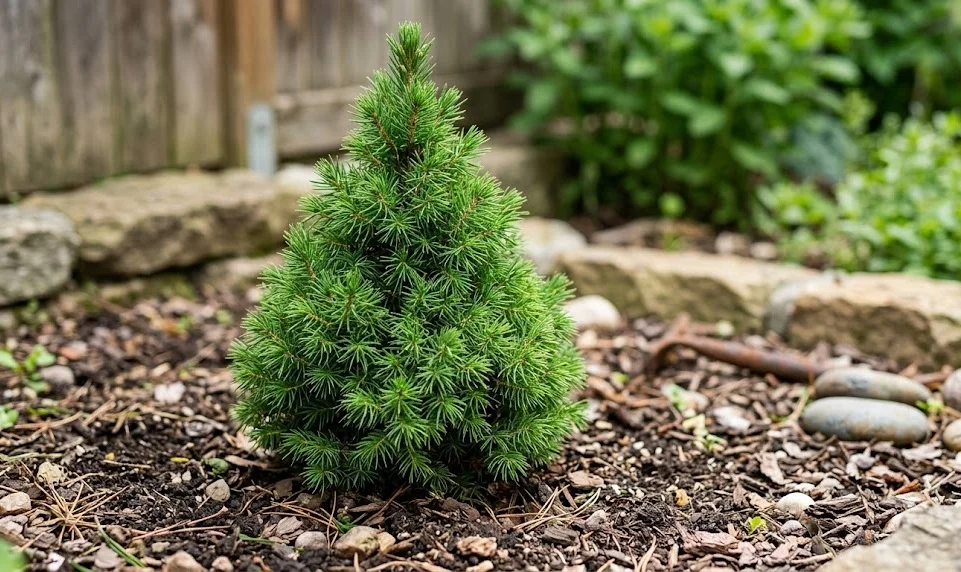

Planting dwarf Alberta spruce well is the foundation of almost every later success with this compact evergreen. A strong start reduces transplant shock, improves drought tolerance, and helps the plant maintain its dense cone without corrective pruning. Propagation is possible, but it requires patience because this cultivar grows slowly and does not produce quick results. For professional growers and serious gardeners, the key is to combine careful site preparation with realistic expectations about establishment and rooting time.
Planning the planting site
Choose the planting site before buying the plant, not after bringing it home. The site should provide sun, cool root conditions, and enough space for the plant to mature. Even though young specimens look small, older plants can become substantial landscape features. Crowding near walls, paths, or other shrubs often causes one-sided thinning and poor airflow.
The plant is most reliable in cool climates with cold winters and moderate summers. In regions with hot summers, avoid reflected heat from paving, white walls, metal fences, and stone surfaces. These surfaces can raise the temperature around the foliage and increase water loss. A position with morning sun and some late-day relief may be more forgiving in warmer gardens.
Good drainage is essential because saturated soil can damage roots. After heavy rain, the planting area should not remain puddled or sticky for long. If drainage is questionable, improve the whole bed rather than placing the plant into a small amended pocket. Raised planting areas can help where native soil is heavy.
Think about maintenance access as part of the design. The dense crown needs occasional inspection for mites, browning, or broken shoots. If the plant is squeezed behind other shrubs, early problems are easy to miss. Space around the plant also preserves its symmetrical outline.
More articles on this topic
Planting step by step
Water the plant thoroughly before planting so the root ball is evenly moist. A dry root ball can be difficult to rewet once it is placed in the ground. Remove the pot carefully, supporting the soil mass rather than pulling by the stem. If roots are circling, loosen them gently to encourage outward growth.
Dig a hole wider than the root ball and no deeper than necessary. The top of the root ball should sit level with the surrounding soil surface. Planting too deeply is one of the most common mistakes with container-grown conifers. A slightly high planting position is safer than burying the stem.
Backfill gradually, firming the soil lightly as you go. Do not stamp heavily with your feet, because compacted soil reduces oxygen and slows root growth. Water halfway through backfilling, then water again after the hole is fully filled. This settles soil around the roots and reduces hidden air pockets.
Create a shallow watering basin only if it will not trap water against the trunk. In most ornamental beds, a broad mulch ring is more useful than a raised soil collar. Apply organic mulch over the root zone while keeping it several inches away from the stem. This protects moisture without encouraging collar rot.
More articles on this topic
Establishment after planting
The first year after planting is critical because the plant still depends heavily on its original root ball. Water deeply whenever the root zone begins to dry. Do not assume rain has soaked the root ball, especially if the dense canopy deflects water. Check moisture by hand before deciding whether irrigation is needed.
Newly planted dwarf Alberta spruce may show little visible growth at first. This is normal because energy is being directed toward root establishment. Avoid forcing growth with high fertilizer rates during this period. Steady moisture and good soil contact are more valuable than rapid top growth.
Protect the plant from physical damage while it is establishing. Lawn equipment, pets, snow piles, and foot traffic can all injure the base or distort the crown. A small mulch ring also serves as a visual boundary for maintenance crews. The lower branches should not be repeatedly brushed, tied, or compressed.
Watch for one-sided browning during the first winter and spring. This often reflects drying wind, sun exposure, or uneven root moisture rather than a single disease. Deep autumn watering can reduce the risk. Temporary winter screening may help in very exposed locations.
Propagation methods and practical limits
Dwarf Alberta spruce is usually propagated vegetatively to preserve its compact form. Seed propagation does not reliably produce identical plants, because seedlings may vary in growth habit and appearance. Hardwood or semi-hardwood cuttings are possible, but rooting can be slow and inconsistent. Commercial nurseries often use controlled environments to improve success.
Cuttings are generally taken from healthy, vigorous shoots rather than weak interior growth. The cutting material should be firm enough to resist wilting but not so old that it roots poorly. Lower needles are removed from the section inserted into the rooting medium. A rooting hormone may improve results, although patience remains essential.
The rooting medium must drain well while remaining slightly moist. A mix with coarse sand, perlite, or similar material helps prevent rotting. Cuttings need humidity around the foliage but not waterlogged conditions around the base. Bright indirect light is safer than harsh direct sun during rooting.
Even when cuttings root, growth is slow. Young propagated plants need careful potting, gradual hardening, and protection from extremes. It may take several seasons before a plant has enough density for landscape use. For most gardeners, buying a healthy nursery-grown specimen is more practical than producing one from cuttings.