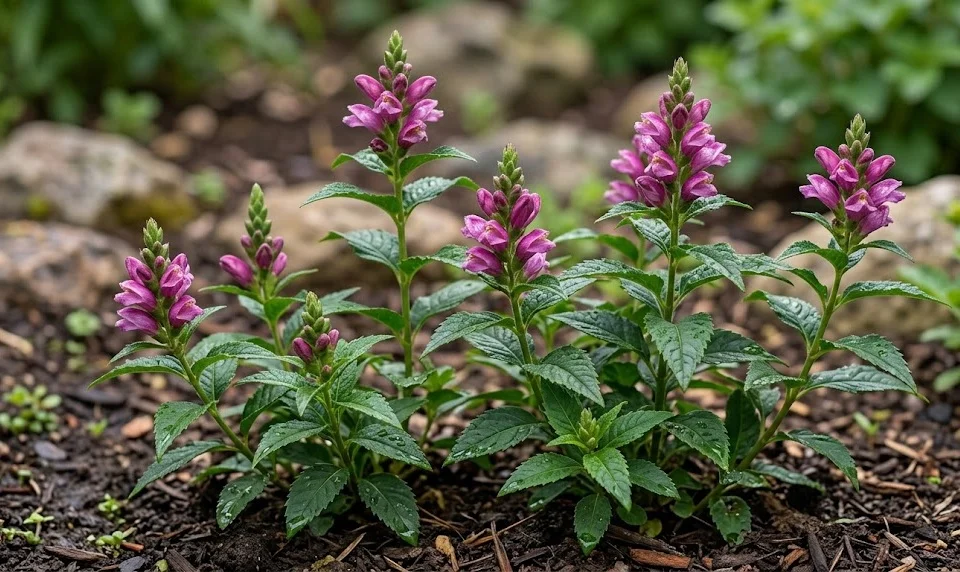

Pink turtlehead does not require complicated pruning, but timely cutting improves shape, flowering quality, and plant hygiene. Its upright stems naturally form a strong clump, yet fertile soil and partial shade can sometimes encourage soft or leaning growth. Light pinching, deadheading, and seasonal cleanup are the main techniques used in professional maintenance. The aim is to guide the plant, not to force it into an unnatural shape.
Pinching and shaping during growth
Pinching can be done in late spring when shoots are actively growing. Removing the soft tips encourages branching lower on the stem. This creates a fuller plant with more flowering points. It can also reduce the risk of tall stems flopping later in the season.
Only healthy, vigorous plants should be pinched. Weak or newly planted specimens may need their energy for root establishment. Heavy pinching can delay flowering too much if done late. A light, early pinch is usually enough.
The technique is simple but should be precise. The growing tip is removed just above a pair of leaves. Clean fingers or sharp snips can be used. Damaged or crushed stems should be avoided because they heal more slowly.
Pinching is most useful in rich, moist, partially shaded gardens. In leaner or brighter sites, the plant may already remain compact. Observing the plant’s natural habit is important before pruning. Not every clump needs the same treatment.
More articles on this topic
Deadheading and summer tidying
Deadheading is optional but useful in formal plantings. Removing faded flowers keeps the plant looking tidy. It may also prevent unnecessary seed development. This helps the clump direct energy toward maintaining healthy foliage and roots.
In naturalistic gardens, spent flowers can be left in place. Seed heads add texture and support a more relaxed seasonal appearance. They may also provide interest after the main flowering period. The choice depends on the desired style of the planting.
Yellowing or damaged leaves can be removed during the growing season. This improves appearance and reduces places where disease can develop. Leaves should be cut cleanly rather than torn from the stem. Good sanitation is especially important after wet, humid weather.
If stems lean after rain, they can be lightly supported instead of cut back immediately. Cutting too much during the flowering season reduces display. Support from neighboring plants is often the most natural solution. A well-planned border can reduce the need for visible stakes.
More articles on this topic
Autumn and spring cutback
After frost, the top growth naturally dies back. Stems may be cut close to the ground in late autumn if the garden needs a clean appearance. This is also recommended when mildew or leaf spot has been present. Diseased material should be removed from the garden rather than composted in a cool pile.
Leaving stems until spring has advantages. They protect the crown slightly and provide winter structure. Hollow or firm stems may also shelter beneficial insects. This approach suits wildlife-friendly and naturalistic plantings.
Spring cutback should be completed before new shoots grow tall. Old stems are removed carefully so emerging growth is not damaged. Sharp secateurs make the work cleaner and faster. The crown should be checked at the same time for signs of rot or frost heaving.
Cutback is also a good moment to refresh mulch and compost. Once debris is removed, the gardener can see the base of the plant clearly. Compost can be spread around the root zone without burying the crown. This gives the plant a clean and well-supported start to the new season.