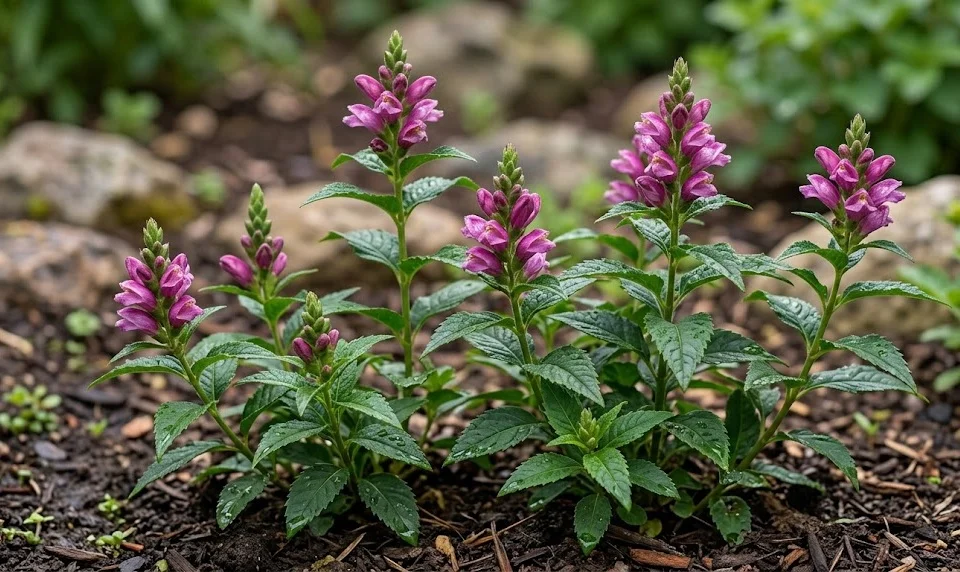

Pink turtlehead is a hardy, moisture-loving perennial that brings late-season structure and color to beds, borders, rain gardens, and naturalistic plantings. It is valued for its upright stems, glossy foliage, and distinctive hooded flowers that resemble a turtle’s head. In well-chosen conditions, it forms reliable clumps without demanding constant attention. The key to successful care is understanding its preference for consistently moist, fertile soil and gentle light.
Choosing the right garden position
Pink turtlehead performs best where the soil stays evenly moist through the growing season. It is especially useful in low areas of the garden that remain fresh but are not permanently waterlogged. A site near a pond edge, stream bank, rain garden, or irrigated mixed border can suit it very well. In dry, sandy ground, the plant usually survives poorly unless watering is regular and careful.
Light conditions should be chosen according to the local climate. In cooler regions, pink turtlehead can tolerate more sun if the soil does not dry out. In warmer gardens, morning sun with afternoon shade is usually safer and produces fresher foliage. Deep shade should be avoided because it can reduce flowering and encourage weak, leaning stems.
Good air movement is also important for long-term plant health. Although pink turtlehead likes moisture, stagnant air around dense foliage can increase the risk of fungal problems. Planting it with enough spacing allows leaves to dry after rain or irrigation. This balance between moisture at the roots and ventilation around the shoots is one of the main points of professional care.
The plant combines well with moisture-loving perennials that share similar growing needs. Astilbe, iris, sedge, cardinal flower, Joe-Pye weed, and ferns can all create a natural-looking composition around it. In a formal border, it can serve as a late-summer vertical accent behind lower plants. Its strongest ornamental value appears when it is grouped in small colonies rather than planted as a single isolated specimen.
More articles on this topic
Soil preparation and planting medium
Pink turtlehead prefers soil rich in organic matter. A loamy, humus-rich structure holds moisture while still allowing oxygen to reach the roots. Before planting, compost or well-rotted leaf mold should be worked into the soil. This improves both nutrient availability and water retention.
Heavy clay can be suitable if it is not compacted. The plant tolerates moisture, but it does not thrive when roots are sealed in dense, airless ground. Loosening the planting area and adding organic material helps create a more open structure. Raised edges or shallow drainage channels can prevent winter standing water from becoming excessive.
Very sandy soils need more preparation. Compost, aged manure, and fine leaf mold can increase the soil’s ability to hold moisture. Mulching after planting is especially important in such conditions. Without these improvements, the plant may wilt repeatedly and flower less generously.
Soil pH is usually not a major limitation for pink turtlehead. It performs well in slightly acidic to neutral soil, which is common in many moisture-retentive garden areas. Extremely alkaline soil may reduce nutrient availability and weaken growth over time. If growth appears pale despite adequate moisture, a soil test can help identify hidden deficiencies.
More articles on this topic
Watering and moisture management
Consistent moisture is the foundation of pink turtlehead care. The plant dislikes repeated cycles of drying and sudden heavy watering. A steady watering routine encourages deep rooting and stronger stems. During hot, dry weather, the soil should be checked regularly rather than watered by habit alone.
Mulch is highly valuable around this perennial. A layer of leaf mold, composted bark, or shredded plant material helps keep the root zone cool and moist. Mulch also reduces weed competition, which is important while the clump is establishing. It should not be piled directly against the crown because trapped moisture there can encourage rot.
Drip irrigation or slow soaking is better than frequent shallow sprinkling. Water should reach the root zone rather than only wetting the leaf surface. Overhead watering can be used when necessary, but it is best done early in the day. This gives the foliage time to dry before evening and lowers disease pressure.
Established plants tolerate brief dry periods better than young ones. However, prolonged drought usually causes leaf curling, reduced flowering, and premature browning. In containers, the plant dries out much faster and needs closer attention. A large pot with moisture-retentive compost is essential if pink turtlehead is grown outside open ground.
Feeding and seasonal nutrition
Pink turtlehead is not a heavy feeder, but it responds well to fertile soil. Compost applied in spring often provides enough nutrition for healthy growth. This approach supports steady development without producing soft, overly lush stems. Excessive nitrogen should be avoided because it can make the plant floppy and more vulnerable to disease.
A balanced slow-release fertilizer can be used where soil fertility is low. It should be applied in modest amounts at the start of active growth. Feeding too late in the season may encourage tender growth that hardens poorly before winter. In most garden soils, one spring feeding is enough.
Organic mulches gradually improve nutrition as they break down. This is especially useful for pink turtlehead because it naturally favors woodland-edge and wet-meadow conditions. Annual top-dressing with compost keeps the soil alive and improves structure. Healthy soil biology often gives better results than repeated soluble feeding.
Leaf color gives useful clues about nutrition. Rich green foliage usually indicates that moisture and nutrients are balanced. Yellowing can result from drought, poor drainage, nutrient deficiency, or root stress. The cause should be identified before adding fertilizer, because feeding a stressed plant in unsuitable soil rarely solves the real problem.
Pruning, support, and shape control
Pink turtlehead usually grows with a naturally upright habit. In rich soil and partial shade, stems can become tall and may need light support. Discreet plant rings, twiggy supports, or neighboring perennials can hold the clump in place. Support is most effective when installed early, before the stems begin to lean.
Pinching young shoots in late spring can create bushier growth. This technique encourages branching and may reduce the need for staking. It can slightly delay flowering, but it often produces a fuller plant. Pinching is most useful in fertile gardens where stems tend to stretch.
Spent flowers may be removed to keep the planting tidy. Deadheading is not essential, but it can improve the appearance of formal beds. In naturalistic plantings, seed heads may be left for texture and wildlife value. The decision depends on the style of the garden and the desired winter appearance.
Old stems can be cut back after they have browned in late autumn or early spring. Leaving them through winter can protect the crown slightly and provide habitat for beneficial insects. If disease was present, removing and disposing of affected stems in autumn is better. Clean tools should be used to prevent spreading problems between plants.
Pest and disease awareness
Pink turtlehead is generally dependable when planted in suitable conditions. Most problems appear when the site is too dry, too crowded, or poorly ventilated. Powdery mildew can occur in warm, humid weather, especially on stressed plants. Preventive care is usually more effective than treatment after symptoms become severe.
Slugs and snails may damage young shoots in damp spring conditions. Their feeding often appears as irregular holes in tender leaves. Mulch should be managed carefully so it protects the soil without creating excessive hiding places. Encouraging ground beetles, birds, and other natural predators helps maintain balance.
Aphids can occasionally gather on soft new growth. Small populations are usually not serious and may be controlled by beneficial insects. A strong jet of water can remove them from stems if needed. Chemical treatments should be avoided unless absolutely necessary, because they can disturb the garden’s natural control system.
Root problems are more likely in soil that stays stagnant rather than simply moist. Pink turtlehead appreciates water, but its roots still need oxygen. If plants collapse despite moist soil, drainage and crown health should be inspected. Replanting into improved soil may be more effective than repeated surface treatments.
Long-term maintenance and garden value
Pink turtlehead becomes more impressive as the clump matures. A well-established plant can provide reliable flowering in late summer and early autumn. This timing is valuable because many earlier perennials have already passed their peak. Its flowers also support pollinators during a period when nectar sources are especially important.
Division may be needed every few years if the clump becomes congested. Spring is usually the best time because new growth is beginning and recovery is quick. Divisions should include strong roots and visible shoots. Replanting them promptly into moist soil reduces transplant stress.
The plant’s design value comes from both foliage and flower form. Its upright shape gives rhythm to mixed plantings, while the blooms add a distinctive texture. It is particularly effective in gardens that aim to look natural but still carefully managed. Repeating it in several places can visually connect damp areas of the landscape.
Successful care depends less on complicated techniques and more on matching the plant to the right environment. Moist soil, moderate light, organic matter, and seasonal tidying are the main requirements. When these are provided, pink turtlehead is robust, elegant, and long-lived. It is an excellent choice for gardeners who want late color in places where ordinary border plants often struggle.