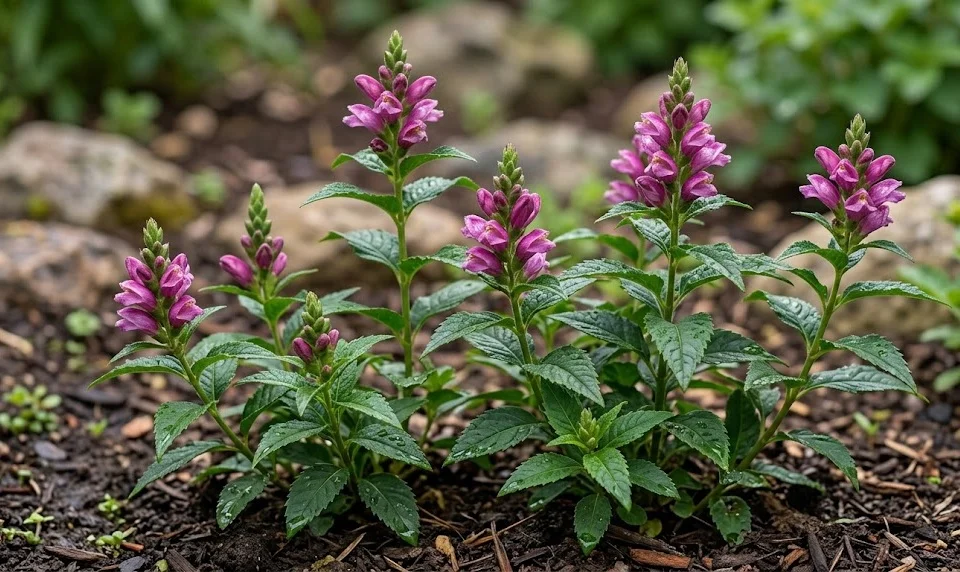

Pink turtlehead grows best when moisture and nutrition are managed steadily rather than aggressively. It is naturally adapted to damp meadows, stream edges, and rich woodland margins, so dry soil is the most common cause of poor growth. At the same time, feeding should be moderate because excessive fertility can make stems soft and floppy. A balanced routine creates strong roots, healthy foliage, and reliable late-season flowering.
Understanding moisture needs
Pink turtlehead requires consistently moist soil during active growth. It should not be treated like a drought-tolerant border perennial. When the root zone dries repeatedly, the plant may wilt, drop lower leaves, and produce fewer flowers. Regular moisture is especially important from spring shoot emergence through the flowering period.
The goal is even moisture, not constant saturation. Soil should feel damp below the surface but should not smell sour or remain airless. Roots need both water and oxygen to function well. This is why good soil structure matters as much as the amount of water applied.
Weather conditions should guide the watering schedule. Cool, cloudy weeks may require little extra irrigation. Hot, windy days can dry the soil quickly, even in partial shade. Checking the soil by hand is more accurate than watering according to a fixed calendar.
Young plants need closer attention than mature clumps. Their root systems are smaller and cannot reach moisture deep in the soil. Newly planted pink turtlehead should be watered before stress becomes visible. Once severe wilting occurs, recovery can be slower and flowering may be reduced.
More articles on this topic
Practical watering methods
Deep watering is better than frequent surface sprinkling. Water should soak into the root zone where it can support sustained growth. Shallow watering encourages roots to remain near the surface, where they dry out faster. A slow hose, watering can, or drip system is usually effective.
Drip irrigation is particularly suitable for pink turtlehead. It delivers moisture directly to the soil and keeps leaves drier. This reduces the risk of foliar diseases in humid weather. It also uses water efficiently in larger perennial plantings.
Overhead watering is acceptable when used carefully. It should be done early in the morning so foliage can dry during the day. Evening overhead watering may leave leaves wet overnight. Prolonged leaf wetness can increase the likelihood of mildew and leaf spot.
Container-grown plants need a different approach. Pots dry out faster than garden soil and may require daily checks in summer. A large container with moisture-retentive compost is much better than a small pot. Drainage holes are still essential because stagnant water can damage roots.
More articles on this topic
Mulching for water stability
Mulch is one of the most useful tools for managing moisture. A layer of organic material reduces evaporation and keeps soil temperature more stable. Compost, shredded bark, leaf mold, and chopped plant debris can all work well. The mulch should be renewed as it decomposes.
The best mulch supports soil life as well as moisture retention. As organic material breaks down, it improves structure and nutrient cycling. This suits pink turtlehead because the plant responds strongly to humus-rich conditions. Over time, mulching can reduce the need for additional fertilizer.
Mulch depth should be moderate. A layer that is too thin dries quickly and gives little benefit. A layer that is too thick may hold excessive moisture against the crown. Keeping the immediate base of the stems open helps prevent crown problems.
Mulching also suppresses weeds. This matters because weeds compete for water during summer. Removing weeds by hand is easier when the soil is moist and covered. A clean, mulched root zone helps young plants establish faster and keeps mature clumps vigorous.
Fertilizing in spring
Spring is the best time to feed pink turtlehead. At this stage, the plant is starting active growth and can use nutrients efficiently. A top-dressing of compost is often enough in fertile garden soil. This gentle feeding supports strong stems without forcing weak growth.
A balanced slow-release fertilizer can be used if the soil is poor. It should be applied according to the product label and kept away from direct contact with crowns. Overapplication is more harmful than underfeeding. Pink turtlehead usually needs steady nutrition, not heavy feeding.
High-nitrogen fertilizers should be used with caution. They can produce lush foliage at the expense of sturdy flowering stems. Soft growth is more likely to lean, split, or develop mildew. Balanced nutrition gives a better ornamental result.
Soil testing is useful in long-established gardens. It can reveal whether potassium, phosphorus, or organic matter is limiting growth. Guessing often leads to unnecessary fertilizer use. Professional care begins with understanding the soil rather than treating every plant the same way.
Adjusting nutrition through the season
After spring feeding, pink turtlehead rarely needs repeated fertilizing. Too much late-season feeding can delay hardening and encourage tender growth before winter. If the plant grows strongly and flowers well, no additional fertilizer is needed. Observation is the most reliable guide.
Compost tea or mild organic liquid feed may help container plants. Nutrients wash out of pots more quickly than they do from open soil. Feeding should still remain moderate. Strong liquid fertilizers can push growth too fast and increase watering demands.
Pale foliage can have several causes. It may indicate low fertility, but it can also result from drought, waterlogging, compacted soil, or root damage. Fertilizer should not be the automatic response. Correcting moisture and soil structure often solves the problem more effectively.
Flowering quality reflects the whole care system. Adequate moisture, sufficient light, and balanced nutrition work together. If one factor is poor, fertilizer alone cannot compensate. The healthiest plants are usually those grown in soil that has been improved gradually and managed consistently.