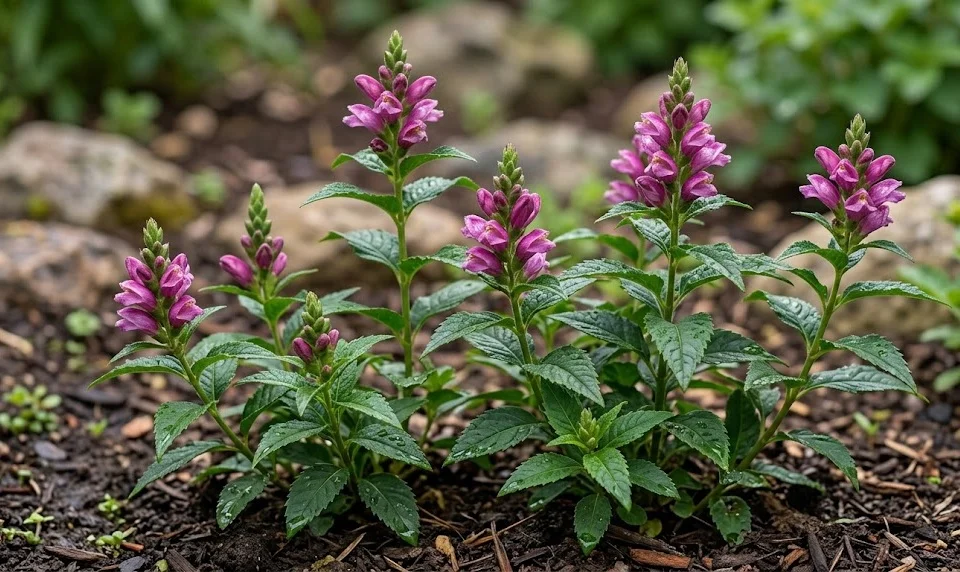

Pink turtlehead is generally a resilient perennial, but it can suffer when moisture, spacing, and air movement are out of balance. The plant likes damp soil, yet crowded foliage and humid conditions can encourage fungal diseases. Young shoots may also attract slugs, snails, and occasional sap-feeding insects. Most problems can be reduced through prevention, careful observation, and good garden hygiene.
Common causes of plant stress
Many disease and pest issues begin with environmental stress. Pink turtlehead grows poorly when the soil alternates between drought and sudden saturation. Stressed plants have weaker tissues and are less able to resist infection. Consistent conditions are the first line of defense.
Poor air circulation can create a humid microclimate inside the clump. Dense planting, heavy shade, and unthinned growth can all contribute to this problem. Leaves that stay wet for long periods are more vulnerable to fungal spores. Proper spacing helps the plant remain healthier without chemical intervention.
Overly rich feeding can also increase susceptibility. Excess nitrogen produces soft, lush growth that pests and diseases often attack more easily. Strong but moderate growth is preferable. Compost-based feeding is usually safer than repeated high-nitrogen fertilization.
Damage from drought may be mistaken for disease. Wilting, browning leaf edges, and poor flowering often indicate water stress rather than infection. Before treating a plant, the soil should be checked carefully. Accurate diagnosis prevents unnecessary and ineffective action.
More articles on this topic
Powdery mildew and leaf diseases
Powdery mildew can appear as pale, powdery patches on leaves. It is more common during warm, humid conditions, especially when plants are stressed. Although it rarely kills pink turtlehead, it can reduce ornamental value. Severe cases may weaken growth and shorten the flowering display.
Prevention begins with spacing and watering practice. Plants should not be packed tightly against other dense perennials. Watering at soil level helps keep foliage drier. If overhead watering is necessary, morning is the best time.
Affected leaves can be removed if infection is limited. Tools should be cleaned after cutting diseased material. Fallen leaves should not be left around the crown if disease has been active. Removing infected debris reduces the number of spores available for reinfection.
Leaf spots may also occur in wet seasons. These usually appear as brown or dark lesions on foliage. Good sanitation, improved airflow, and avoidance of late-day overhead watering are useful responses. Fungicides are rarely needed in well-managed ornamental plantings unless disease becomes persistent and severe.
More articles on this topic
Slugs and snails
Slugs and snails are among the most common pests on young pink turtlehead shoots. They feed mostly at night or during damp weather. Damage appears as irregular holes, shredded edges, or missing tender growth. Small plants can be set back significantly if feeding is heavy.
The risk is highest in spring. New shoots are soft, close to the soil, and surrounded by moist conditions that slugs favor. Regular inspection helps detect damage before it becomes serious. Early action is more effective than waiting until stems are badly eaten.
Cultural control is important. Excessive mulch piled close to crowns can create hiding places. Boards, dense weeds, and damp debris should be reduced near vulnerable plants. Encouraging wildlife and beneficial predators can also help keep populations balanced.
Hand-picking can be effective in small gardens. Evening checks after rain often reveal active pests. Barriers and traps may reduce damage when used consistently. Any bait product should be chosen carefully to protect pets, wildlife, and soil life.
Aphids and other sap-feeding insects
Aphids may appear on soft shoots and flower buds. They feed by sucking sap and can cause curled leaves or sticky residue. Light infestations are usually not serious. Natural predators often control them without intervention.
A strong spray of water can remove many aphids. This simple method is useful when colonies are found early. It avoids harming lady beetles, lacewings, hoverflies, and other beneficial insects. Repeated checks may be needed because aphids can reproduce quickly.
Chemical insecticides should be avoided unless absolutely necessary. Broad-spectrum products can kill beneficial insects and make pest outbreaks worse later. If treatment is needed, a targeted low-impact product is preferable. It should be applied according to label directions and only where pests are present.
Other insects may occasionally chew leaves, but serious damage is uncommon. Pink turtlehead is not usually considered a highly pest-prone plant. The presence of a few insects does not automatically require control. A healthy garden includes some feeding activity without losing overall plant performance.
Root and crown problems
Root and crown rot can occur when the soil is wet but poorly aerated. Pink turtlehead likes moisture, but it does not thrive in stagnant, compacted ground. Symptoms may include sudden collapse, blackened crown tissue, and poor regrowth. These problems are harder to correct once established.
Prevention depends on soil preparation. Organic matter improves structure and helps water move through the root zone. Heavy clay should be loosened before planting. Areas that remain under standing water for long periods may need drainage improvement or a different planting choice.
Crowns should not be buried too deeply. Planting at the correct depth keeps the growing point healthy. Mulch should be kept away from direct contact with the crown. This is especially important in winter and during prolonged rainy periods.
If a plant shows serious crown rot, affected material should be removed. Healthy sections may sometimes be divided and replanted in improved soil. Severely rotted plants are often best discarded. Replanting into the same unimproved location usually leads to repeated failure.