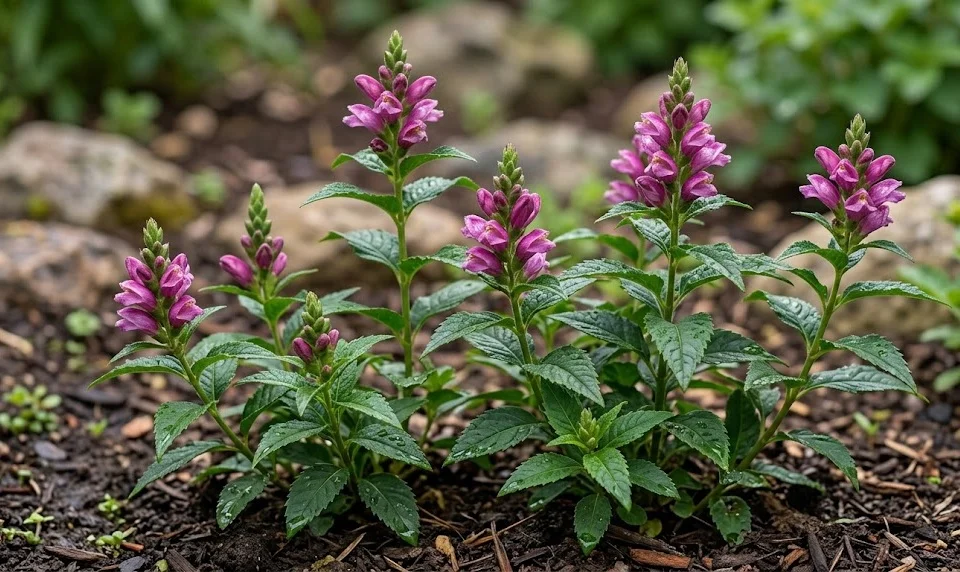

Pink turtlehead grows best in balanced light, where it receives enough brightness to flower well but not so much heat that the soil dries out. Its natural character suits woodland edges, damp meadows, and streamside plantings with filtered sun. The ideal exposure depends on climate, soil moisture, and the surrounding planting. Managing light correctly improves stem strength, leaf quality, and bloom production.
Ideal exposure in the garden
Partial shade is often the most reliable exposure for pink turtlehead. Morning sun followed by afternoon shade gives the plant energy without excessive heat stress. This arrangement is especially valuable in warm climates. It keeps foliage fresh and helps the soil remain evenly moist.
In cooler regions, the plant can tolerate more direct sun. Full sun may produce strong flowering if the ground remains consistently damp. The risk is that sunny soil dries too quickly during summer. Where irrigation is limited, full sun is usually less suitable.
Deep shade is not ideal. The plant may survive, but flowering is often reduced. Stems can stretch toward light and become weak or open. A bright shaded position is usually better than a dark corner beneath dense evergreen trees.
Filtered light beneath open-canopied shrubs or small trees can be excellent. The plant receives shifting brightness during the day, which resembles many natural habitats. Competition from tree roots should still be considered. Moisture must remain available at the soil level.
More articles on this topic
How light affects growth and flowering
Light has a direct effect on flowering. Plants receiving too little light may produce lush leaves but few buds. The flowering stems can also be thinner and more prone to leaning. Better light usually creates a stronger and more ornamental clump.
Too much sun can create different symptoms. Leaves may wilt during the hottest part of the day, especially if the soil is not moist enough. Leaf edges can brown, and the flowering period may shorten. These signs indicate that light and moisture are out of balance.
Stem height is also influenced by exposure. In moderate light, pink turtlehead usually grows upright and sturdy. In heavy shade, stems may elongate and separate. Pinching can help, but correcting the light conditions is often more effective.
Flower color and freshness can be better in gentle light. Harsh afternoon sun may fade blooms more quickly in hot weather. Partial shade can extend the attractive period of the flowers. This makes the plant especially useful in east-facing borders and lightly shaded rain gardens.
More articles on this topic
Adjusting light conditions through design
Garden design can be used to create suitable light. Taller perennials, shrubs, or ornamental grasses can provide afternoon protection. This is useful in borders that receive strong sun for part of the day. The goal is shade that cools the plant without blocking all brightness.
Planting near water features can also help. Reflected light may brighten the area while the soil remains moist. Pink turtlehead can look especially natural along pond edges or damp channels. These positions often provide the kind of balanced exposure the plant prefers.
Seasonal changes should be considered. A site that is sunny in spring may become shaded after trees leaf out. This can be beneficial if summer shade protects the plant from heat. However, dense canopy shade all season may reduce flowering.
If the plant performs poorly, light should be assessed before major changes are made. Weak stems, few flowers, and pale growth may suggest insufficient brightness. Wilting, scorching, and early browning may suggest too much sun combined with dry soil. Moving the plant to a better exposure can restore its natural vigor.