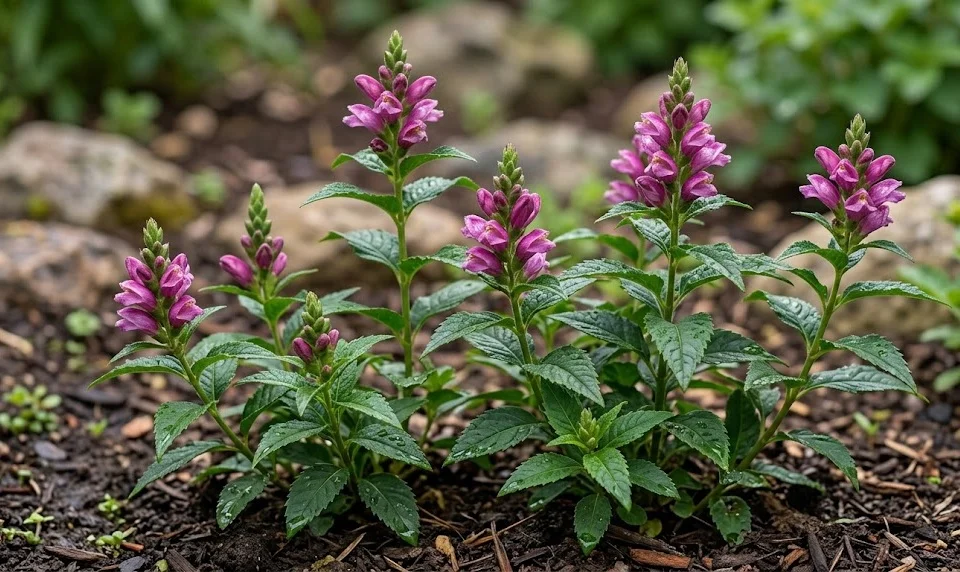

Pink turtlehead is a hardy perennial that normally overwinters well when planted in suitable soil. Its top growth dies back after frost, while the crown and roots remain alive below ground. The main winter risks are not ordinary cold but poor drainage, crown rot, repeated freeze-thaw movement, and late-season stress. Good autumn preparation helps the plant return strongly in spring.
Preparing the plant in autumn
Autumn care should begin after flowering declines. The plant naturally shifts energy from stems and leaves into the crown and roots. This process should not be interrupted by heavy late fertilizing. Soft new growth produced too late in the season is more vulnerable to frost damage.
Watering may still be needed in dry autumn weather. A plant entering winter with a dry root ball is more likely to suffer stress. Soil should be moist but not saturated before hard frost arrives. This is especially important for newly planted specimens.
Old stems can be left standing or cut back, depending on garden style and disease history. Standing stems may provide winter texture and habitat for beneficial insects. They can also help mark the plant’s location in dormant beds. If foliage was diseased, cutting and removing it in autumn is the cleaner option.
Autumn cleanup should be selective rather than excessive. Healthy fallen leaves can contribute organic matter if they are not smothering the crown. Diseased leaves should be removed from the planting area. Good hygiene lowers the risk of fungal spores overwintering near the plant.
More articles on this topic
Protecting the crown and root zone
A light winter mulch can help protect the crown. This is most useful for young plants, recent divisions, and gardens with unstable winter temperatures. Leaf mold, composted bark, or loose straw can be used carefully. The material should insulate without trapping wetness directly against the crown.
Freeze-thaw cycles can lift shallow-rooted plants from the soil. This is called frost heaving and is most common in newly planted perennials. Mulch helps moderate temperature changes in the upper soil layer. If a plant is pushed upward, it should be gently firmed back into place when conditions allow.
Drainage remains important during winter. Pink turtlehead tolerates damp soil, but prolonged stagnant water can damage roots. Heavy, compacted ground is particularly risky in cold weather. Improving soil structure before planting is better than trying to solve drainage problems after winter damage appears.
Container plants need extra protection. Roots in pots are exposed to colder temperatures than roots in the ground. The container can be moved to a sheltered spot, grouped with other pots, or insulated around the sides. The compost should not dry completely, but it should never remain waterlogged for weeks.
More articles on this topic
Winter watering and weather risks
In open ground, winter watering is rarely necessary in regions with regular rainfall or snow. However, dry winters can stress newly planted pink turtlehead. Moisture should be checked during mild periods if the weather has been unusually dry. Watering should be done only when the soil is not frozen.
Snow cover can be beneficial. It insulates the crown and protects the soil from sharp temperature swings. Problems are more likely in bare, windy winters with repeated freezing and thawing. A stable mulch layer can partly replace the protection normally provided by snow.
Winter sun and drying winds can affect exposed sites. Although the top growth is dormant, the crown and upper roots can still suffer from drying conditions. Mulch and nearby planting can reduce exposure. Avoiding very open, dry sites from the start is the best strategy.
Heavy wet mulch should be avoided. Materials that mat down tightly can hold too much moisture and reduce air exchange. This may create conditions favorable to rot. Loose, breathable organic material is safer for overwintering perennial crowns.
Spring recovery after winter
Spring inspection should be done as new shoots begin to appear. Dead stems left over winter can be cut back close to the base. Care should be taken not to damage emerging shoots. These shoots may be small at first but usually strengthen quickly in moist soil.
Mulch can be adjusted in spring. If it has shifted over the crown, it should be pulled back slightly. The soil should be allowed to warm while remaining protected from drying. A thin compost top-dressing can support early growth.
Winter losses are often linked to planting conditions rather than cold hardiness. If a plant fails to return, drainage, crown depth, and autumn moisture should be reviewed. Replacing the plant in the same spot without correcting the cause may lead to another failure. A better-prepared site usually produces better long-term results.
Healthy plants resume growth steadily as temperatures rise. New shoots expand into upright stems, and the clump becomes fuller each year. With modest spring care, pink turtlehead usually recovers without special treatment. Its hardy nature makes it a dependable perennial for gardens with cool, moist soil.