
Effective water and nutrient management are the two most influential factors in determining the yield and quality of a spinach crop. Because spinach is composed largely of water and grows at an incredibly rapid pace, any interruption in its supply of resources can lead to immediate stress. This stress often manifests as stunted growth, tough leaf texture, or the dreaded onset of bolting. Developing a systematic approach to irrigation and fertilization ensures that the plants remain in a state of constant, healthy development from germination to harvest.
Water requirements and frequency
Spinach has a shallow root system, which makes it highly susceptible to fluctuations in surface soil moisture. To maintain succulent leaves and prevent the plant from entering a defensive reproductive mode, the soil should be kept consistently moist but not saturated. Generally, spinach requires about two to three centimeters of water per week, either from rainfall or supplemental irrigation. During periods of high wind or rising temperatures, the frequency of watering may need to be increased to compensate for higher evaporation rates.
The best time to water spinach is early in the morning to allow the foliage to dry before the sun becomes too intense. Afternoon watering can sometimes lead to leaf scald, while evening watering increases the risk of fungal diseases by leaving the leaves damp overnight. By watering at dawn, you ensure the plant is fully hydrated as it begins its daily photosynthetic processes. This timing also minimizes water loss due to evaporation, making your irrigation more efficient.
Monitoring soil moisture is more reliable than following a strict calendar schedule, as environmental conditions change daily. You can check the moisture level by inserting a finger into the soil near the base of the plants; it should feel damp at a depth of two to three centimeters. If the soil feels dry or starts to crack, it is a clear sign that the plants are under stress and need immediate hydration. Investing in a simple soil moisture meter can provide even more precision for larger garden areas.
Uniformity in water application is essential to prevent some plants from being flooded while others remain parched. If the soil dries out and is then suddenly saturated, the sudden influx of water can cause the plant tissues to swell too quickly. This can lead to physiological issues or make the plant more attractive to certain pests that thrive on stressed vegetation. Consistent, moderate moisture levels create the stable environment that spinach needs to produce its best foliage.
More articles on this topic
Irrigation methods and techniques
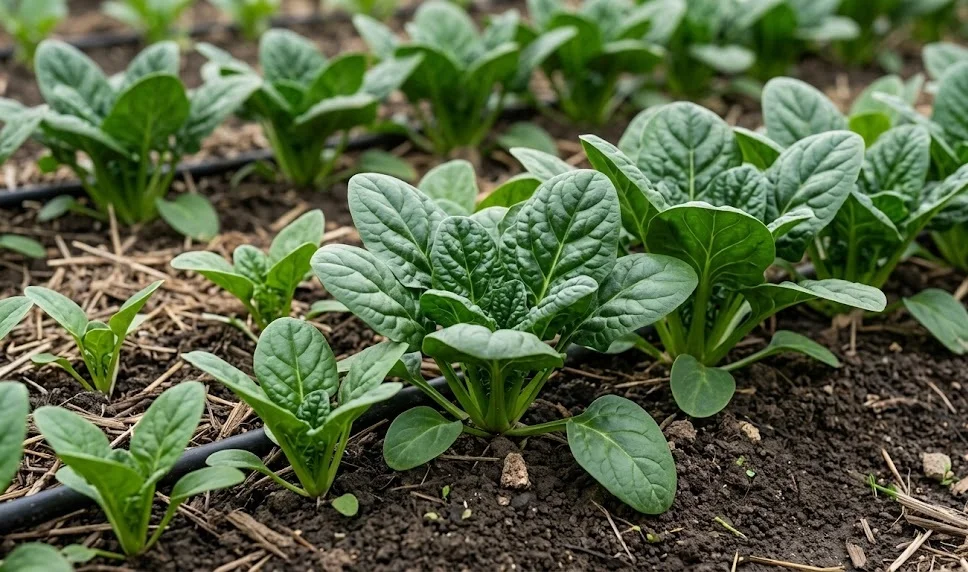
Drip irrigation is widely considered the gold standard for watering spinach in a professional or semi-professional setting. This method delivers water directly to the soil surface through a network of tubes and emitters, keeping the foliage dry. By reducing leaf moisture, you significantly lower the chances of downy mildew and other common fungal pathogens taking hold. Drip systems also conserve water by minimizing runoff and evaporation, making them an environmentally friendly choice.
Soaker hoses are an excellent alternative for those who want the benefits of ground-level watering without the complexity of a full drip system. These porous hoses allow water to seep out slowly along their entire length, providing a gentle and thorough soaking of the root zone. They are easy to install and can be tucked under a layer of mulch to further improve efficiency. Ensuring the hose is placed close to the plant base ensures that the shallow roots have direct access to the moisture.
If overhead watering is necessary, using a fine misting nozzle or a sprinkler with small droplets is preferred. Large, heavy water drops can compact the soil surface and physically damage the tender leaves of young spinach plants. When using overhead methods, it is even more critical to water early in the day so the plants can dry out completely. Proper spacing between rows and plants also helps improve air movement, which aids in the drying process after overhead irrigation.
Mulching plays a supportive role in irrigation by acting as a protective barrier for the soil moisture you have applied. A layer of organic mulch reduces the rate of evaporation from the soil surface, keeping the root zone cooler and more stable. This means you can often water less frequently while still maintaining the necessary moisture levels for optimal growth. Mulch also prevents soil from splashing onto the leaves during watering, which keeps the harvest cleaner and reduces disease transmission.
More articles on this topic
Essential nutrient needs
Spinach is categorized as a heavy feeder, primarily requiring high levels of nitrogen to support its rapid leaf production. Nitrogen is the main component of chlorophyll and is essential for the vegetative growth that gardeners value most in this crop. However, a balanced approach is necessary, as phosphorus and potassium are also vital for root development and overall plant resilience. A deficiency in any of these macronutrients will quickly result in visible symptoms and a decline in crop quality.
Yellowing of the older, lower leaves is a classic sign of nitrogen deficiency, indicating that the plant is moving nutrients to newer growth. If the leaves appear purple or unusually dark green, it may suggest a lack of phosphorus, which is common in very cold spring soils. Potassium deficiency often shows up as browning or “burning” along the edges of the leaves. Regular observation allows for corrective measures before the entire crop is compromised by a lack of essential minerals.
In addition to macronutrients, spinach also benefits from various trace minerals such as magnesium and iron. Magnesium is a central atom in the chlorophyll molecule, and a lack of it can cause interveinal chlorosis, where the veins stay green while the rest of the leaf turns yellow. These micronutrients are usually present in healthy, organic-rich soil but can become depleted in over-worked garden beds. Using compost or sea-based fertilizers can help replenish these subtle but important components of plant health.
The timing of nutrient availability is just as important as the quantity of fertilizer applied to the soil. Because spinach grows so quickly, it needs nutrients to be available in a form the roots can absorb almost immediately. Fast-acting organic fertilizers or liquid feeds are often more effective than slow-release granules for a crop that matures in only six to eight weeks. Ensuring the soil is moist before applying fertilizer helps prevent “fertilizer burn” and aids in the distribution of nutrients to the root zone.
Organic versus mineral fertilizers
Organic fertilizers, such as compost, aged manure, and bone meal, focus on building long-term soil health while feeding the plants. These materials improve the soil structure and support a diverse community of beneficial microbes that help process nutrients for the roots. While organic options often release nutrients more slowly, they provide a more stable and sustainable environment for the crop. Many professional gardeners prefer organics because they are less likely to cause nutrient imbalances or environmental runoff.
Mineral or synthetic fertilizers provide a precise and immediate boost of nutrients that can be helpful in specific situations. They are often used to quickly correct a visible deficiency or to provide a “jump start” to plants in very cold spring weather. However, they do not contribute to soil structure and can lead to a buildup of salts if used excessively over many seasons. If choosing mineral fertilizers, it is essential to follow the application rates strictly to avoid damaging the sensitive spinach tissues.
Liquid fertilizers, whether organic like fish emulsion or mineral-based, are particularly effective for spinach due to their rapid absorption. These can be applied as a soil drench or, in some cases, as a foliar spray to provide an instant nutrient hit. Foliar feeding should be done with caution and at a lower concentration to prevent leaf damage, especially in bright sunlight. This method is an excellent way to maintain high growth rates during the middle of the growing cycle.
The choice between organic and mineral approaches often depends on the gardener’s philosophy and the specific needs of the soil. A hybrid approach, using compost for foundation health and targeted liquid feeds for growth boosts, is often very successful. Regardless of the source, the goal is to keep the spinach “running” at its maximum capacity without causing stress. A well-fed spinach plant is much more capable of resisting pests and environmental challenges.
Timing of application and management
The first application of fertilizer should ideally occur several weeks before planting to allow the soil to stabilize and nutrients to become available. This pre-planting boost creates a nutrient-rich environment that supports the critical first few weeks of seedling development. Raking well-rotted compost into the top few centimeters of the soil is usually sufficient for this initial stage. If the soil is known to be poor, a balanced granular fertilizer can also be added at this time.
Side-dressing is a technique used to provide additional nutrients once the plants are established and growing vigorously. This involves applying a small amount of fertilizer in a shallow trench next to the row of plants, then covering it with soil and watering it in. For spinach, a high-nitrogen side-dressing when the plants are about ten centimeters tall can provide the energy needed for the final push to harvest. Careful application is necessary to ensure the fertilizer does not touch the stems or leaves directly.
Late-season applications should be handled with care, especially as the harvest date approaches. Excessive nitrogen right before harvest can lead to the accumulation of nitrates in the leaves, which is undesirable for consumption. It is generally best to stop fertilizing about two weeks before the planned harvest to allow the plant to utilize its internal reserves. This practice ensures a safer and more flavorful product for the kitchen.
Consistent record-keeping helps refine the fertilizing schedule for future seasons and different varieties of spinach. Tracking how the plants respond to specific types and timings of fertilization provides invaluable data for optimizing your garden’s output. Every garden is unique, and what works in one climate may need adjustment in another to achieve the same results. Mastery over watering and fertilizing turns the challenge of growing spinach into a predictable and rewarding professional endeavor.